The Style Guide · Moroccan Maximalism
Moroccan Maximalism: How to Get Zahra's Jewel-Toned Studio Look
Zahra turns a studio apartment into a jewel box caravan where every evening feels like a journey through a thousand and one nights.
What is Moroccan Maximalism?
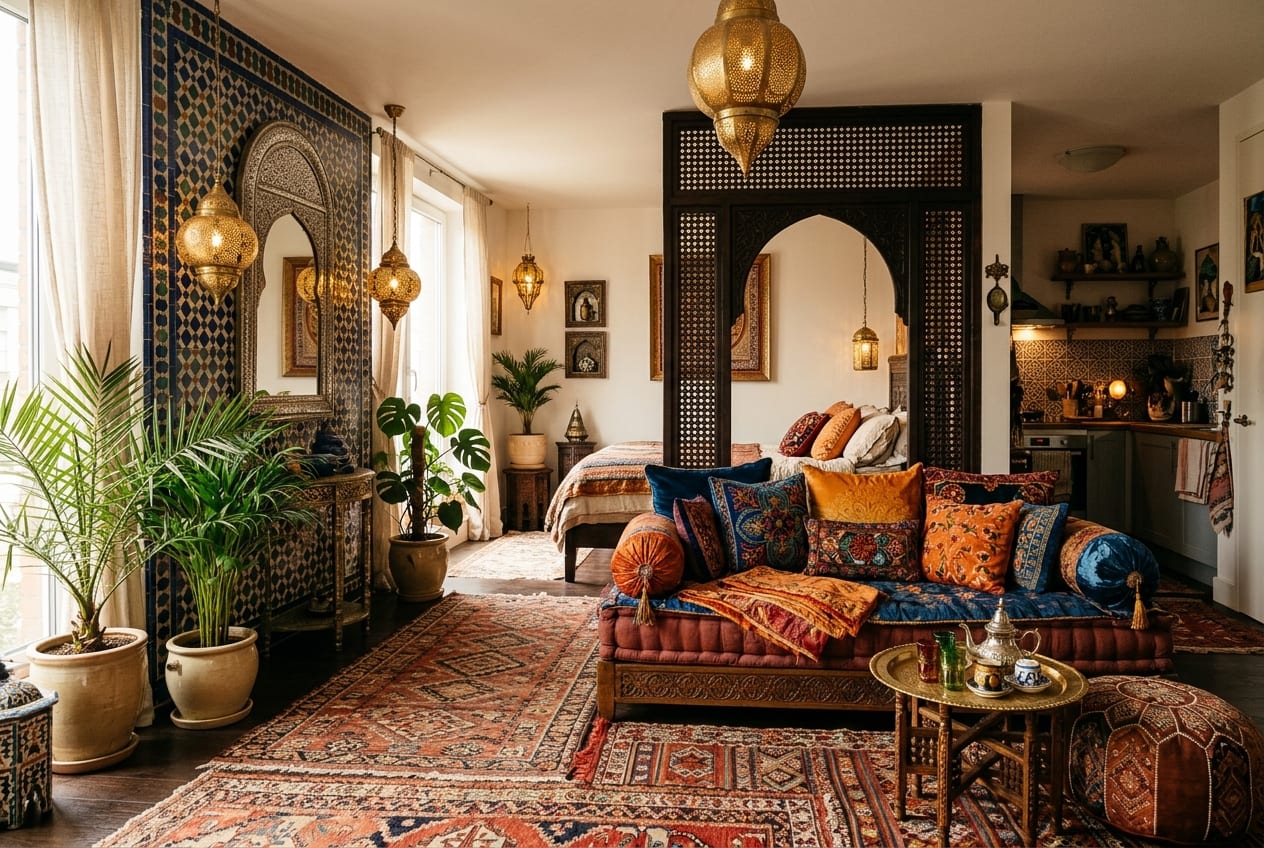
Moroccan Maximalism transforms small spaces into sensory sanctuaries through the deliberate layering of pattern, metalwork, and saturated color. Unlike its bohemian cousin, this style follows the precise geometric logic of Islamic design, where repetition creates rhythm and every surface tells a story. Zahra exemplifies this approach perfectly: she's a studio apartment that functions like a riad courtyard, using vertical drama and strategic zoning to make one room feel like many interconnected chambers.
This aesthetic draws from centuries of North African craft traditions, particularly the artisan quarters of Fez, Marrakech, and Tangier, where zellige tile cutters, brass workers, and textile weavers created environments of astonishing complexity within modest footprints. Moroccan homes have always understood that luxury isn't about square footage but about richness of detail: the hand-cut geometry of a single tile, the pierced patterns that turn lamplight into constellations, the endless patience of embroidery. These techniques traveled along trade routes, absorbing influences from Andalusian Spain, Ottoman Turkey, and Berber mountain villages, creating a visual language that feels both ancient and remarkably contemporary.
Today's renewed love for Moroccan Maximalism comes from our hunger for spaces that feel handmade, traveled, and story-rich in an increasingly generic world. In small apartments especially, this style offers a brilliant solution: it uses pattern and color to create visual complexity that makes rooms feel larger and more interesting, not cluttered. Zahra proves you don't need a sprawling house to live maximally; you need intention, layers, and the confidence to let every corner sing. This is maximalism as world-building, where a studio becomes a portal.
The signatures
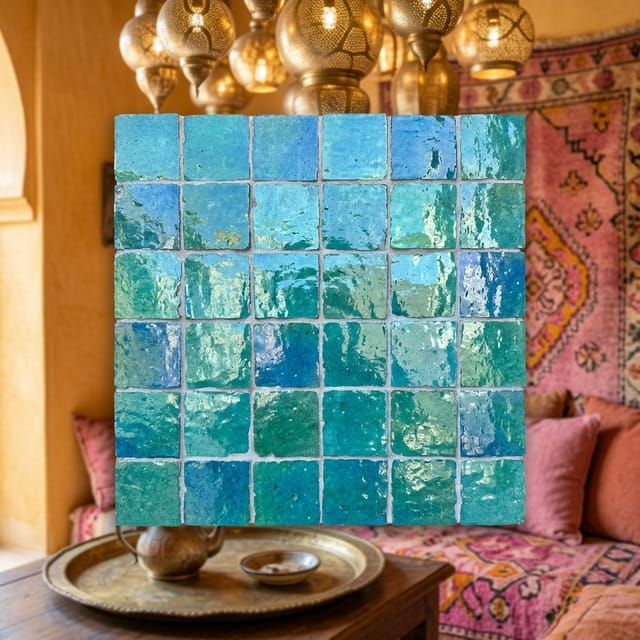
- Zellige tilework in geometric patterns, especially in blues and greens
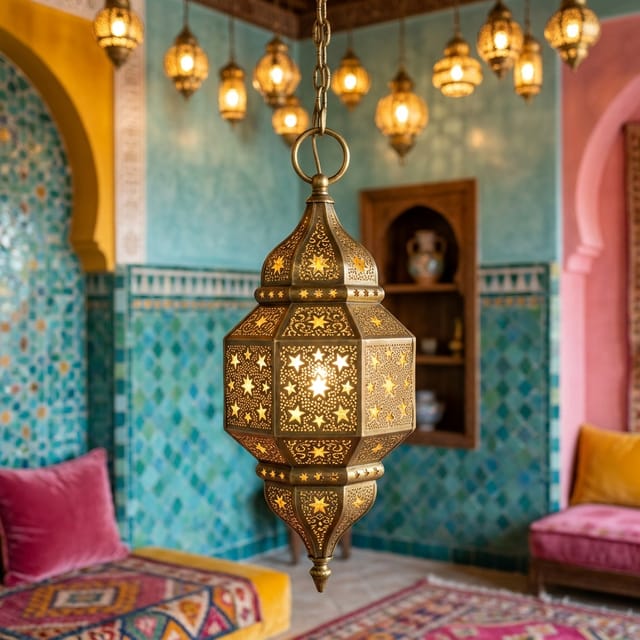
- Pierced brass lanterns casting patterned light across walls and ceilings
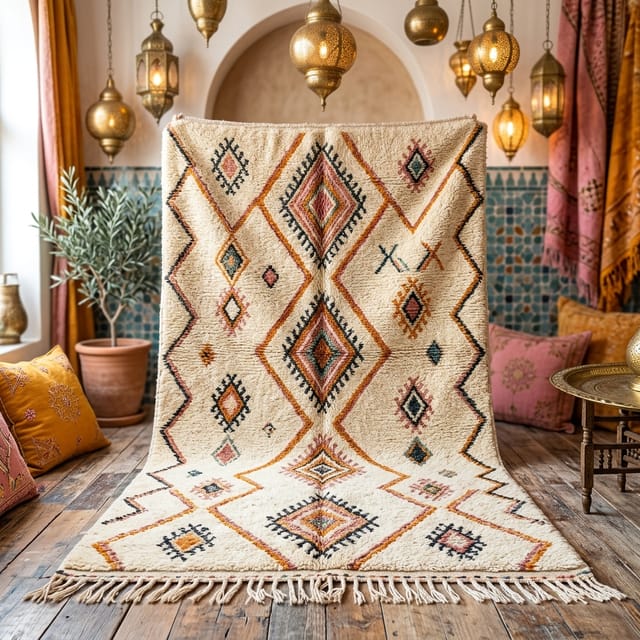
- Layered textiles: Berber rugs, embroidered cushions, woven blankets
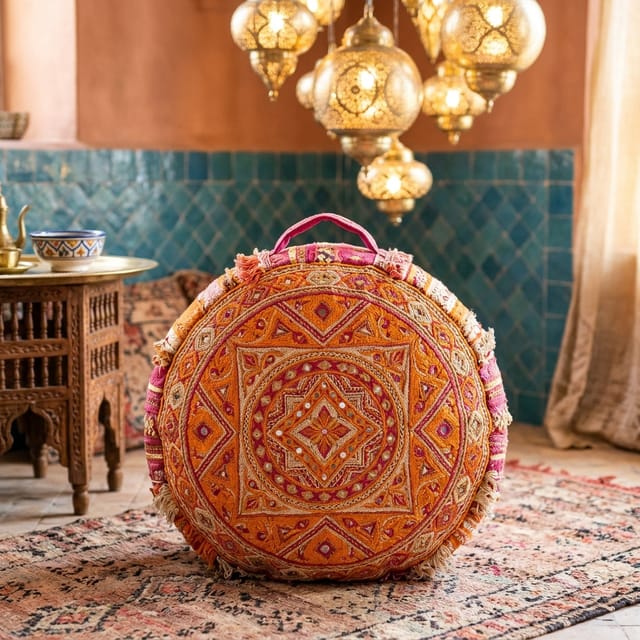
- Low seating areas with floor cushions and poufs creating intimate zones
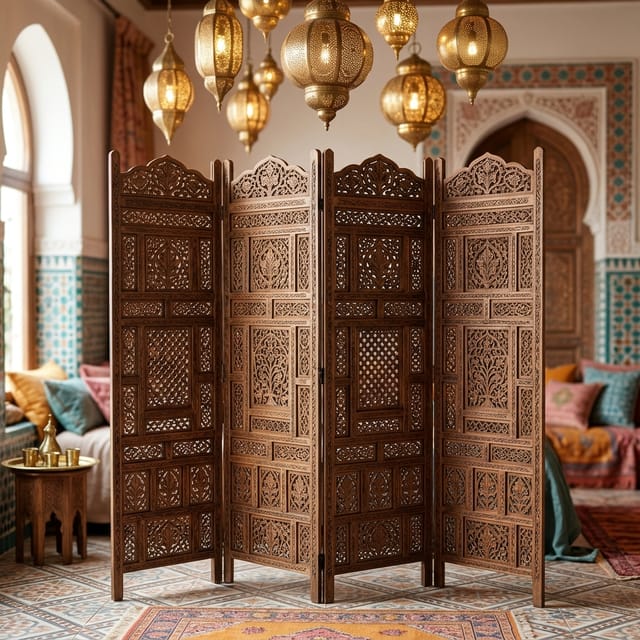
- Carved wood screens and arches that divide space without closing it off
- Jewel-tone palette of saffron, rose, emerald, and sapphire against warm neutrals
Anatomy of the look
Color & Paint
Zahra's walls wear a warm, sandy neutral that lets her jewel tones pop without competition—think the color of clay architecture under North African sun. The zellige blue-green appears as an accent wall or backsplash, its geometric precision grounding the room's exuberance. Saffron and rose pulse through textiles and accessories like spices in a souk, while brass adds its golden warmth to every light source, creating an envelope of amber glow after dark.
Walls & Pattern
Pattern in Zahra's world follows Islamic geometric principles: repetition, symmetry, and the idea that decoration is a form of devotion. One wall might feature actual zellige tile or a convincing peel-and-stick version, while others get texture through carved wood panels, woven wall hangings, or the projected shadows of pierced lanterns. The key is controlled repetition—the same star pattern echoing from tile to metalwork to textile, creating visual harmony within abundance.
Furniture & Shapes
Zahra sits low and invites you to slow down. Seating clusters on the floor or just above it: daybeds with carved legs, upholstered ottomans, cushion piles that can be rearranged for dinner parties or solo lounging. Furniture pieces have curved silhouettes and decorative carving, often in dark wood that contrasts beautifully with bright textiles. In a studio, a carved screen becomes essential architecture, dividing sleeping from living space while maintaining visual flow through its intricate cutouts.
Textiles
This is where Zahra becomes truly maximal: rugs layer over rugs, cushions pile three deep, throws drape over every surface. Berber rugs with their abstract geometry anchor seating areas, while smaller kilims can climb walls. Embroidered cushions in saffron and rose silk mix with woven wool in earthy stripes. The trick is varying scale and technique—pair a large-pattern rug with small-scale embroidery, mix shaggy Beni Ourain with flat-weave kilim—so the eye has a journey through texture.
Lighting
Zahra's lighting is her magic hour, transforming the studio into a lantern-lit caravan at dusk. Pierced brass lanterns hang at varying heights, casting geometric shadows that animate walls and ceilings like living zellige. Table lamps with colored glass or brass filigree add pools of amber and ruby light. The goal is multiple light sources at different levels, all warm-toned, creating an environment that glows rather than glares—light as decoration, not just function.
Collections & Accessories
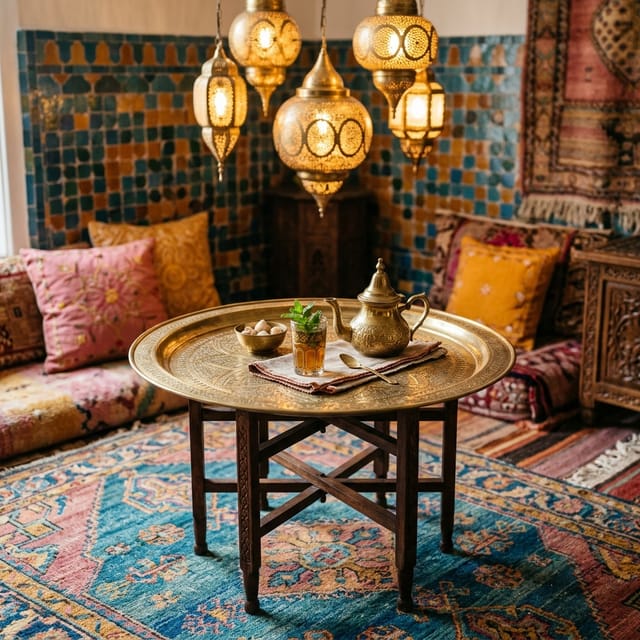
Zahra's accessories follow the caravan principle: each piece looks traveled, collected, significant. Brass trays become side tables and serving pieces. Ceramic tagines and painted plates mount on walls as art. Vintage tea glasses in jewel colors cluster on shelves. The unifying thread is handcraft and metal—lots of brass, copper, and silver—displayed in grouped arrangements rather than scattered randomly. A collection of three brass vessels says more than one lonely piece.
Plants & Flowers
Plants in Zahra's world evoke the riad courtyard: lush, architectural, slightly exotic. Think palms, fiddle leaf figs, or bird of paradise in hammered brass or ceramic planters. Fresh flowers appear in jewel tones—coral roses, fuchsia ranunculus—arranged simply in brass vessels or colored glass. Dried elements work too: pampas grass, palm fronds, eucalyptus bundles hung to dry. The greenery provides organic contrast to all that geometry, softening edges while maintaining the room's dramatic color story.
The recipe
The Zahra Formula
- 160% warm neutral base (sandy walls, natural wood) to let jewel tones sing
- 225% one signature jewel tone (zellige blue-green or saffron) as your anchor color
- 310% contrasting jewel accent (rose or emerald) in smaller doses
- 45% metallic (brass everywhere) to unify and add warmth
Paint picks
Caravan Sand #D4B5A0
Main walls—a warm, clay-like neutral that references Moroccan architecture and makes jewel tones pop
Zellige #1F5E73
Accent wall or backsplash—the cool, tiled blue-green that grounds the palette and adds depth
Saffron Market #E0A12E
Doors, window frames, or furniture accents—warm gold that bridges neutrals and jewel tones
Rose Souk #C0566E
Inside of shelves, back of niches, or one dramatic ceiling—the unexpected jewel that makes the room bloom
Room by room
Living Room
Create distinct zones with rugs and low seating clusters—one area for lounging with floor cushions, another for a brass tray coffee table setup. Hang lanterns at varying heights to define the space vertically and use a carved screen to suggest separate areas without blocking light or making the room feel smaller.
Bedroom
Layer your bed with embroidered textiles in saffron and rose, and hang a statement lantern as a bedside pendant instead of table lamps to save surface space. Use a carved wood headboard or create a faux one with a large textile wall hanging, and tuck a small brass tray table beside the bed for jewelry and late-night mint tea.
Kitchen & Dining
Install zellige tile as a backsplash or use peel-and-stick versions for instant Moroccan drama, then display everyday dishes—tagines, painted plates, brass tea service—as open-shelf decor. Create an intimate dining zone with floor cushions around a low brass tray table, or drape a standard table with a richly patterned cloth and surround it with upholstered poufs instead of chairs.
Bathroom
Go bold with zellige-pattern tile or waterproof wallpaper, add a pierced brass pendant for atmospheric lighting, and display rolled towels in a brass basket. Incorporate rose and saffron through plush towels, a patterned shower curtain, and small brass accessories like soap dishes and tissue holders—the bathroom is where you can be most maximal since it's a contained space.
Small Spaces & Rentals
Zahra proves studios can hold worlds: use removable zellige decals, lean carved screens instead of installing them, and build your layers through textiles that can move with you. Focus your maximalism vertically with hanging lanterns and wall textiles, keep furniture low to maintain sight lines, and remember that in Moroccan design, pattern creates richness, not clutter—so don't be afraid to go bold even in tight quarters.
Get it on any budget
Under $200
Under $500
Renter-friendly
- Use peel-and-stick zellige tile on one wall or in the kitchen backsplash—it creates huge impact and removes cleanly when you move, taking Zahra's signature element with you to your next space
- Lean a carved wood screen against the wall instead of installing room dividers, and drape it with textiles or fairy lights to make it feel intentional—it divides space beautifully and moves easily
- Build your layers through textiles: rugs over rental carpet, floor cushions instead of a sofa you'd have to move, throws and pillows that pack flat—Moroccan maximalism is naturally portable since it's about textiles and accessories, not built-ins
- Install battery-operated or plug-in pendant lanterns using removable ceiling hooks instead of hardwiring—you get all the atmospheric lighting without electrical work, and can take your lantern collection to your next home
Easy to avoid
- Choosing all large-scale patterns—Zahra works because she mixes sizes, from tiny zellige geometry to bold rug motifs. Vary your pattern scales so the eye has places to rest and each design can be appreciated.
- Skipping the warm neutral base—jumping straight to all jewel tones makes a studio feel chaotic, not cozy. Those sandy, clay-colored walls are essential for making the colors pop and creating a sense of calm abundance rather than overwhelming clutter.
- Using only overhead lighting—Moroccan magic happens at lamp level. Multiple low light sources (lanterns, table lamps, floor lamps) create the warm, layered glow that makes Zahra feel like a jewel box instead of just a well-lit room.
- Arranging furniture against walls in a studio—this actually makes small spaces feel smaller. Float your seating areas on rugs, use screens to create zones, and embrace low furniture that maintains sight lines while defining distinct areas for living, sleeping, and dining.
FAQ
How do I do Moroccan maximalism in a studio without it feeling cluttered?
The secret is controlled repetition and low furniture. Zahra feels spacious because she sits low (floor cushions, low daybeds) which maintains vertical space and sight lines. Choose one or two pattern families (geometric zellige, abstract Berber) and repeat them across textiles, tiles, and accessories—this creates richness through rhythm, not chaos. Zone your studio with rugs and screens rather than walls, and keep your color palette focused on your jewel tones plus warm neutrals.
Can I mix Moroccan style with my existing modern furniture?
Absolutely—Moroccan maximalism actually loves this tension. Keep your modern sofa or bed frame and layer it with embroidered cushions, throws, and a vintage rug underneath. Add brass lanterns, carved wood accessories, and zellige tile in one area (backsplash, accent wall) to create the Moroccan mood without replacing everything. The key is adding the layers—textiles, metalwork, pattern—that create the aesthetic, not necessarily buying all new furniture.
What's the difference between Moroccan and general boho maximalism?
Moroccan maximalism follows stricter geometric rules rooted in Islamic design—think precise zellige patterns, symmetrical arrangements, and lots of brass metalwork. Boho maximalism is more eclectic and organic, mixing global influences freely with plants and vintage finds. Zahra has structure: her patterns repeat, her colors follow a jewel-tone palette, her metals are consistently brass. Boho would mix metals, embrace asymmetry, and throw in some macramé—both are maximal, but Moroccan has more architectural discipline.
How much should I spend on a Moroccan rug?
Start with what you can afford—even a $100 flatweave kilim or new Berber-style rug creates the foundation for layering. Vintage Berber rugs run $300-800 for good quality, while antique pieces can reach thousands. The beauty of Moroccan style is that you can layer: start with an affordable larger neutral rug, then add a smaller vintage piece on top as you find it. Zahra's look is about the layering itself, not necessarily expensive individual pieces.
Where should I start if I want to create this look?
Begin with lighting—one or two pierced brass lanterns transform the mood immediately and work in any room. Then add textiles: a rug, some embroidered cushions, a throw in your jewel tones. These two moves (lanterns + textiles) create 80% of Zahra's magic and are totally reversible. Once you have the vibe, add your zellige moment (real tile, peel-and-stick, or even a stenciled accent) and some brass accessories. You're building a world layer by layer, which is exactly how Moroccan spaces have always been created.
Some links may earn MAX by Design a small commission at no cost to you.