The Style Guide · Western Maximalism
Ranch Maximalist Decor: How to Get Wyatt's Warm Western Look
Wyatt proves that Western style isn't about minimalism—it's about layering every blanket, story, and well-worn treasure until your room feels like the kind of place where nobody leaves early.
What is Ranch Maximalist?
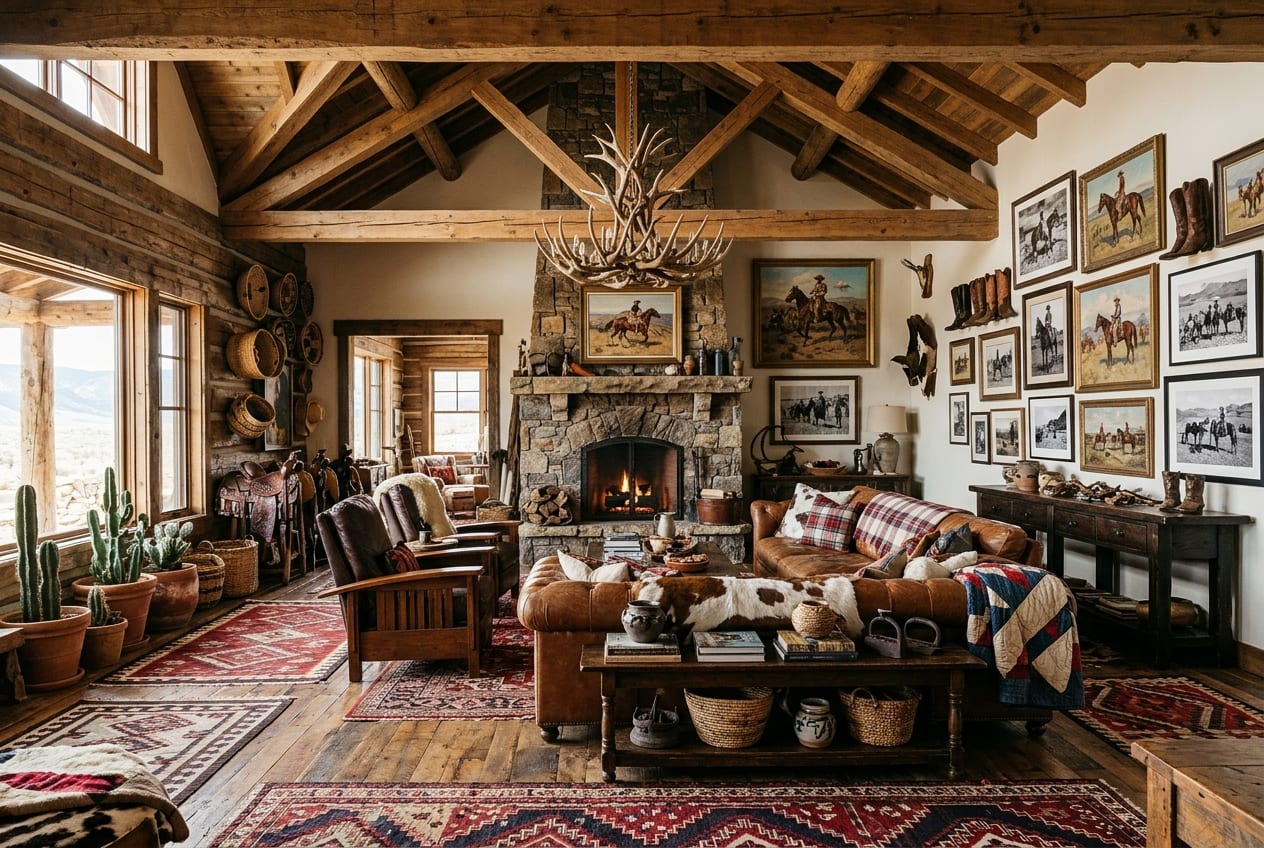
Ranch Maximalist is cowboy-core abundance: layers of worn leather, stacked Navajo blankets, timber beams hung with everything from lassos to lanterns, and enough seating for the whole bunkhouse. It's Western style that rejects the sparse, gallery-like approach to ranch decor and instead embraces the collected, lived-in reality of homes where gear becomes art and every surface tells a story. Think less catalog cowboy, more fourth-generation ranch house where beauty comes from use and nothing matches because it all works.
This look draws from real working ranch interiors, Southwestern trading post aesthetics, and the maximalist tradition of displaying what you love and use. It pulls from Native American textile traditions, Mexican ranch culture, and the practical beauty of Western gear—saddles, ropes, hats, boots—that's too good-looking to hide away. The style honors the original maximalists of the American West: people who layered pattern on pattern because warmth and beauty weren't mutually exclusive, and who understood that a room should work as hard as you do.
Ranch Maximalist resonates now because it offers warmth and authenticity in a world of beige minimalism. It's maximalism with purpose—every layer has a job, whether it's keeping you warm, holding your coffee, or reminding you of a place you love. People are drawn to its unapologetic coziness, its celebration of craft and heritage, and the way it makes a room feel immediately welcoming. In Wyatt's world, more is more, but only if it means more comfort, more story, and more reasons to stay.
The signatures
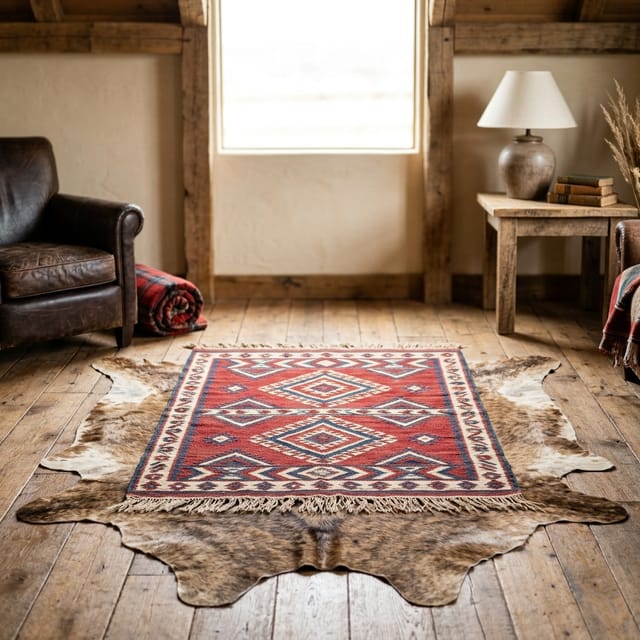
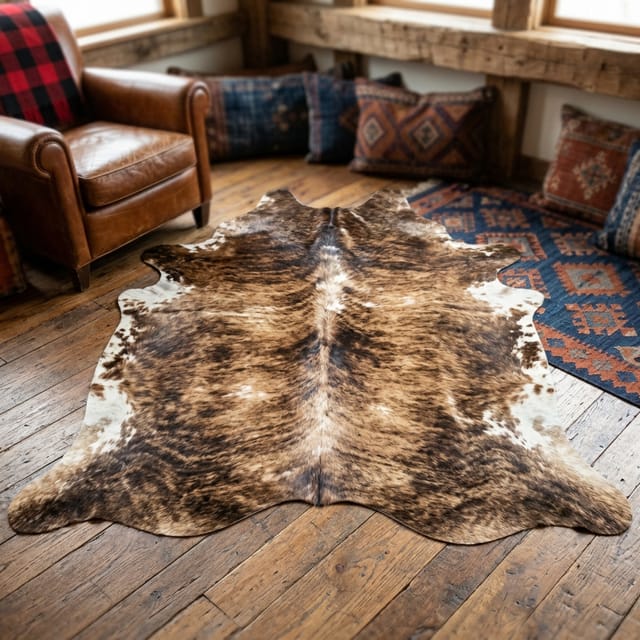
- Layered vintage kilims and cowhides, often three deep
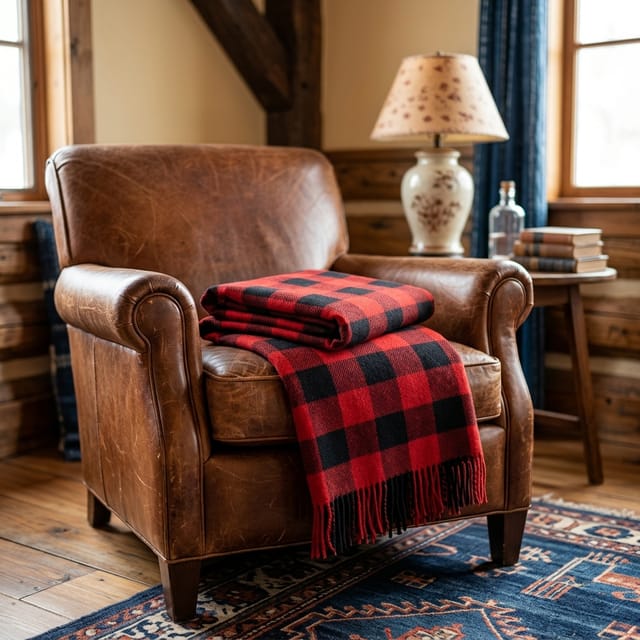
- Saddle leather in every form—chairs, ottomans, straps, and patina
- Red plaid and indigo textiles stacked like a trading post
- Exposed timber beams hung with collections and gear
- Western artifacts displayed as art—hats, ropes, spurs, maps
- Warm, layered lighting from lanterns, sconces, and firelight
Anatomy of the look
Color & Paint
Wyatt's walls wear Prairie Cream, a warm off-white that mimics canvas tents and open sky, letting the saturated colors of textiles and leather take center stage. Trim and architectural details often appear in deeper Saddle Leather tones, grounding the room. The color story builds through layers rather than paint—Ranch Red and Indigo Blanket arrive via textiles, art, and collections, creating a palette that feels earned rather than designed.
Walls & Pattern
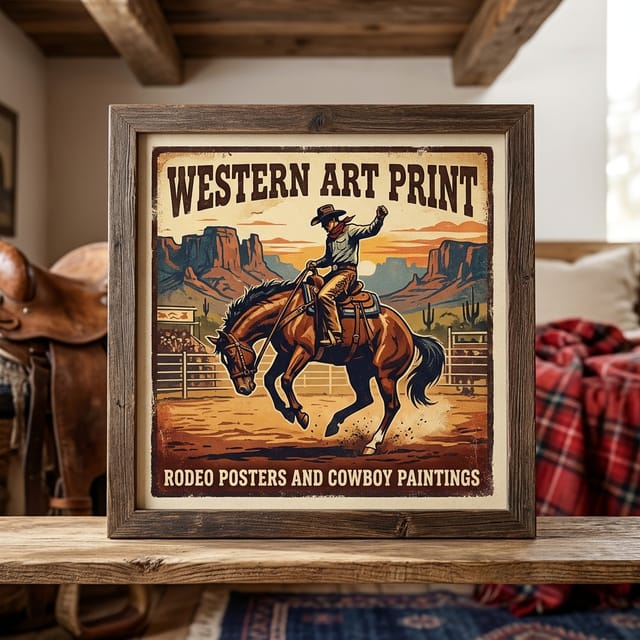
Pattern lives on the walls through collected Western art, vintage rodeo posters, framed bandanas, and Navajo weavings hung like tapestries. Wyatt layers these salon-style, creating a gallery of Western life that mixes high and low, vintage and new. Wood paneling or shiplap often appears on one accent wall, adding texture and warmth. The walls become a backdrop for storytelling, with every piece adding to the narrative of place and heritage.
Furniture & Shapes
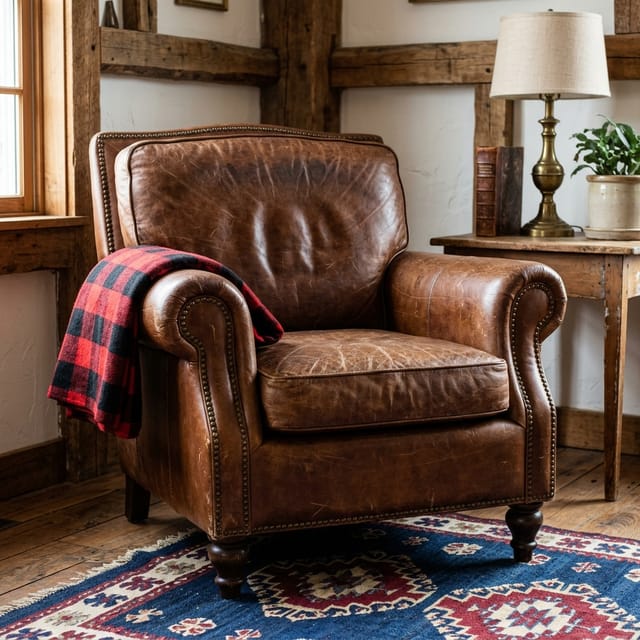
The furniture is sturdy, lived-in, and unapologetically masculine—leather club chairs with brass tacks, wooden benches that could seat six, and tables made from reclaimed barn wood or live edge timber. Wyatt mixes periods and provenances: a Victorian leather sofa next to a Southwestern pine cabinet, a mid-century rocker draped with a Pendleton blanket. Every piece looks like it could tell you where it's been, and the overall effect is collected rather than matched, with comfort and durability as the guiding principles.
Textiles
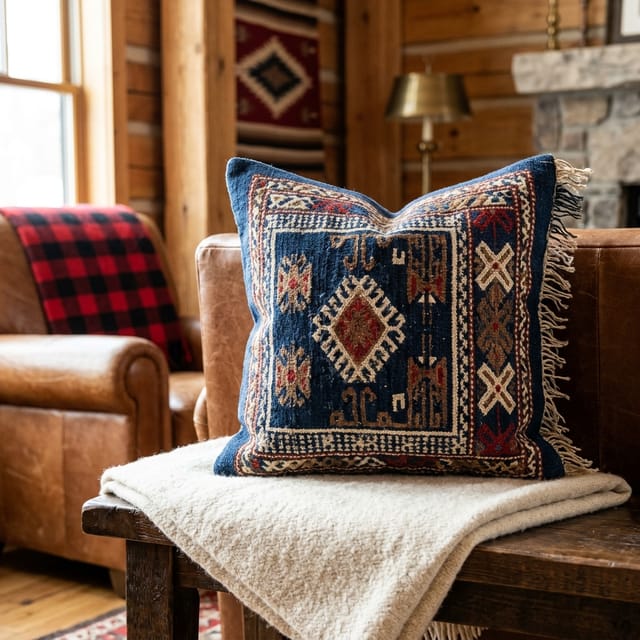
This is where Ranch Maximalist truly maximizes—textiles layer three, four, five deep. Vintage kilims overlap with cowhides, wool plaid throws drape over indigo blankets, and Navajo-inspired pillows pile on leather sofas. Wyatt treats textiles like insulation and art, stacking patterns and textures until the room feels warm enough for a blizzard. Red plaid and indigo dominate, but earth tones, cream, and rust weave through, creating a collected-over-time feel. Every textile has weight and presence—these aren't delicate fabrics, they're meant to be used.
Lighting
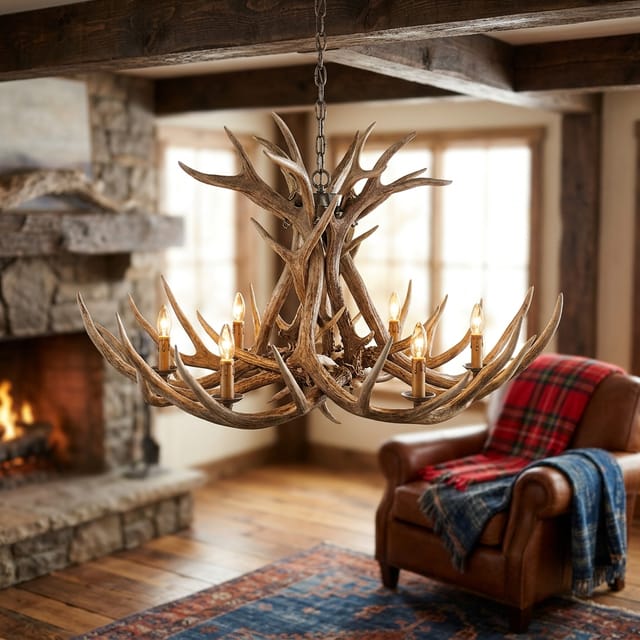
Wyatt's lighting is warm, layered, and often salvaged—antler chandeliers, wrought iron sconces, vintage lanterns, and Edison bulb fixtures that cast a golden glow. The goal is firelight quality even when there's no fire, with multiple low-level sources creating pools of warmth throughout the room. Table lamps wear burlap or rawhide shades, and task lighting comes from adjustable brass or iron fixtures. Dimmer switches are essential—this room should never feel bright and clinical, only warm and welcoming.
Collections & Accessories
Western gear becomes art in Wyatt's world—vintage hats hang on pegs, lassos loop over hooks, spurs and belt buckles fill shadow boxes, and old maps mark territories explored. Collections group by type and story: a wall of framed ranch brands, a shelf of leather-bound books about the West, a corner dedicated to rodeo memorabilia. Nothing is precious or untouchable—these are working objects that happen to be beautiful. Brass, leather, and wood dominate the material palette, and every collection invites closer inspection.
Plants & Flowers
Wyatt's greenery is low-maintenance and Western-appropriate—cacti and succulents in terracotta pots, dried grasses in vintage crocks, and branches of sage or juniper in leather-wrapped vases. Fresh flowers, when they appear, are wildflower-style arrangements in mason jars or enamelware pitchers, nothing fussy or formal. The plant life reinforces the connection to landscape and place, bringing the high desert or prairie indoors without trying too hard. Think practical beauty: plants that could survive on a ranch.
The recipe
The Wyatt Formula
- 160% warm neutrals (cream walls, saddle leather, natural wood) as your foundation
- 230% saturated pattern (red plaid, indigo kilims, Navajo prints) layered thick
- 310% Western artifacts and collections displayed as functional art
- 4Layer textiles until you lose count—if you can see the sofa, add another blanket
Paint picks
Prairie Cream #F2E8D5
Main wall color—warm, soft, and perfect for showcasing collections and textiles
Saddle Leather #7A4A24
Trim, doors, or accent wall to ground the room in rich, earthy warmth
Ranch Red #A4282C
An accent wall in a dining nook or behind shelving—use sparingly for punch
Indigo Blanket #2E3A5F
Interior of a bookcase or back of open shelving to make collections pop
Room by room
Living Room
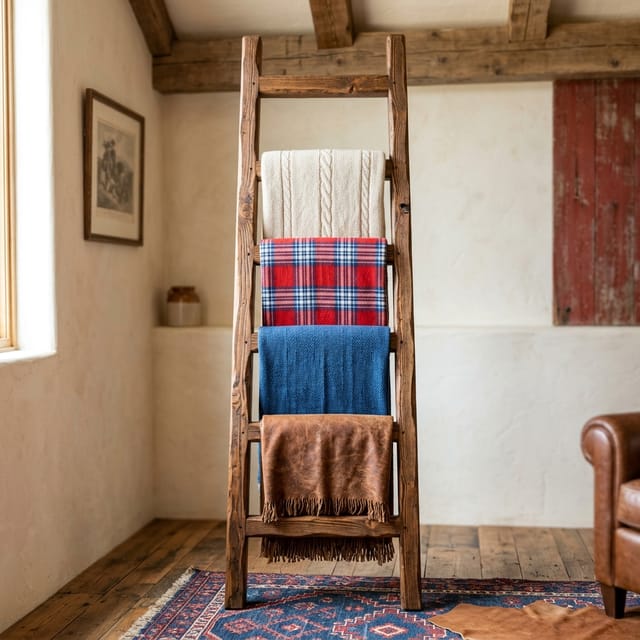
This is Wyatt's natural habitat—layer a cowhide over a vintage kilim, pile the sofa with plaid and indigo throws, hang Western art salon-style, and add a blanket ladder in the corner. Install dimmer switches and light the room like a campfire: warm, low, and layered.
Bedroom
Stack the bed with wool blankets and kilim pillows, hang a collection of vintage hats above the headboard, and add a leather bench at the foot. Use warm wood furniture and keep lighting soft—bedside lantern-style lamps with Edison bulbs create the right mood.
Kitchen & Dining
Bring in open shelving to display enamelware and vintage crockery, add a reclaimed wood dining table with mismatched chairs, and hang a wrought iron chandelier overhead. Layer the table with woven placemats and cloth napkins in plaid or indigo, and keep a collection of vintage coffee tins or canisters visible.
Bathroom
Even the smallest bathroom can go Ranch Maximalist with a Navajo-print shower curtain, leather and brass hardware, vintage Western soap labels framed on the walls, and a cowhide bath mat. Swap builder-grade fixtures for oil-rubbed bronze and add a wooden ladder for towel storage.
Small Spaces & Rentals
Focus on textiles and collections rather than furniture—a single vintage kilim, a stack of wool blankets, and a gallery wall of Western art can transform a rental. Use removable hooks for hanging hats and gear, and layer rugs to hide flooring you can't change.
Get it on any budget
Under $200
Under $500
Renter-friendly
- Layer rugs—cowhide over kilim over jute—to cover rental flooring without damage, and take them all with you when you leave
- Use picture ledges or leaning art instead of hanging heavy pieces, and create a salon wall with removable adhesive hooks
- Bring in furniture with character (leather chairs, reclaimed wood tables) to distract from builder-grade cabinets and fixtures
- Add warmth through textiles and lighting rather than permanent changes—a room full of wool blankets and warm bulbs feels completely different without touching the walls
Easy to avoid
- Going too themed or costume-y—Wyatt collects real things with real stories, not kitschy cowboy decor from a party store
- Skipping the layers—one kilim and one throw isn't Ranch Maximalist, it's ranch minimalist. Keep stacking until it feels abundant.
- Choosing matchy-matchy sets—this style is about collected-over-time, so mix eras, provenances, and patterns freely
- Forgetting comfort in favor of look—every piece should be something you'd actually use, sit on, or wrap yourself in on a cold night
FAQ
How do I mix patterns in Ranch Maximalist style without it looking chaotic?
Stick to a consistent color story—red, indigo, cream, and brown—and vary the scale of patterns. Pair a large-scale kilim with smaller plaid throws and geometric Navajo prints. The shared palette and Western provenance will tie everything together, even when patterns are bold and varied.
Where can I find authentic Western pieces on a budget?
Scour estate sales, thrift stores, and online marketplaces for vintage kilims, wool blankets, and Western gear. Look for damaged pieces you can repurpose—a worn saddle becomes wall art, a frayed blanket becomes pillow covers. Reproduction textiles and prints can fill in the gaps while you collect the real thing over time.
Can Ranch Maximalist work in a modern home?
Absolutely—the contrast between modern architecture and collected Western pieces creates tension in the best way. Let the modern bones stay clean and simple, then layer in all the warmth and texture through furniture, textiles, and collections. The juxtaposition makes both elements more interesting.
How do I avoid cultural appropriation with Native American-inspired textiles?
Seek out authentic pieces made by Native artists when possible, and educate yourself about the origins and significance of patterns you're drawn to. Avoid sacred symbols and ceremonial designs. Buy vintage when you can, support Native-owned businesses, and treat these textiles as the art they are—with respect and proper attribution.
What if my space doesn't have timber beams or architectural character?
Bring in the architecture through furniture and accessories—a large reclaimed wood beam as a mantel, exposed wood shelving, or a timber-frame mirror. Focus on creating warmth through layers of texture and lighting rather than trying to fake structural elements. Wyatt's character comes from what fills the room, not just the room itself.
Some links may earn MAX by Design a small commission at no cost to you.