The Style Guide · Chinoiserie
Chinoiserie Dining Room: How to Get Wren's Elegant Aviary Look
Wren believes dinner is a performance, and her chinoiserie dining room proves that elegance and curiosity make the most memorable meals.
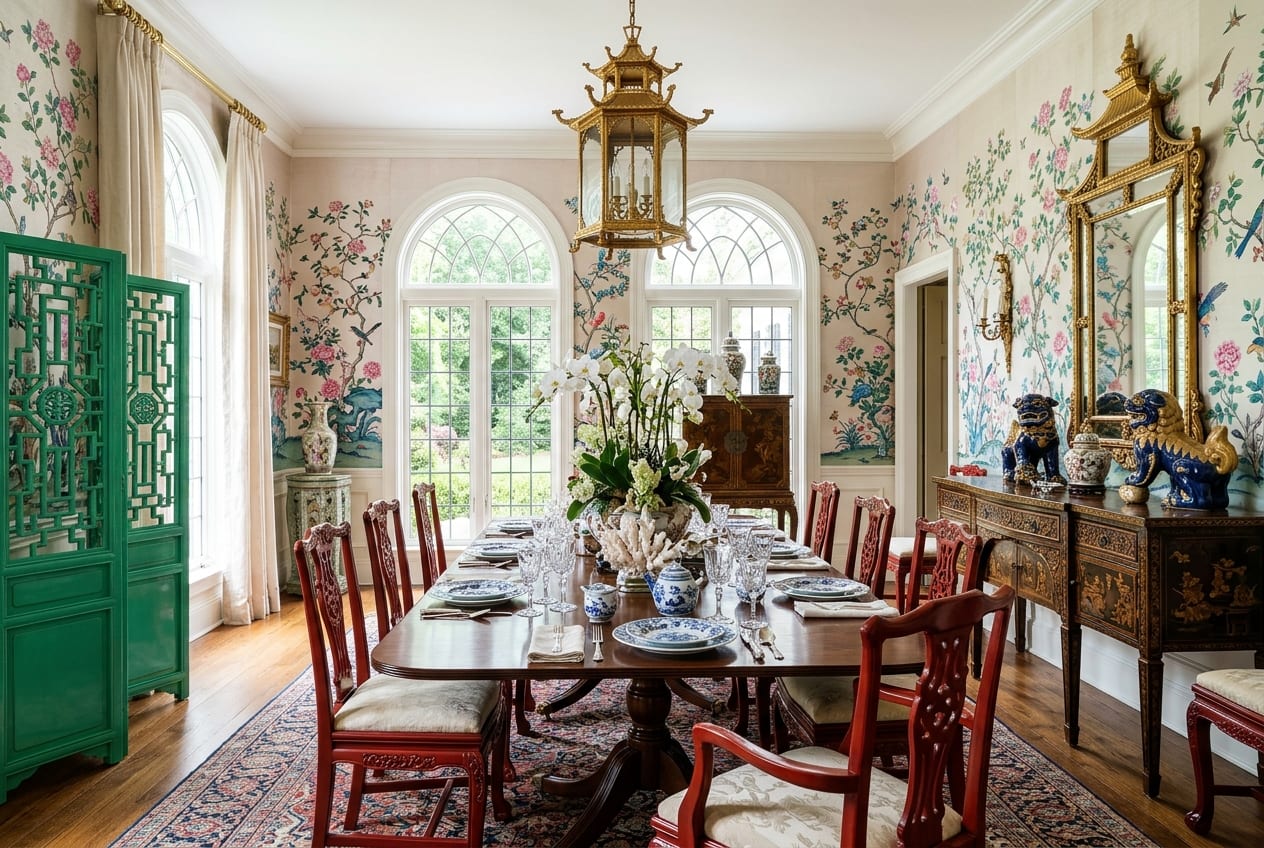
What is Chinoiserie Dining Room Maximalism?
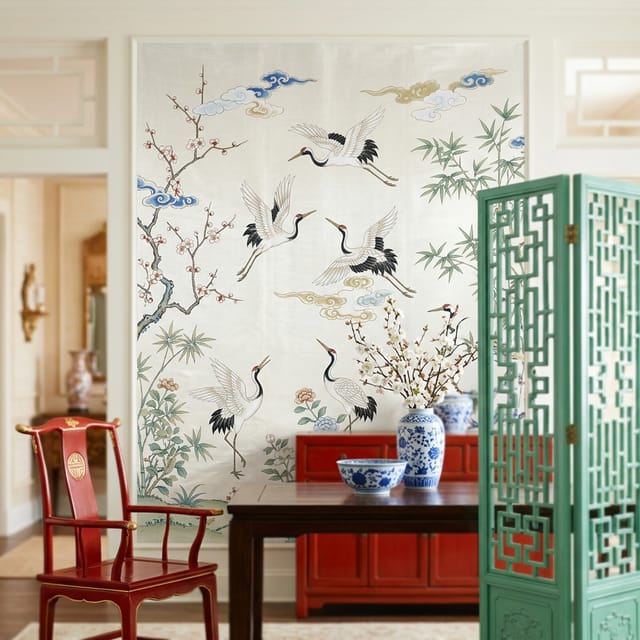
Chinoiserie dining room maximalism is where East meets West over the dinner table, layering hand-painted birds, lacquer-red seating, and fretwork screens into a space that feels like dining inside a jewel box. This isn't minimalist Asian-inspired design; it's the full theatrical production, where blue-and-white porcelain shares the stage with pagoda lanterns and every surface tells a story. The room hums with pattern and color while maintaining an air of refined elegance that makes guests sit a little straighter.
Chinoiserie emerged in 17th-century Europe when trade routes opened and Western designers became obsessed with interpreting Chinese and East Asian aesthetics through their own romantic lens. What resulted wasn't authenticity but fantasy: hand-painted wallpapers depicting imagined gardens, furniture with faux-bamboo legs, and decorative motifs borrowed and reimagined. By the 18th century, chinoiserie dining rooms became status symbols, places where the wealthy could showcase exotic treasures and create conversation around the unfamiliar. The style fell in and out of favor but never disappeared, always lurking in estate sales and grandmother's china cabinets.
Today's chinoiserie maximalism appeals to people who want their dining rooms to do more than function, they want them to transport. It's for hosts who believe setting the table is an art form, who'd rather have one spectacular room than five beige ones, and who understand that dinner parties are better when the walls give you something to talk about. This style says you value craft, history, and a touch of drama. It's also delightfully adaptable, working in formal dining rooms and tiny breakfast nooks alike, as long as you commit to the fantasy.
The signatures
- Hand-painted birds on wallpaper or silk panels, mid-flight or perched
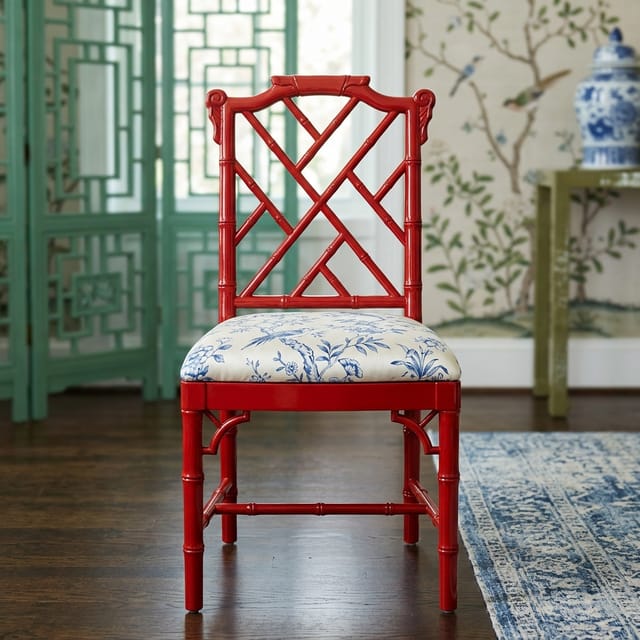
- Lacquer-red or black dining chairs with ornate backs
- Blue-and-white porcelain displayed and used, never hidden
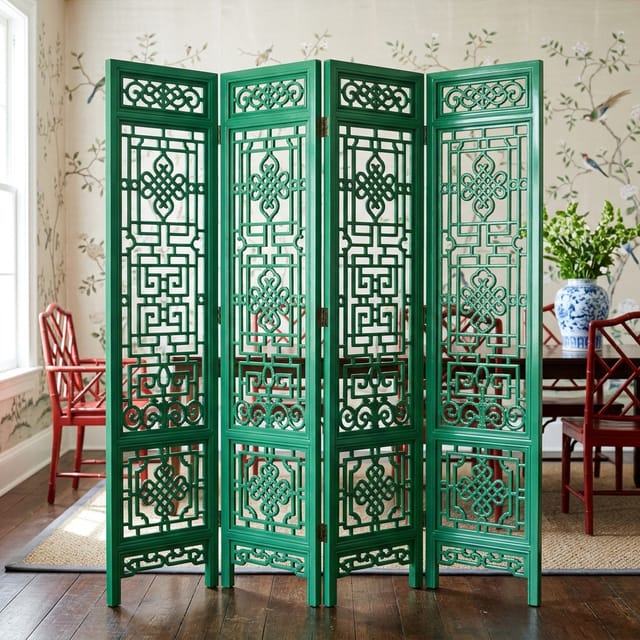
- Fretwork screens or lattice details that create layers
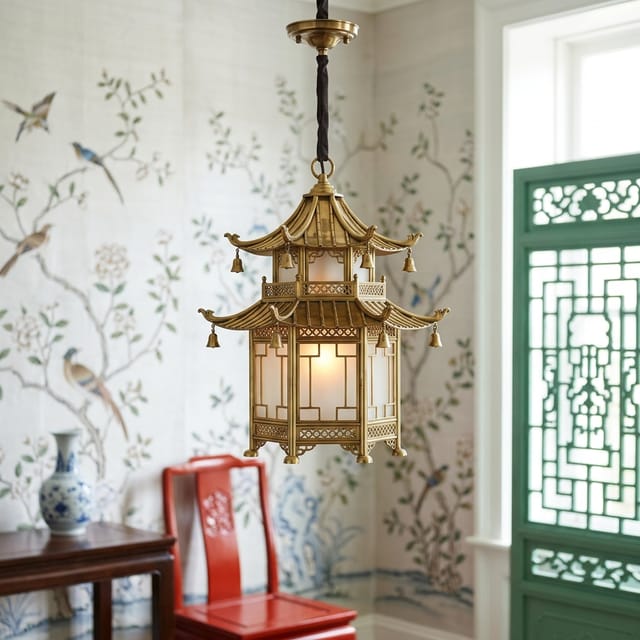
- Pagoda or lantern-style lighting that casts patterned shadows
- Jade green, coral, or gold accents that pop against neutrals
Anatomy of the look
Color & Paint
Wren's palette starts with a pale silk ground that lets everything else sing—think cream, ivory, or the softest blush. Lacquer red appears in deliberate doses (chairs, a cabinet interior, lacquer trays) for drama without dominance. Jade green and deep blue-and-white provide the supporting cast, grounding the airiness with jewel-toned weight.
Walls & Pattern
This is where chinoiserie dining rooms make their boldest statement: hand-painted or printed wallpaper depicting birds, branches, and botanicals. Wren prefers designs on pale grounds where delicate brushwork shines, but darker grounds work for moodier interpretations. If wallpaper feels too permanent, consider large-scale panels or framed silk textiles that deliver the same visual impact.
Furniture & Shapes
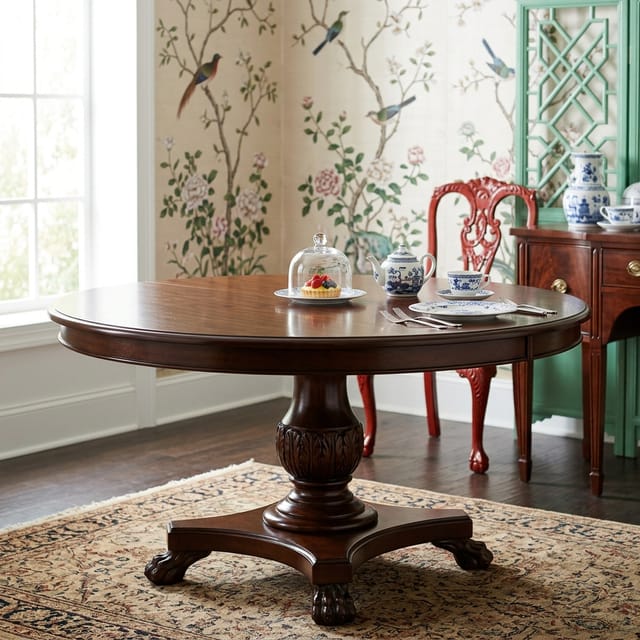
Dining chairs in lacquer red or black with Chippendale or bamboo-style backs anchor the look—they're sculptural even when no one's sitting. The dining table itself can be simpler (a pedestal base, a parsons style) to let the chairs and settings shine. Add a sideboard or console in black lacquer or distressed wood for serving and display.
Textiles
Keep table linens relatively simple so they don't compete with the walls and porcelain—ivory linen, pale blue, or even lacquer red if the chairs are a different color. Introduce pattern through embroidered napkins, a silk table runner with Asian motifs, or chair cushions in coordinating prints. Window treatments should puddle: silk curtains in cream or a complementary color add softness without fighting for attention.
Lighting
A pagoda-style chandelier or lantern pendant is the crown jewel, casting architectural shadows and reinforcing the theme. Choose one with fretwork or lattice details for maximum effect. Add accent lighting—picture lights on wall panels, a lamp on the sideboard with a porcelain base—to create layers and highlight your collections after dark.
Collections & Accessories
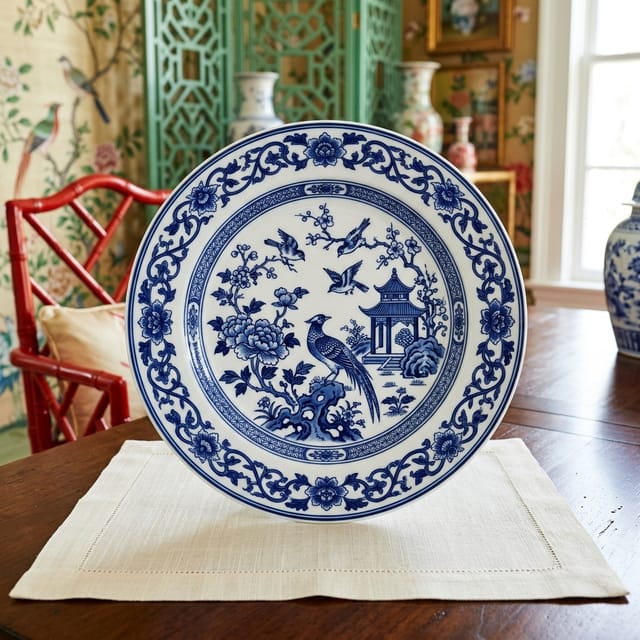
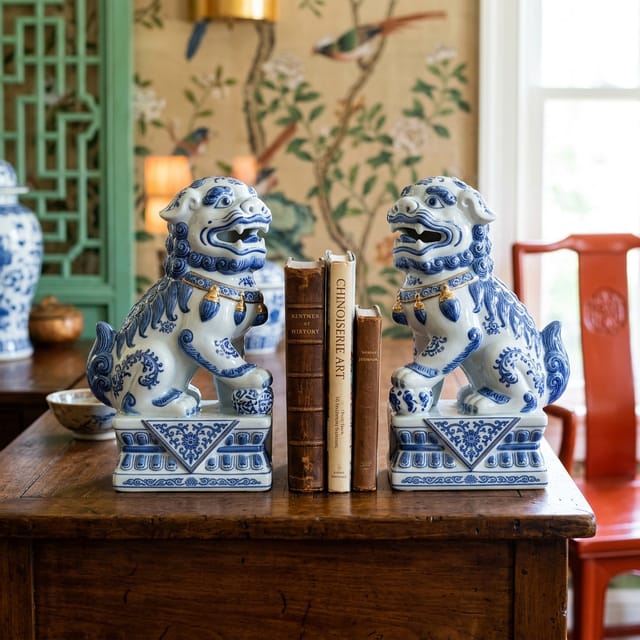
Blue-and-white porcelain is non-negotiable: ginger jars on the sideboard, plates on the wall or in use, bowls filled with lemons. Foo dogs, decorative boxes, lacquer trays, and small sculptures add layers. The key is abundance without clutter—group items in odd numbers, vary heights, and leave some breathing room so each piece can be appreciated.
Plants & Flowers
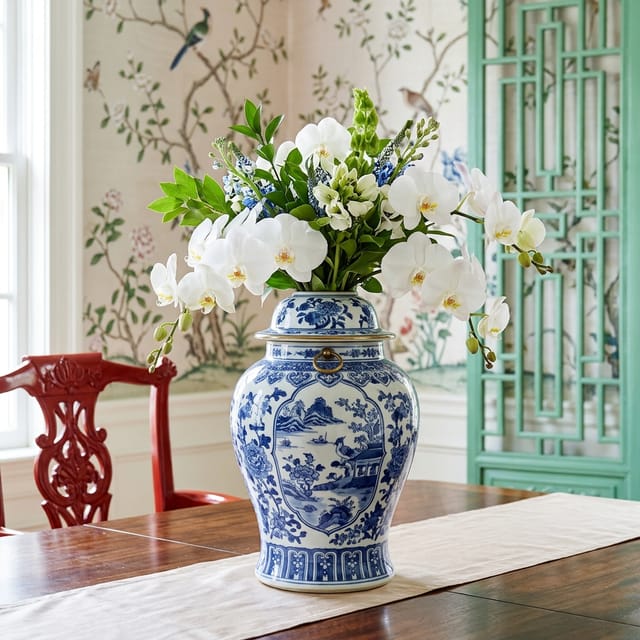
Fresh flowers in ginger jars or porcelain vases are essential—peonies, cherry blossoms, or simple white blooms that echo the painted botanicals. A potted orchid on the sideboard or a small bonsai adds living greenery without overwhelming. Avoid overly wild or rustic arrangements; keep the shapes elegant and the palette restrained.
The recipe
The Wren Formula
- 160% pale silk ground (walls, table linens, curtains) to keep it airy
- 220% lacquer red or black in furniture for sculptural drama
- 315% blue-and-white porcelain throughout—displayed and in use
- 45% jade green or gold accents to add unexpected richness
Paint picks
Silk Ground #F1EADB
Walls, ceiling, or as a base for panels—the canvas where birds fly
Lacquer Red #9E1B22
Chair frames, cabinet interiors, or a dramatic accent wall behind a sideboard
Jade #1F7A4D
Trim, a fretwork screen, or the back of built-in shelving
Blue-and-White #2B4C8C
Not for walls, but for selecting porcelain and textile accents that unify the palette
Room by room
Living Room
Translate Wren's approach with a chinoiserie wallpaper accent wall behind the sofa, a pair of lacquer-red side chairs, and a coffee table styled with stacked books and a ginger jar. Let blue-and-white porcelain lamps flank the seating area for symmetry.
Bedroom
Use hand-painted bird panels as a headboard or frame them above the bed, then bring in lacquer-red nightstands and jade-green bedding. A pagoda-style table lamp and silk curtains complete the cocoon.
Kitchen & Dining
If your kitchen opens to the dining room, carry the palette through with blue-and-white canisters, a red lacquer stool, or chinoiserie wallpaper in a breakfast nook. Even a single ginger jar on the counter creates continuity.
Bathroom
A powder room is perfect for full chinoiserie wallpaper since it's a small, enclosed space. Add a lacquer-red vanity, blue-and-white soap dishes, and a pagoda mirror for a jewel-box effect.
Small Spaces & Rentals
Use removable wallpaper on one wall, invest in a pair of lacquer-red chairs that can move between rooms, and build your blue-and-white collection slowly. A fretwork screen divides space and adds drama without nails.
Get it on any budget
Under $200
Under $500
Renter-friendly
- Use removable wallpaper or large framed silk panels that lean against walls instead of permanent wallpaper
- Invest in statement chairs and a fretwork screen that move with you—they define the style without touching walls
- Build your blue-and-white porcelain collection on open shelving or a sideboard you already own
- Hang curtains from tension rods and layer rugs to add softness without damaging floors
Easy to avoid
- Matching everything too perfectly—chinoiserie thrives on collected-over-time, not bought-all-at-once
- Skipping the pale ground and going too dark overall, which makes the room heavy instead of elegant
- Using only blue-and-white without the lacquer red or jade green accents that add warmth and depth
- Overcrowding surfaces so nothing gets to breathe—abundance needs editing to avoid chaos
FAQ
What is chinoiserie style in dining rooms?
Chinoiserie is a Western interpretation of East Asian design, featuring hand-painted birds and botanicals, lacquered furniture, blue-and-white porcelain, and pagoda-inspired details. In dining rooms, it creates an elegant, theatrical backdrop for entertaining that feels both collected and intentional.
How do I decorate with chinoiserie wallpaper?
Choose a design with birds or branches on a pale ground for maximum elegance, and paper all walls for full immersion or just one accent wall for impact. Keep furniture relatively simple so the wallpaper stays the star, and echo its colors in your porcelain, textiles, and accents.
What colors go with chinoiserie decor?
Start with a pale neutral base (cream, ivory, soft blush), then add lacquer red or black for drama, blue-and-white porcelain throughout, and jewel-toned accents like jade green, coral, or gold. The key is letting the pale ground dominate while the saturated colors punctuate.
Can I mix chinoiserie with other styles?
Absolutely—chinoiserie pairs beautifully with traditional, Hollywood Regency, and even modern styles. The key is balancing the ornate elements (wallpaper, lacquer chairs) with simpler pieces so it doesn't feel costume-y. A sleek dining table or contemporary art can ground the fantasy.
Where can I find affordable chinoiserie decor?
Start with removable wallpaper, which delivers major impact for under two hundred dollars. Build your blue-and-white porcelain collection slowly at estate sales and online marketplaces. Look for lacquer-finish chairs and pagoda-style lighting at home stores, and use what you have (a simple table, neutral linens) as your foundation.
Some links may earn MAX by Design a small commission at no cost to you.