The Style Guide · Tropical Maximalism
Tropical Maximalism: How to Get Thorne's Jungle-Overgrown Look
When the plants take over and you're perfectly fine with it.
What is Tropical Maximalism?
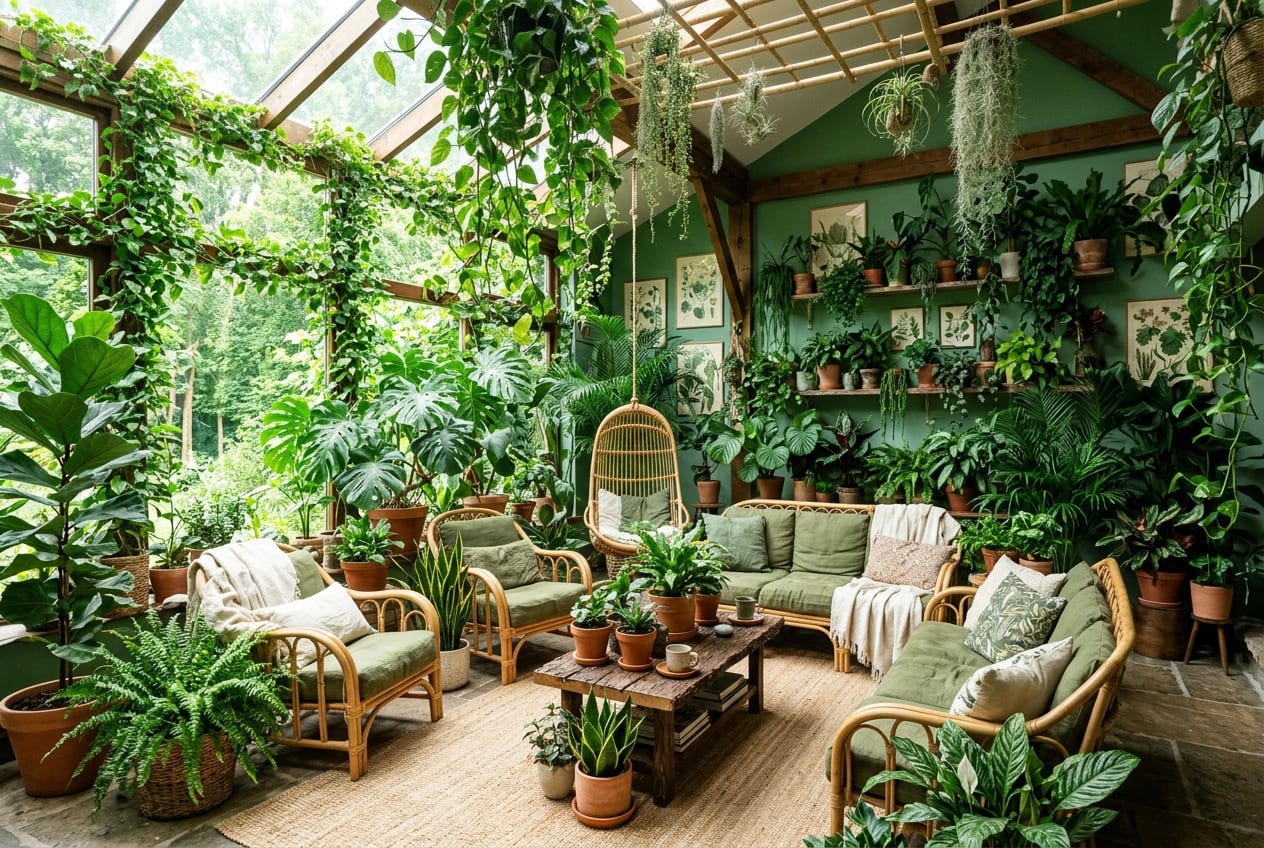
Tropical maximalism is biophilic design turned up to eleven—where houseplants aren't accents but architecture, where greenery claims every surface, and where the line between indoors and outdoors gets delightfully blurry. This is maximalism rooted in nature's abundance: think Victorian conservatories meeting modern jungle dwellers, where more is always more as long as it photosynthesizes. The room breathes. It grows. It occasionally drops leaves on your laptop.
This aesthetic draws from multiple rich traditions: the colonial-era conservatories of Europe where exotic plants were status symbols, the naturally lush interiors of tropical Southeast Asia and Latin America where indoor-outdoor living is necessity, and the 1970s houseplant boom when macramé met monstera. More recently, it's been fueled by millennials treating plant care like a competitive sport and our collective hunger for nature in increasingly urban lives. Rattan and natural materials aren't styling choices here—they're structural partners to all that green.
People love tropical maximalism now because it makes rooms feel alive in a way that's both calming and energizing. There's science backing the mood-boosting effects of plants, sure, but there's also something deeply satisfying about creating your own microclimate, your own pocket jungle. It's maximalism that serves a purpose beyond beauty: better air, better mood, better humidity for your skin. And unlike some design styles that demand perfection, this one rewards you for letting things get a little wild.
The signatures
- Layers upon layers of real and faux plants in every size
- Natural materials: rattan, bamboo, jute, teak, wicker
- Deep, saturated greens from forest to jade
- Terracotta and ceramic planters in abundance
- Botanical prints and palm-patterned textiles
- Warm wood tones and earthy neutrals as grounding
Anatomy of the look
Color & Paint
Thorne's walls are typically a deep, saturated green—not sage, not mint, but proper canopy forest green that makes the room feel cocooned. Some walls stay cream or warm white to let the plants pop, but at least one accent wall goes full jungle. Terracotta and clay tones appear in accessories, grounding all that green with earth.
Walls & Pattern
Wallpaper often features oversized palm fronds, banana leaves, or vintage botanical illustrations—the kind where every leaf vein is visible. Thorne doesn't do subtle leaf prints; he wants scale. Alternatively, walls might stay plain to become a backdrop for the real plant collection, which creates its own living pattern of shadows and shapes throughout the day.
Furniture & Shapes
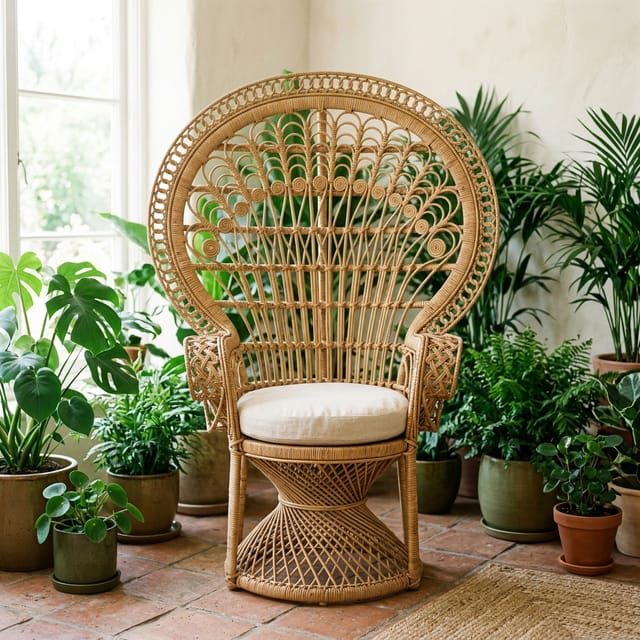
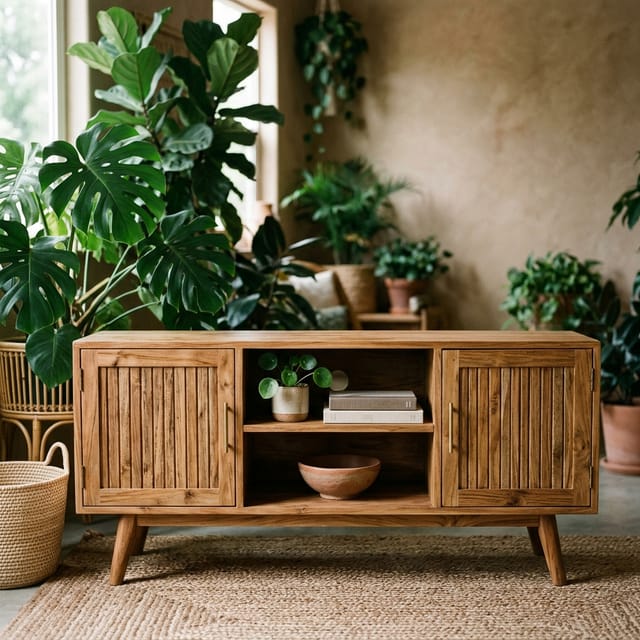
Rattan and wicker aren't accents here—they're the main event. Peacock chairs, curved rattan sofas, bamboo shelving, and teak pieces bring organic shapes and honey-warm tones. Furniture sits low and sprawling, with room for plants to drape over arms and trail from surfaces. Every piece has visible texture and natural imperfection.
Textiles
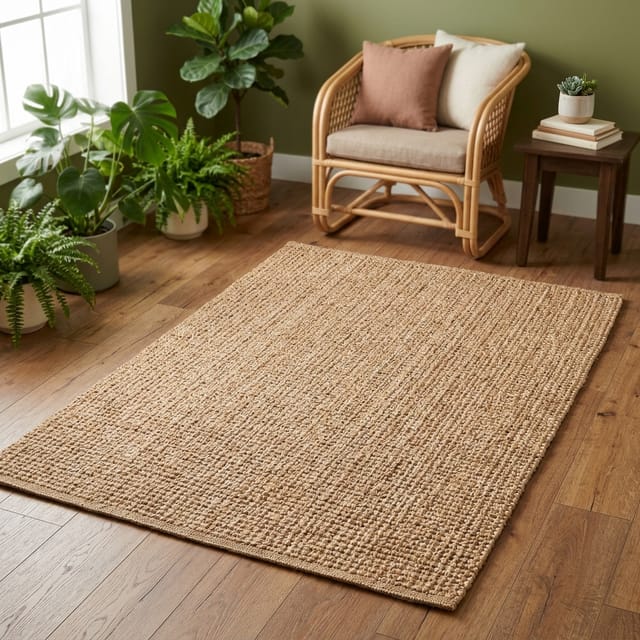
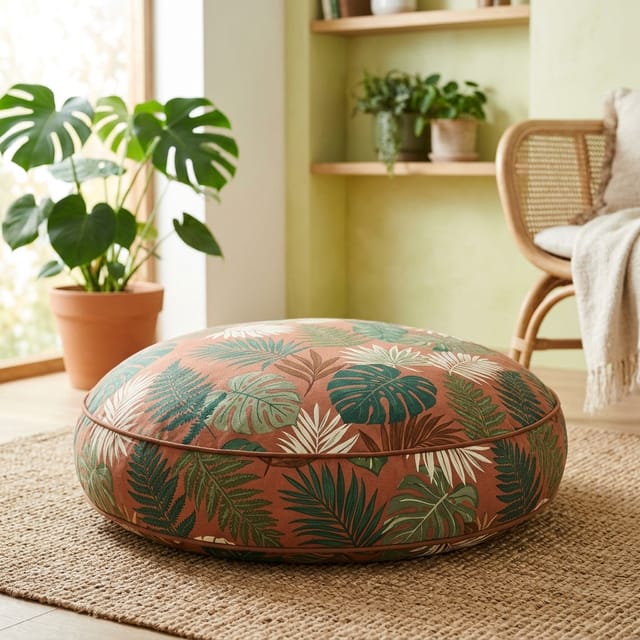
Natural fibers dominate: jute rugs, linen curtains in cream or soft green, cotton cushions with palm prints or solid earth tones. Thorne layers textures—a jute rug under a smaller woven mat, linen throws over rattan, floor cushions that invite you to sit among the ferns. Everything feels touchable, lived-in, slightly rumpled from humidity.
Lighting
Lighting is warm, dappled, and often filtered through plants themselves. Rattan pendant lights cast beautiful shadows, while floor lamps with natural shades nestle between larger plants. Thorne avoids harsh overhead lighting in favor of multiple soft sources that mimic sunlight filtering through a canopy. Grow lights are functional necessities that get incorporated into the design.
Collections & Accessories
The accessories are the plants themselves, displayed in a collected-over-time array of terracotta pots, ceramic planters, hanging baskets, and vintage finds. Plant stands at varying heights create levels. Watering cans, pruning shears, and misters become part of the decor. Vintage botanical prints, pressed leaves in frames, and the occasional taxidermy butterfly add to the naturalist-collector vibe.
Plants & Flowers
This is where Thorne really lives. Monsteras, pothos, philodendrons, snake plants, ferns, palms—real ones in abundance, supplemented with quality faux plants in hard-to-reach spots. Different sizes create layers: floor plants as tall as you, tabletop plants at eye level, trailing plants from shelves and macramé hangers. The goal is density without darkness, jungle without claustrophobia.
The recipe
The Thorne Formula
- 160% green—in plants, walls, textiles—from deep forest to bright jade
- 230% natural materials in warm tones: rattan, bamboo, jute, teak, terracotta
- 310% cream and clay neutrals for breathing room and grounding
- 4Plants at three heights minimum: floor, surface, hanging or climbing
Paint picks
Canopy #2F4A2E
Accent wall behind the plant collection or in a cozy reading nook
Moss #6B7A3A
Secondary walls or ceiling for an enveloping forest feel
Cream #E6DDC8
Main walls to keep the room bright and let plants be the stars
Clay #B0603A
Trim, door frames, or a single warm accent wall for contrast
Room by room
Living Room
Cluster plants around seating areas to create intimate zones within the larger space. A large floor plant behind the sofa anchors the arrangement, while trailing pothos softens shelving and a fiddle leaf fig claims a corner with authority.
Bedroom
Keep the bed area slightly less dense for ease of movement, but let plants frame the space—tall plants flanking the headboard, hanging plants from the ceiling, a snake plant on the nightstand. The bedroom becomes a sleeping porch without leaving the building.
Kitchen & Dining
Herbs in terracotta pots on open shelving serve double duty as decor and ingredients. A hanging planter above the dining table creates a living centerpiece, while a pothos trails along the top of cabinets, softening hard kitchen lines.
Bathroom
Embrace the humidity—ferns, pothos, and philodendrons actually thrive here. Hang plants in the shower area (if there's enough light), cluster small plants on the toilet tank, and let a large plant turn the bathroom into a spa-like retreat.
Small Spaces & Rentals
Go vertical with wall-mounted planters, hanging baskets, and tall narrow plants that don't eat floor space. A single statement plant (real or faux) plus strategic trailing greenery can create the jungle effect without overwhelming a small room.
Get it on any budget
Under $200
Under $500
Splurge
Renter-friendly
- Invest in quality faux plants for high shelves and dark corners where real plants struggle—modern faux greenery is shockingly convincing and requires zero landlord-angering water damage
- Use removable wallpaper or a large-scale palm leaf tapestry on one wall to create instant jungle vibes without paint
- Lean large plants in decorative pots against walls instead of installing shelving—they create vertical interest and move with you
- Hang plants from tension rods in window frames or from removable ceiling hooks rated for the weight
Easy to avoid
- Forgetting that real plants need light—even tropical plants—so check your room's conditions before buying. A north-facing room might need more faux or low-light varieties like pothos and snake plants
- Buying all the same size plants, which creates a flat, monotonous look. Thorne needs drama: tall floor plants, medium tabletop varieties, and trailing hanging plants at different heights
- Overwatering because the aesthetic feels humid—most houseplants actually prefer to dry out between waterings. The jungle look doesn't require jungle watering habits
- Skimping on quality for faux plants in visible spots. Cheap fake plants read as cheap; invest in realistic faux greenery where it matters, or stick with real plants you can actually maintain
FAQ
How many plants are too many plants for tropical maximalism?
There's no maximum, only practical limits like your ability to water them all and maintain clear walking paths. A good starting point is one large floor plant per 50 square feet, plus smaller plants on surfaces and walls. If you can still move through the room comfortably and the plants are healthy, you haven't hit too many yet.
What are the best low-maintenance plants for a tropical maximalist look?
Pothos, snake plants, and ZZ plants are nearly indestructible and create lush greenery with minimal fuss. Monsteras and philodendrons are also forgiving once established. For the truly hands-off, high-quality faux plants mixed with a few real easy-care varieties give you the look without the constant maintenance.
Can I do tropical maximalism in a dark room?
Yes, but you'll need to lean heavily on low-light plants like pothos, snake plants, and ferns, plus supplement with grow lights disguised as regular lamps. Alternatively, embrace faux plants for the aesthetic and save your real plant energy for spaces with better light. The style itself doesn't require sunlight—just the living plants do.
How do I keep tropical maximalism from feeling cluttered?
Stick to a consistent color palette of greens and natural materials—this creates visual cohesion even with abundance. Use varying heights to create intentional layers rather than random crowding. Keep some surfaces clear as visual rest stops, and ensure there are clear paths through the space. Clutter happens when there's no logic; Thorne has a plan, even if that plan is 'more plants.'
What's the difference between tropical maximalism and boho jungle style?
Tropical maximalism is specifically about plant abundance and biophilic design—the plants are the maximalism. Boho jungle tends to include more global textiles, patterns, and collected objects alongside the greenery. Thorne is laser-focused on letting nature take over; boho jungle is about layering plants with other maximalist elements. There's overlap, but tropical maximalism is more disciplined in its excess.
Some links may earn MAX by Design a small commission at no cost to you.