The Style Guide · Dark Academia
Cozy Brown Maximalism: How to Get Theo's Warm, Layered Look
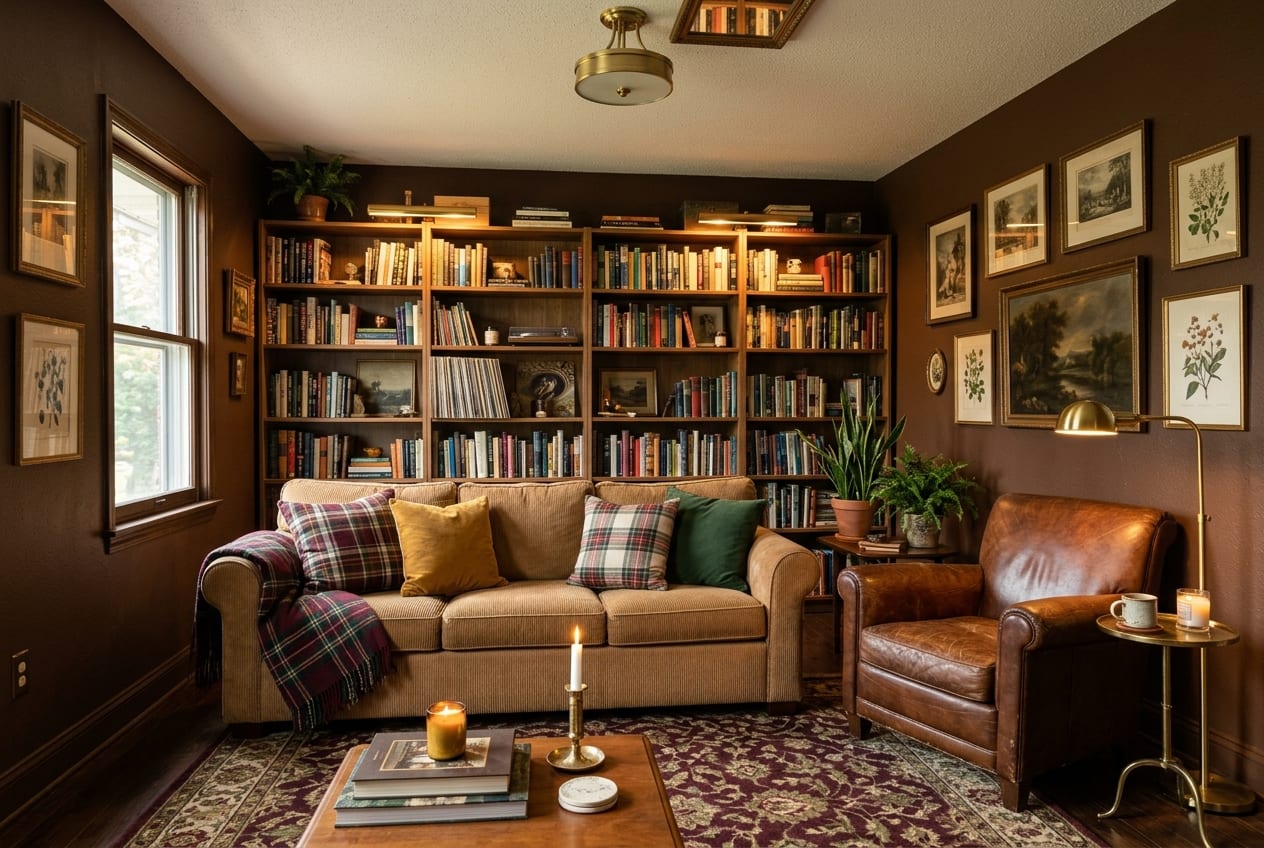
Theo is the kind of room that makes you lose track of time, all chocolate walls and lamplight and nowhere else you'd rather be.
What is Cozy Brown Maximalism?
Cozy Brown Maximalism is maximalism's warmest expression: a room wrapped entirely in shades of brown, from chocolate walls to camel corduroy, burgundy rugs to brass fixtures. This isn't minimalism's beige cousin—it's brown as the hero, layered until it glows. Theo proves that brown, long dismissed as boring or dated, is actually the most enveloping color in the spectrum. It's maximalism that prioritizes comfort over spectacle, depth over contrast, the feeling of sinking in over standing out.
This aesthetic draws heavily from Dark Academia's love of old libraries and gentleman's clubs, but strips away the formality. Think less Oxford study, more 1970s living room that somehow feels brand new. The roots are in mid-century wood paneling, Victorian smoking rooms, and the recent rediscovery of brown as a sophisticated neutral. Designers have been championing brown's return since the late 2010s, recognizing what our grandparents knew: brown makes everything feel lived-in and loved immediately.
People are drawn to Theo now because we're exhausted by stark white walls and the pressure to keep things bright and airy. Brown maximalism is permission to cocoon, to prioritize warmth over Instagram-perfect light. It's especially appealing to renters tired of beige boxes and homeowners ready to commit to genuine coziness. In an age of anxiety, a chocolate brown room that hugs you the moment you enter isn't indulgent—it's essential. Theo doesn't apologize for being dark. He's too busy being exactly where you want to spend every evening.
The signatures
- Chocolate brown walls that make the room feel smaller in the best way
- Layers of brown in every finish: leather, corduroy, velvet, wood, brass
- Warm, targeted lighting from brass lamps, never overhead
- Vintage pieces that look like they've been here for decades
- Plaid, herringbone, and textured patterns in the brown family
- A record player or bar cart—something that invites you to linger
Anatomy of the look
Color & Paint
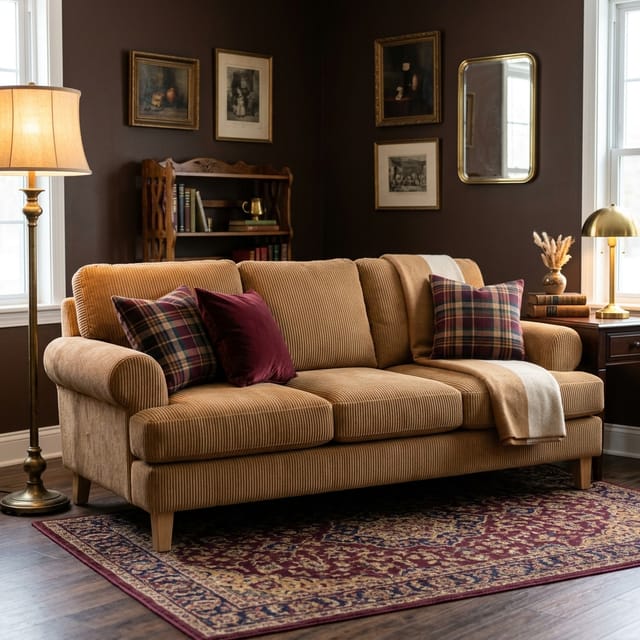
Theo's walls are chocolate brown—not milk chocolate, but the deep, almost-black kind that reads warm instead of stark. This is the anchor that makes everything else glow. The camel and burgundy accents keep it from feeling one-note, while brass adds just enough shine to catch lamplight. The palette is monochromatic but never flat, because brown contains infinite variation.
Walls & Pattern
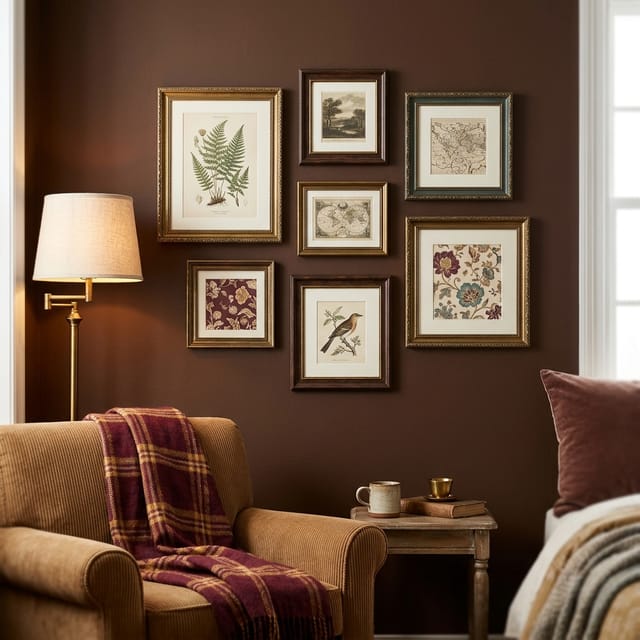
Beyond the paint, Theo's walls earn their keep with vintage prints in dark frames, wood shelving, and the occasional textile hung like art. Plaid appears in throws and pillows, adding pattern without disrupting the brown-on-brown harmony. Wood paneling or picture rail molding, if you have it, makes Theo feel even more like a vintage gentlemen's club.
Furniture & Shapes
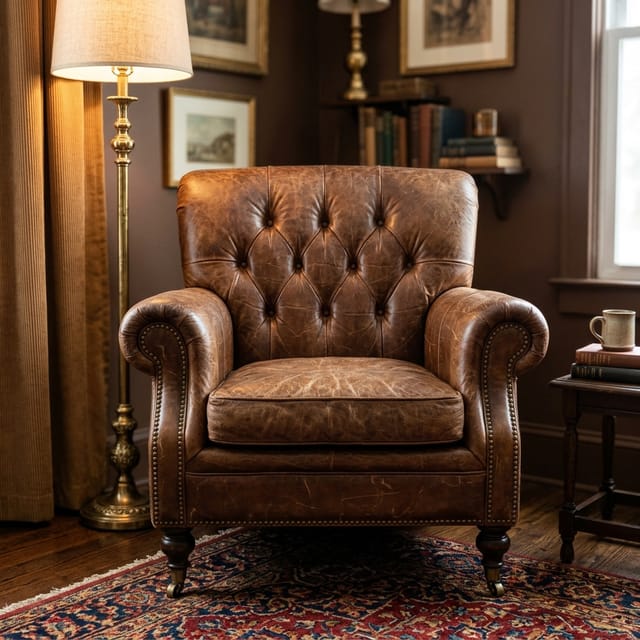
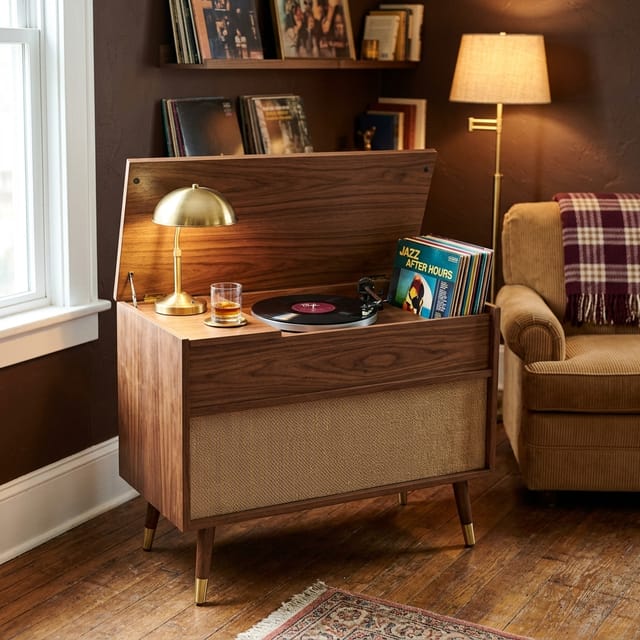
The furniture is low, deep, and upholstered in materials that beg to be touched: camel corduroy sofas, leather club chairs with brass studs, wood coffee tables with visible grain. Shapes are rounded and substantial—no spindly legs or glass tops. Everything looks like it could have been here since 1975, even if you bought it last month. A record console or bar cart adds function and vintage charm.
Textiles
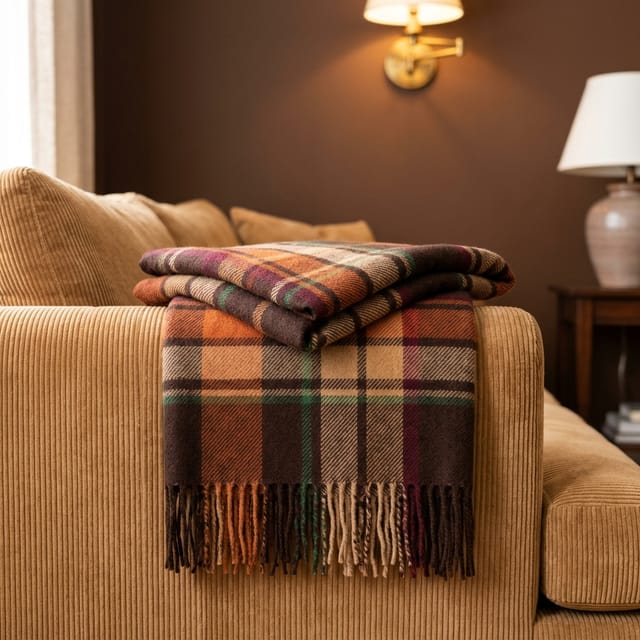
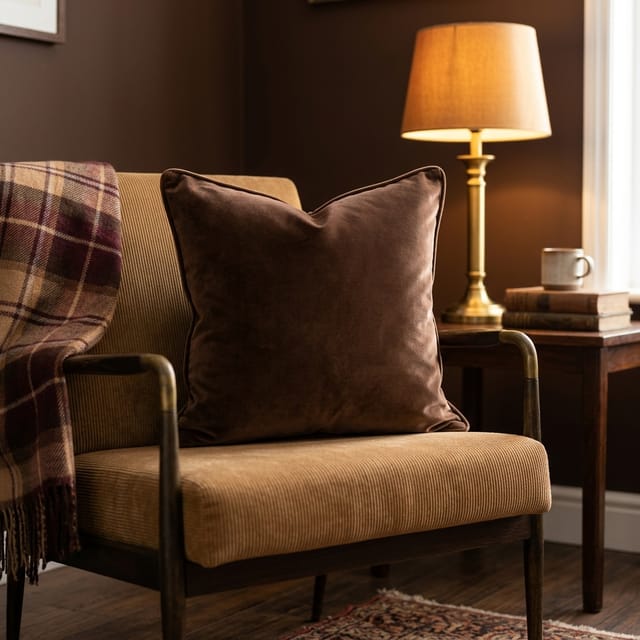
Textiles are where Theo really earns his cozy reputation. Plaid wool throws, brown velvet cushions, a burgundy Persian-style rug—every surface is soft and layered. Corduroy, velvet, wool, and leather create textural depth that makes the monochromatic palette feel rich instead of repetitive. Nothing matches exactly, but everything belongs.
Lighting
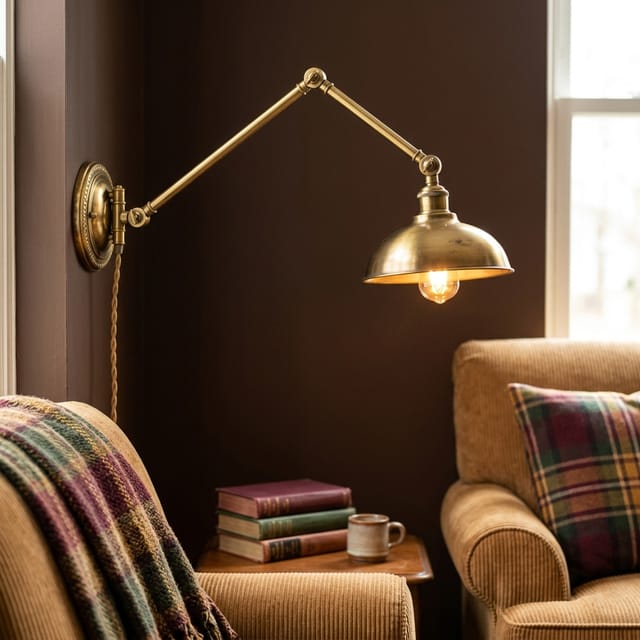
Overhead lighting is Theo's enemy. Instead, brass swing-arm lamps, table lamps with warm bulbs, and maybe a floor lamp with a fabric shade create pools of light that make the room feel intimate and golden. The brass finish picks up the warmth in the walls and makes everything glow. Dimmers are essential—Theo never wants to be too bright.
Collections & Accessories
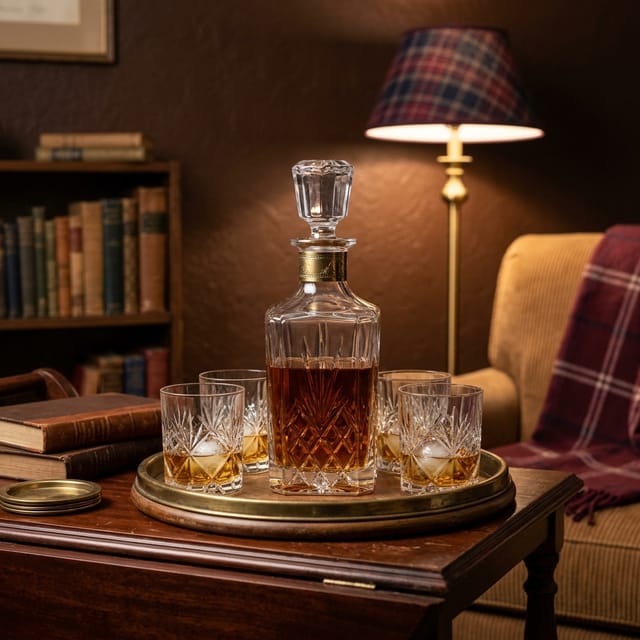
Theo's accessories are functional and nostalgic: a vintage bar set, stacks of old books, a record collection displayed on open shelving, brass bookends, a wooden tray for glasses. Nothing feels precious or untouchable. The collections look accumulated over time, not bought in one trip. Brass, wood, and glass are the material palette.
Plants & Flowers
Plants in Theo are low-maintenance and sculptural: a snake plant in a ceramic pot, dried pampas grass in a brass vase, maybe a potted fiddle leaf fig if you're ambitious. Nothing too colorful or fussy. The greenery is there to soften the brown without competing with it, and dried arrangements work just as well as living ones.
The recipe
The Theo Formula
- 160% deep chocolate brown as your base—walls, largest furniture piece, or both
- 225% camel, tan, and cognac in mid-tones—corduroy, leather, wood tones
- 310% burgundy or rust as your accent—rug, pillows, one chair
- 45% brass and warm metallics to catch the light and add subtle shine
Paint picks
Chocolate Truffle #4A2C21
All four walls for full cocoon effect, or just the wall behind your sofa if you're easing in
Camel Cord #B8865B
Trim, built-ins, or a single accent wall if chocolate feels too dark
Burgundy Velvet #7A1F2B
Inside of bookshelves, back of a cabinet, or a powder room for drama
Warm Brass #B08D57
Ceiling for unexpected warmth, or as a glaze over camel for extra depth
Room by room
Living Room
This is Theo's natural habitat. Go all-in with chocolate walls, a camel corduroy sofa, layered rugs, and as many lamps as you can plug in. Add a bar cart and a record player, and never turn on the overhead light again.
Bedroom
A chocolate brown bedroom is a sleep sanctuary. Paint three walls chocolate and keep the fourth camel for balance, pile the bed with brown velvet and plaid, and use brass sconces for reading. Blackout curtains in a rich brown will make mornings feel less harsh.
Kitchen & Dining
Brown maximalism in the kitchen works best in the dining area—chocolate painted built-ins, a burgundy rug under the table, brass pendant lights, and wood chairs in varying finishes. If your cabinets are wood, lean in and add chocolate walls to make them pop.
Bathroom
A small bathroom in chocolate brown feels like a jewel box. Paint the walls, add brass fixtures and a mirror, hang a vintage print, and use camel towels. The lack of natural light becomes a feature, not a bug.
Small Spaces & Rentals
Renters can get Theo's look with peel-and-stick brown wallpaper on one wall, a camel corduroy sofa cover, removable brass lighting, and layered textiles. The darkness actually makes small spaces feel more intentional and cozy, not cramped.
Get it on any budget
Under $200
Under $500
Renter-friendly
- Use peel-and-stick wallpaper in chocolate or brown linen texture on one accent wall—it's removable and makes a huge impact without paint
- Invest in a camel corduroy slipcover for your existing sofa instead of buying new furniture
- Layer rugs over builder-grade carpet: a jute rug as a base, then a smaller burgundy or patterned rug on top
- Swap out light fixtures temporarily with plug-in brass sconces or use lamp shades to warm up existing lighting
Easy to avoid
- Keeping your overhead light as the main source—Theo needs lamps and warm bulbs to glow, not glare
- Matching every brown exactly—the beauty is in the variation between chocolate, camel, cognac, and rust
- Forgetting texture—flat brown paint and smooth surfaces will feel dull; you need velvet, corduroy, leather, and wood grain
- Being afraid to go dark—half-hearted brown (one accent wall, beige sofa) won't give you Theo's cozy magic; commit to the chocolate
FAQ
Will a brown room make my space feel smaller and darker?
Yes, and that's the point. Theo makes a room feel smaller in the way a hug does—enveloping and comforting, not claustrophobic. The key is layered lighting with warm bulbs and brass fixtures, which makes the brown glow instead of disappear. Dark rooms with good lighting feel infinitely cozier than bright rooms with bad lighting.
What's the difference between brown maximalism and just a brown room?
Brown maximalism is about layering many shades, textures, and finishes of brown until the room feels rich and collected. A plain brown room might have brown walls and a beige sofa—fine, but flat. Theo has chocolate walls, camel corduroy, burgundy velvet, leather, brass, wood grain, and plaid all working together. It's maximalism in a monochromatic palette.
How do I keep brown maximalism from feeling dated or like the 1970s in a bad way?
Embrace the 70s influence but keep it intentional: choose clean-lined furniture, avoid orange and avocado green unless you're fully committed to retro, and mix in contemporary art or accessories. The chocolate-and-camel palette feels current because it's been absent for so long. Brass and velvet also read modern when styled with confidence.
Can I add any other colors to a brown maximalist room?
Burgundy, rust, and forest green are natural friends to brown and add depth without disrupting the warmth. Cream and ivory work for contrast if you need a break from the intensity. Avoid cool tones like gray, blue, or stark white—they'll fight the warmth instead of supporting it. Metallics should be warm: brass and copper, not chrome or silver.
What if I don't want to paint my walls chocolate brown?
You can still get Theo's vibe with one chocolate accent wall, brown peel-and-stick wallpaper, or by keeping walls neutral and going heavy on brown furniture and textiles. A camel corduroy sofa against a cream wall, layered with brown velvet pillows and a burgundy rug, will give you the warmth without the commitment. Just add brass lamps and you're halfway there.
Some links may earn MAX by Design a small commission at no cost to you.