The Style Guide · Cabinet of Curiosities
Curio-Cabinet Dining: How to Get Opal's Jewel-Box Supper Nook
Where every meal comes with a story and your favorite treasures get a seat at the table.
What is Curio-Cabinet Dining Maximalism?
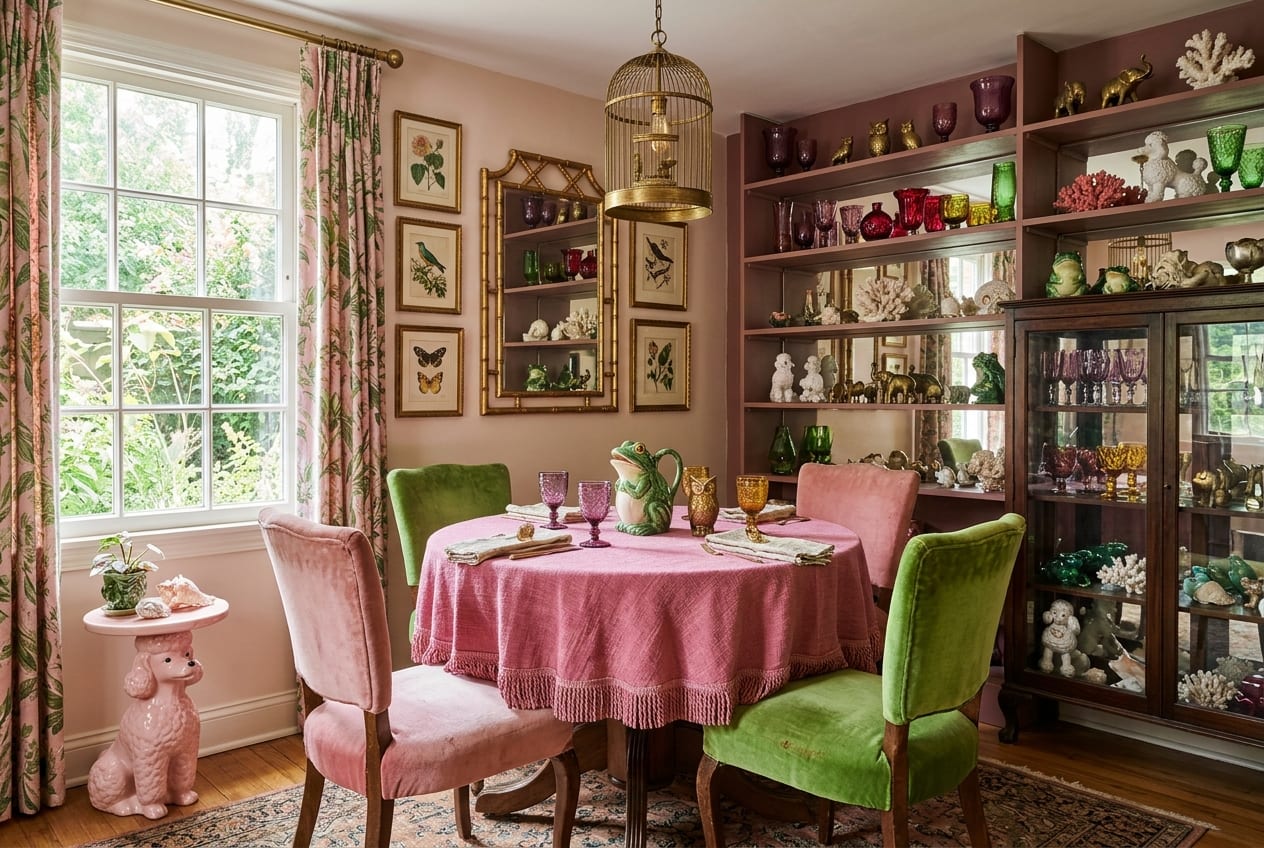
Curio-Cabinet Dining Maximalism treats your eating space like a jewel box filled with treasures. This is the dining room as display case, where pink and green velvet chairs surround a cloth-draped table, glass cabinets glow with colored bottles and curiosities, and every surface tells a story. It's maximalism with a collector's heart—not chaotic, but carefully curated, like walking into an eccentric aunt's favorite room where she keeps all her most precious finds. The mood is intimate supper club meets natural history museum's prettiest corner.
This style descends directly from the Renaissance wunderkammer—those rooms of wonder where collectors displayed exotic shells, specimens in glass, unusual minerals, and precious objects all together. Victorian parlors continued this tradition with their whatnot shelves and glass-fronted cabinets, mixing coral with porcelain, feathers with fossils. The pink-and-green palette specifically echoes the Aesthetic Movement's love of unconventional color pairings and the mid-century Italian glass boom, when Murano artisans filled the world with jewel-toned vessels that looked too beautiful to be functional.
People are drawn to Opal now because she makes dining feel special again without being stuffy. In an era of minimalist white kitchens, she offers permission to display your collections, to mix pretty with peculiar, to let your dining room be a conversation starter. She's perfect for anyone who's ever bought something beautiful just because, who saves vintage glassware and interesting shells, who believes that where you eat matters as much as what you eat. She turns every dinner into a small occasion simply by surrounding it with things that make you happy to look at.
The signatures
- Pink and green velvet seating in jewel tones
- Glass display cabinets with interior lighting
- Colored glass collections catching light
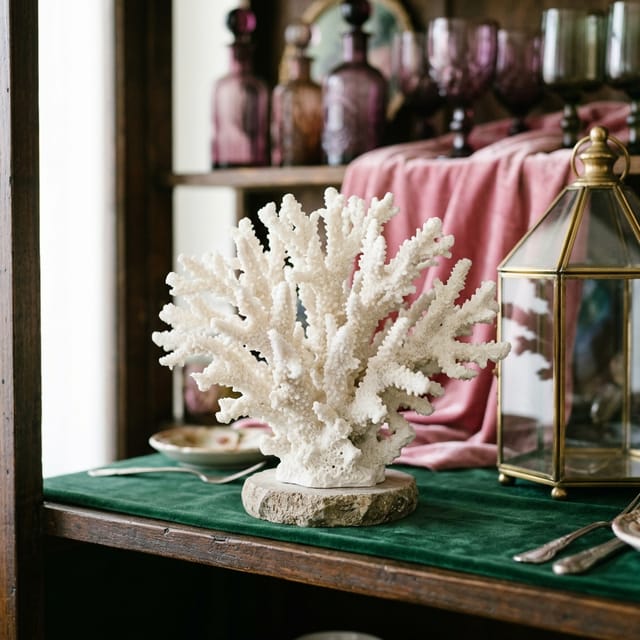
- Natural curiosities: shells, coral, feathers, minerals
- Ornate or whimsical lighting fixtures
- Layered textiles: fringed cloths, embroidered napkins
Anatomy of the look
Color & Paint
Opal's walls stay relatively neutral—soft shell white or pale blush—because the color lives in the objects and furniture. This restraint lets the pink velvet chairs, green velvet seats, and jewel-colored glass do the talking without visual chaos. When color does hit the walls, it's often in wallpaper with botanical or curiosity-cabinet motifs rather than solid paint.
Walls & Pattern
Pattern appears in unexpected places: a framed collection of vintage botanical prints, a gallery wall of ornate empty frames, or open shelving styled like a cabinet of curiosities. Opal loves symmetry broken by whimsy—two matching sconces flanking a taxidermy butterfly display, or wallpaper on just one accent wall behind the display cabinet to make it glow.
Furniture & Shapes
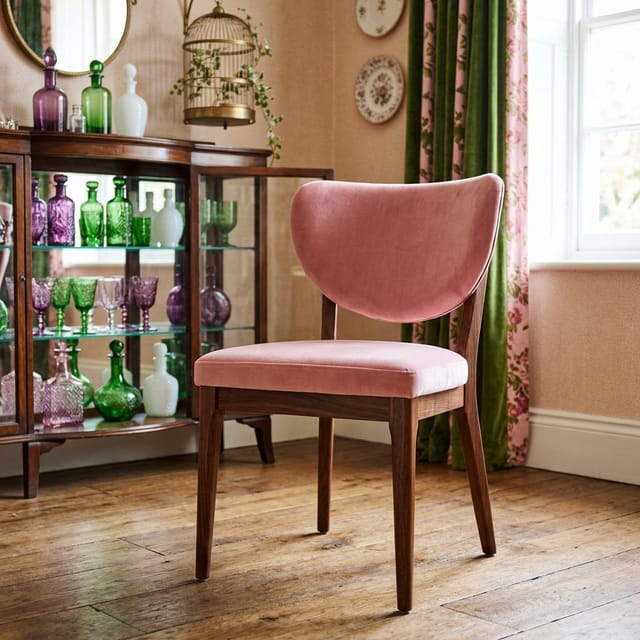
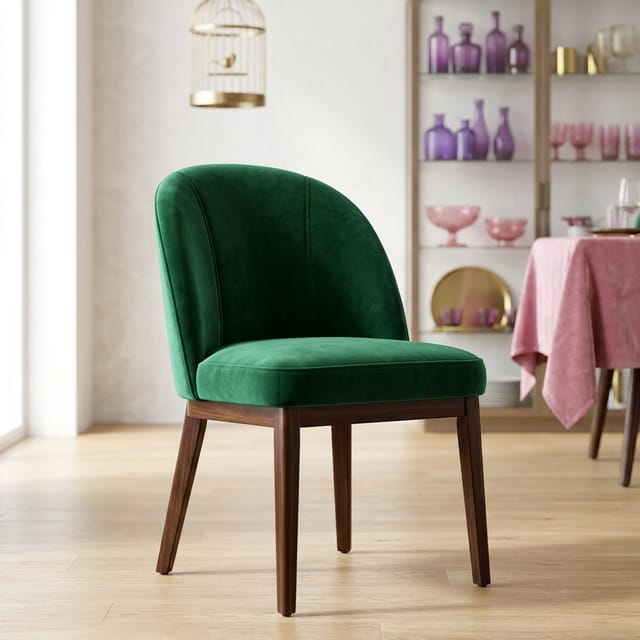
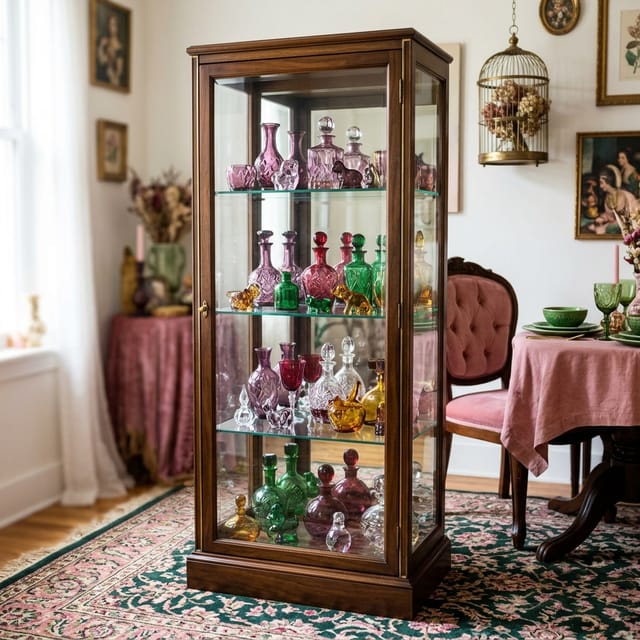
The dining table itself often disappears under a beautiful cloth, making its shape less important than what's on it. Chairs are mismatched on purpose—two pink velvet, two green velvet, maybe one vintage cane chair—united by similar scale and a shared sense of occasion. A glass-front cabinet or étagère is essential, preferably with interior lighting, plus smaller accent pieces like a bar cart or plant stand with personality.
Textiles
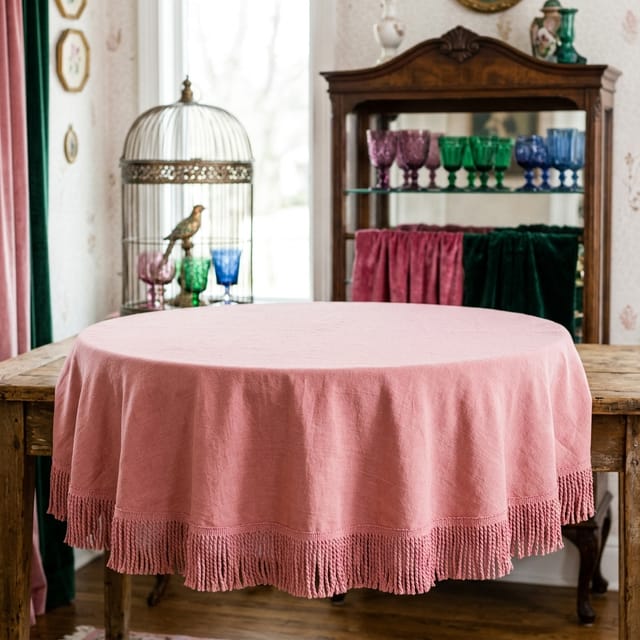
Opal layers textiles like a magpie: a fringed tablecloth in dusty pink, embroidered napkins that don't match, velvet chair cushions, maybe a small rug under the table in a faded Persian pattern. Everything has texture—fringe, tassels, embroidery, nap. She's not afraid of pink-on-pink or mixing patterns at the table, because the glass and curiosities provide enough visual breathing room.
Lighting
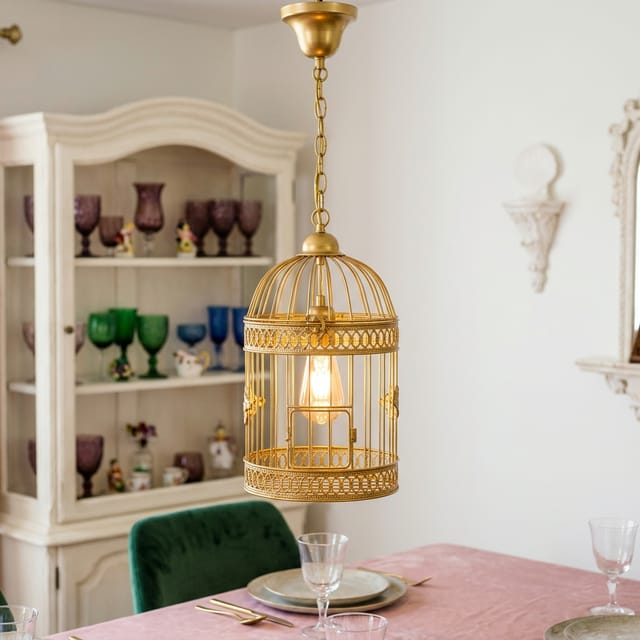
Lighting is jewelry for the room—a statement pendant like a birdcage chandelier, or a cluster of colored glass pendants hung at varying heights. Opal also uses interior cabinet lighting to make her glass collections glow like a museum display, and candles everywhere: tapers in vintage holders, votives in colored glass.
Collections & Accessories
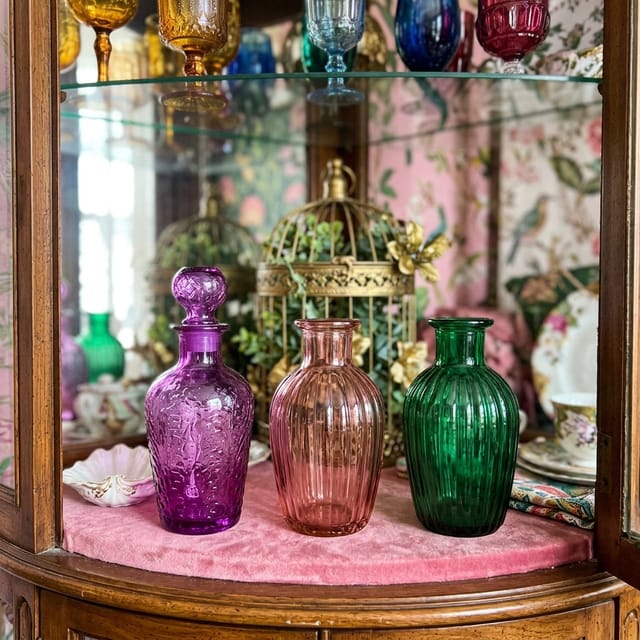
This is where Opal really sings: shelves filled with colored glass bottles and vases, vintage apothecary jars, shells and coral arranged like specimens, small taxidermy or faux versions, interesting minerals, vintage serving pieces displayed as art. Everything is both beautiful and slightly curious—you want to pick it up, ask about it. Group like with like but vary heights and colors within each collection.
Plants & Flowers
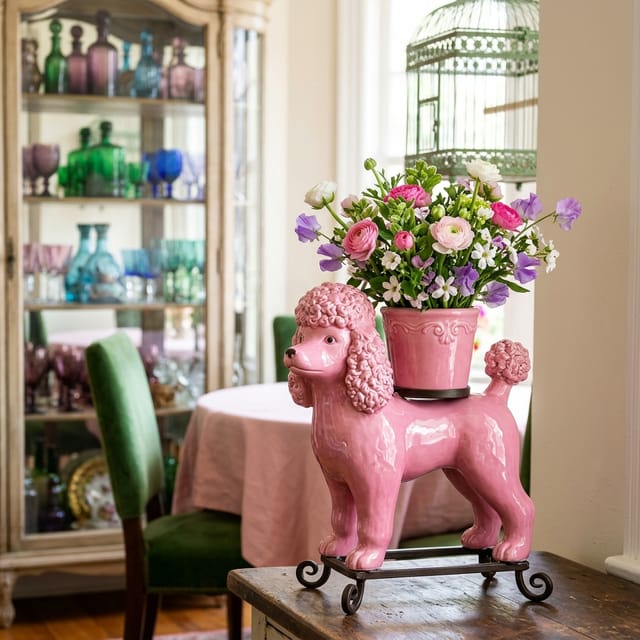
Plants are presented as specimens: a single dramatic orchid, ferns in vintage cachepots, or flowers arranged in colored glass vases and scattered across surfaces rather than in one big centerpiece. A whimsical plant stand—like a pink poodle or ornate metal piece—adds vertical interest and more display space for small plants or curiosities.
The recipe
The Opal Formula
- 160% neutral backdrop (soft walls, natural light) to let collections shine
- 225% jewel-toned furniture and glass (pink velvet, green velvet, amethyst and colored vessels)
- 310% natural curiosities (shells, coral, minerals, botanical specimens)
- 45% metallic accents (brass candlesticks, gold frames, vintage silver) to catch light
Paint picks
Shell White #F4E9E1
Main walls to create a soft, warm backdrop that makes colors and glass glow
Tablecloth Pink #E9A3B5
Accent wall behind display cabinet, or use in textiles and accessories
Velvet Green #5FA33A
Inside of a bookshelf or cabinet back to make displayed objects pop
Amethyst Glass #8E4F9E
Small accent wall in a nook, or as inspiration for glass and textile colors
Room by room
Living Room
Translate Opal to the living room with a glass-front bookcase styled like a cabinet of curiosities, velvet seating in pink or green, and collections displayed on every surface—vintage books, colored glass, small natural specimens. Use a beautiful tray on the coffee table to corral and display treasures.
Bedroom
Bring Opal's collector spirit to the bedroom with a velvet headboard in pink or green, glass perfume bottles and jewelry displayed on a mirrored tray, and a small étagère for your favorite objects. Keep the palette soft and add brass or gold accents in lamps and frames.
Kitchen & Dining
This is Opal's natural habitat. If your dining area is in the kitchen, use open shelving to display colored glassware and pretty dishes, add velvet seat cushions to basic chairs, and style your counters with canisters, vintage jars, and small plants in brass pots.
Bathroom
A small bathroom becomes a jewel box with Opal's touch: display perfumes and potions in colored glass on a mirrored tray, hang a small shelf for shells and coral, add a velvet stool or chair, and use brass fixtures and vintage mirrors to catch light.
Small Spaces & Rentals
Opal actually works beautifully in small spaces because she's about curation, not sprawl. One small glass cabinet or étagère, two velvet chairs, and a few carefully chosen collections create the look without overwhelming. Use removable wallpaper on one wall and focus your treasures in one display area rather than spreading them thin.
Get it on any budget
Under $200
Under $500
Splurge
Renter-friendly
- Use a beautiful tablecloth to transform a basic table without permanent changes—fringed, embroidered, or velvet for instant Opal magic
- Skip built-in cabinets and use freestanding glass-front bookcases or étagères that move with you and provide the same display impact
- Add removable wallpaper to one accent wall behind your display area, or use large framed prints and mirrors to create visual interest without paint
- Bring in color through furniture and accessories (velvet chairs, colored glass, textiles) rather than painting walls—these pack up and travel to your next space
Easy to avoid
- Displaying everything you own at once—Opal is a curator, not a hoarder. Rotate collections seasonally and leave breathing room between objects so each one can be appreciated.
- Forgetting about lighting inside cabinets and on shelves. Without interior lighting, your beautiful glass and curiosities disappear into shadows. Battery-operated LED strips are inexpensive magic.
- Matching everything too perfectly. Opal's charm is in the collected-over-time feeling—mismatched chairs united by color family, varied glass in similar tones, objects that look like they came from different places and eras.
- Neglecting the table itself in favor of display. Remember, this is a dining room—keep the table functional and beautiful, with textiles and a few carefully chosen centerpiece elements that can be moved aside when it's time to eat.
FAQ
How do I start a curio-cabinet dining room on a budget?
Begin with one display piece—even a small bookcase with glass doors from a thrift store—and style it with colored glass from secondhand shops, shells you've collected, and interesting objects you already own. Add one velvet chair or cushion in pink or green, and use a pretty tablecloth to set the mood. You can build the collection slowly, which actually makes it feel more authentic and personal.
Where can I find colored glass and curiosities for display?
Thrift stores, estate sales, and antique malls are treasure troves for vintage colored glass, brass objects, and natural curiosities. Online marketplaces work too, but seeing the glass in person helps you judge color and quality. For shells and coral, look for ethically sourced or faux versions. Start with one color family of glass—all blues or all ambers—then expand as you find pieces you love.
Can I do pink and green velvet together without it looking childish?
Absolutely, and the key is in the specific shades and context. Choose sophisticated, jewel-toned versions—dusty rose and emerald, or mauve and sage—rather than bubblegum and lime. Surrounding them with brass, glass, natural wood, and curiosities gives them an adult, collected context. The Victorians and Aesthetic Movement designers did this combination beautifully, and it reads as bold and artistic rather than juvenile.
How do I keep a curio-cabinet dining room from looking cluttered?
Contain your collections within defined areas—inside the cabinet, on specific shelves, on a bar cart—rather than spreading objects across every surface. Keep your walls relatively simple and your table functional. Group like objects together (all glass in one area, all natural specimens in another) and leave empty space between groups. The key is intentional curation: everything displayed should be something you truly love and want to share.
What if I don't have room for a big display cabinet?
Opal scales beautifully. Use a small wall-mounted shelf with a glass door, a narrow étagère, or even a styled bar cart as your display piece. You can also create the cabinet-of-curiosities feeling with open shelving styled carefully, or a gallery wall that includes small shadow boxes for three-dimensional objects. Even one small glass-front cabinet and a few colored vases on the table create the mood.
Some links may earn MAX by Design a small commission at no cost to you.