The Style Guide · Grandmillennial
Romantic Cluttercore: How to Get Marguerite's Layered Floral Look
Marguerite proves that sentiment is a design principle, one ruffled pillow at a time.
What is Romantic Cluttercore?
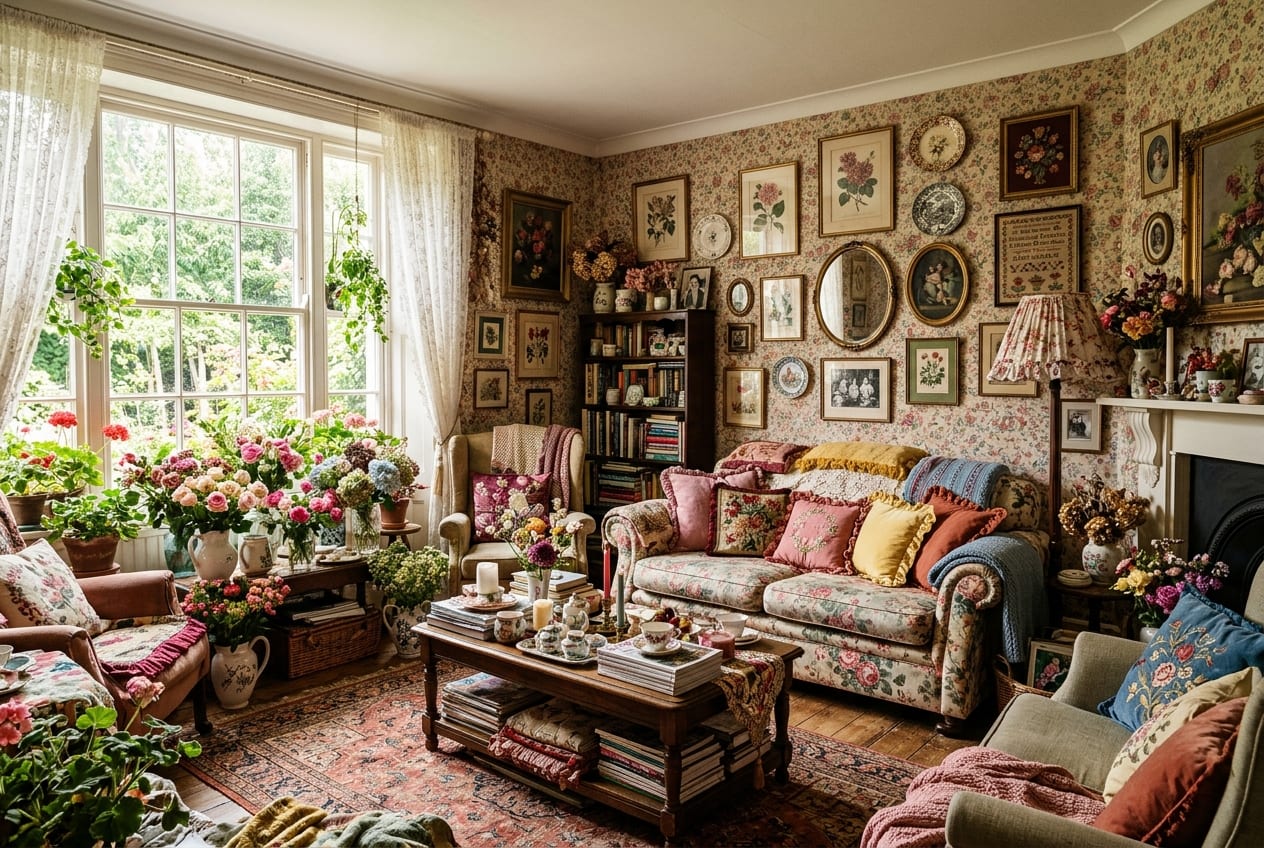
Romantic cluttercore is maximalism with a memory box heart. It's the grandmillennial aesthetic turned up to eleven, where chintz sofas wear five different floral pillows and every surface holds something precious. This isn't minimalism's opposite, it's minimalism's warm grandmother who saves every birthday card and displays them all with pride. The look layers pattern on pattern, textile on textile, until the room feels like a hug that smells faintly of lavender sachets. It's controlled chaos with a color story, usually anchored in garden-party palettes of rose, sage, and butter yellow.
This style draws from English cottage interiors, French country romance, and the 1980s American country craze that your actual grandmother probably lived through. Chintz, those glazed floral cottons that decorated every aspirational home from 1975 to 1995, is the hero fabric here. The grandmillennial movement reclaimed these grandmother-approved patterns around 2019, and romantic cluttercore takes that nostalgia further by embracing not just the florals but the sheer quantity of stuff that made those rooms feel so lived-in. It's Laura Ashley meets your great-aunt's sitting room, with a knowing wink.
People love romantic cluttercore now because it feels emotionally generous in a world that can feel cold and curated. Every object tells a story or could tell one, and the abundance reads as warmth rather than excess. It's permission to keep the things you love visible, to mix the fancy with the sentimental, and to admit that yes, you do need seven throw pillows. In an era of beige minimalism and algorithm-approved neutrals, Marguerite's room is a rebellion of roses and ruffles that says your space should feel like a love letter to yourself.
The signatures
- Chintz and floral fabrics in cheerful competition with each other
- Ruffles, scallops, and trims on everything from lampshades to bedskirts
- Rose and sage green as the romantic anchor palette
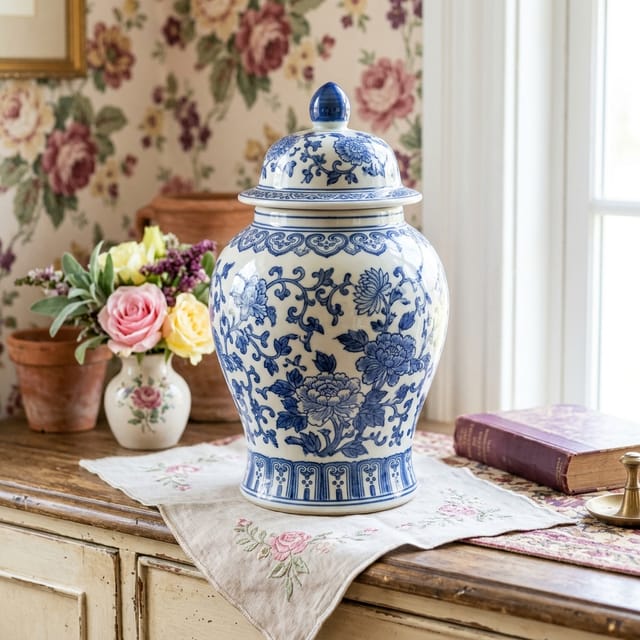
- Collections displayed with purpose: ginger jars, teacups, botanical prints
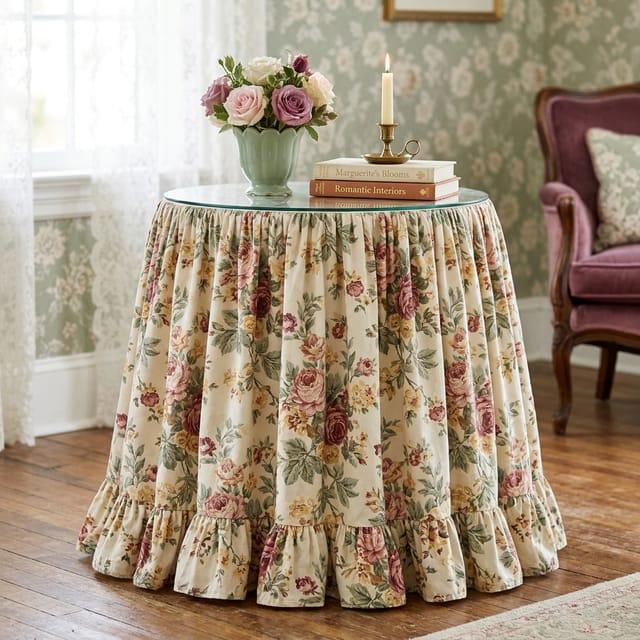
- Skirted furniture that hides storage while adding softness
- Layers of textiles creating depth, warmth, and touchable surfaces
Anatomy of the look
Color & Paint
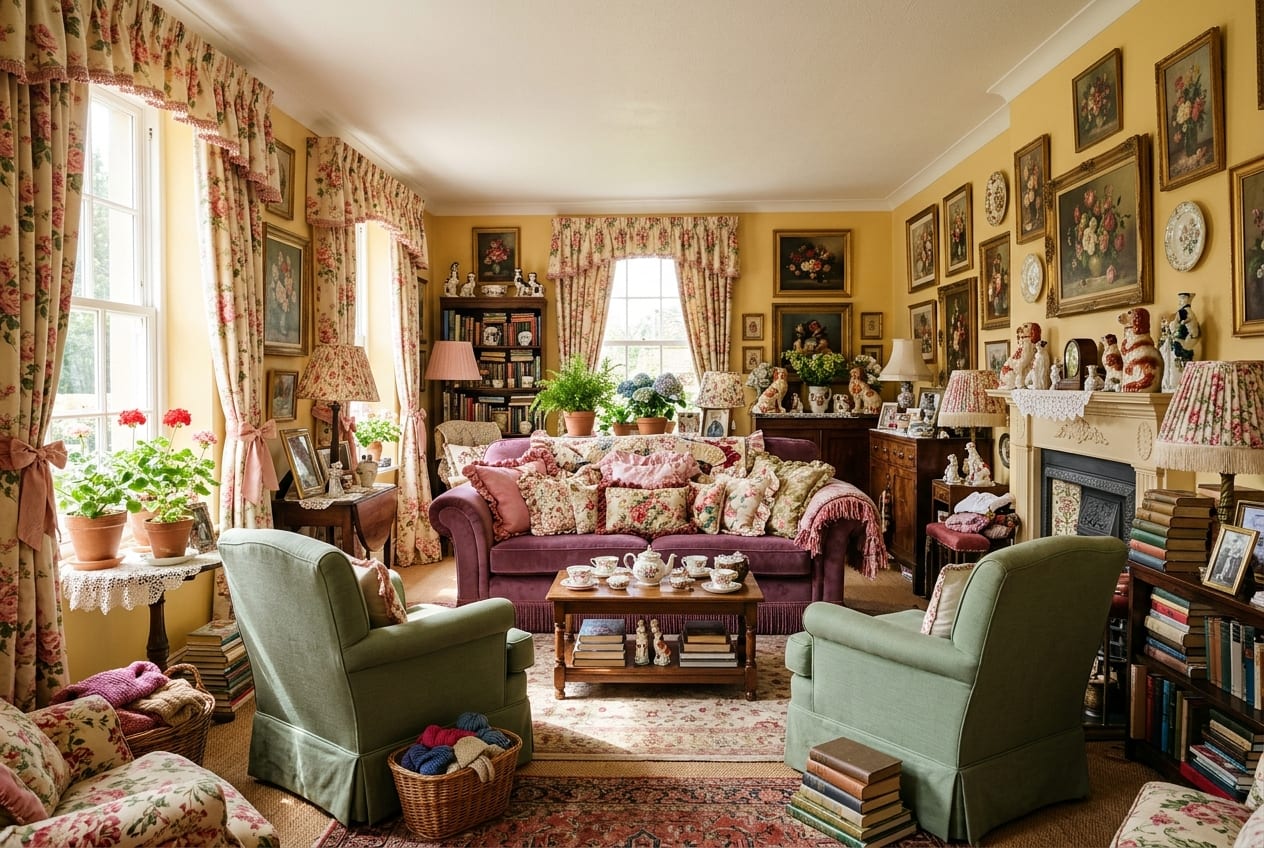
Marguerite's walls wear soft, edible colors that let the patterns shine: buttery yellows, blush pinks, or warm creams that feel like aged linen. The palette stays in the garden party family, with rose, sage, and plum acting as the recurring chorus across fabrics and accessories. Paint is never stark white here; it's always got a whisper of warmth, like cream with a drop of honey.
Walls & Pattern
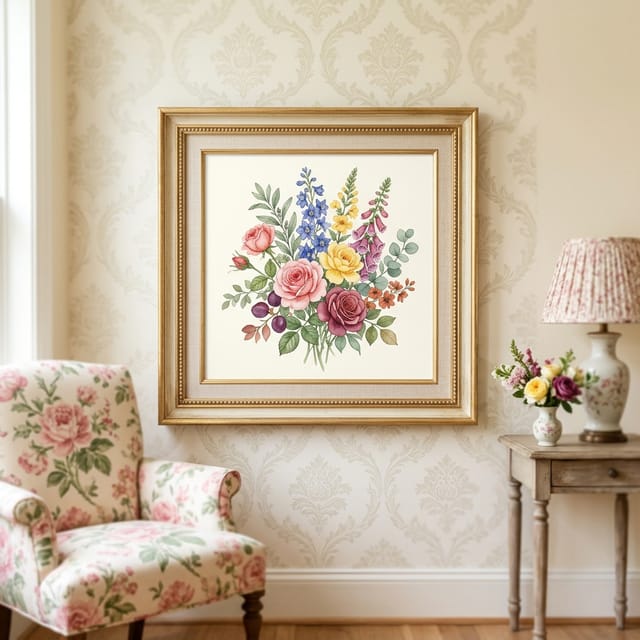
Wallpaper is Marguerite's love language, especially vintage-inspired florals, toiles, or delicate stripes that add pattern without shouting. If wallpaper isn't possible, she hangs framed botanical prints in mismatched frames, creating a gallery wall that feels collected over decades. Wainscoting or picture rail molding adds architectural romance, painted in contrasting cream or sage to break up the wall.
Furniture & Shapes
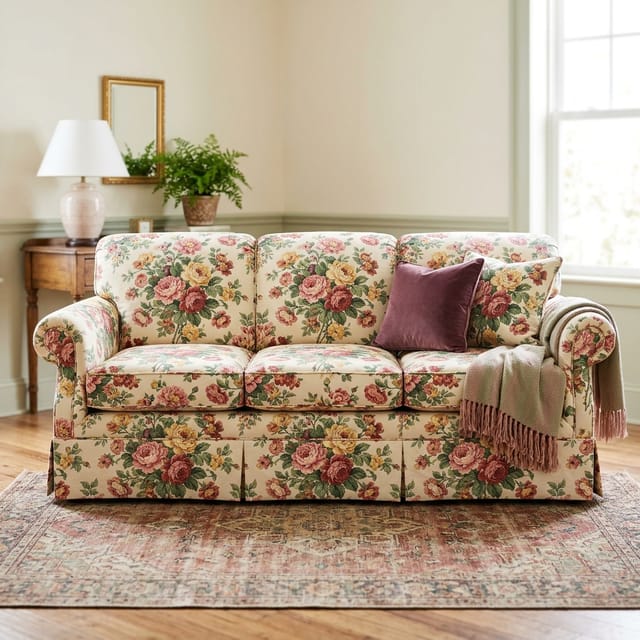
Furniture here has curves, skirts, and a certain ladylike quality: skirted sofas and chairs, cabriole legs, and anything with a scalloped edge. Marguerite loves a slipcovered piece that can be washed and changed with the seasons. Wood furniture is painted or distressed in soft colors rather than dark and formal, and every piece has a slightly worn, loved quality that says it's been in the family for years, even if you bought it last month.
Textiles
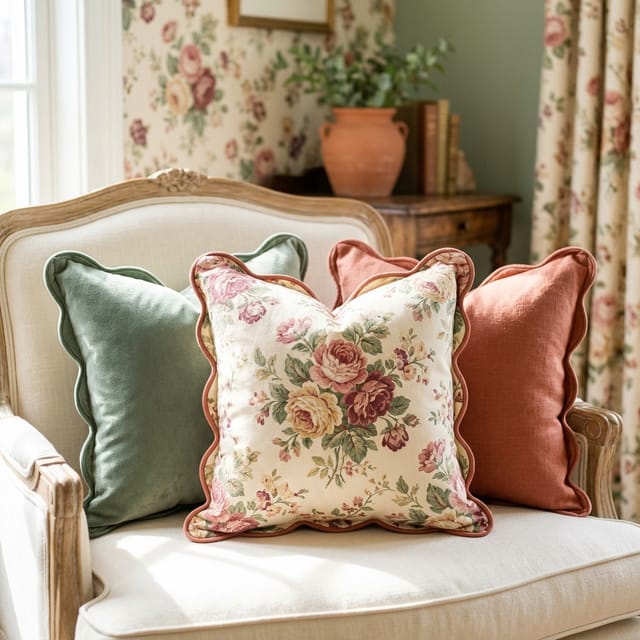
This is where Marguerite goes wild: chintz florals, ticking stripes, gingham checks, and embroidered linens all live together in joyful argument. Layering is key—a floral sofa gets striped pillows, a checked throw, and maybe a needlepoint cushion for good measure. Ruffled edges, piping, and trims add detail to everything from curtains to duvet covers, and nothing matches too perfectly because that would be boring.
Lighting
Marguerite's lighting is soft, warm, and often dressed up: table lamps with fabric shades trimmed in fringe or scallops, ceramic bases shaped like gourds or flowers, and maybe a small chandelier dripping with crystals or painted white. She avoids harsh overhead light, preferring the glow of multiple lamps that create pools of warmth and make the room feel like perpetual golden hour.
Collections & Accessories
Every surface holds a small collection: blue-and-white ginger jars on the mantel, teacups on open shelving, stacks of vintage books tied with ribbon. Marguerite groups objects in threes or fives, mixing heights and textures, and nothing is too precious to touch. Decorative boxes, trays, and baskets corral the smaller bits while adding more pattern and texture to the mix.
Plants & Flowers
Fresh flowers are non-negotiable, even if they're from the grocery store: roses, peonies, or garden clippings in mismatched vases and pitchers. Marguerite also loves potted plants in pretty cachepots, especially blooming ones like African violets or orchids. Dried flowers and botanical specimens under glass cloches add romance without the maintenance, and floral scents—real or candle—complete the garden-room feeling.
The recipe
The Marguerite Formula
- 160% soft, garden-party base colors (rose, sage, cream) across walls and larger furniture pieces
- 230% pattern mixing—at least three different florals or complementary prints like stripes and checks
- 310% metallic or reflective touches in brass, crystal, or mercury glass to catch the light
- 4Layer textiles until every seat has at least two cushions and every bed has four pillows minimum
Paint picks
Garden Party Rose #C46A7A
Accent wall in bedroom or powder room, or on painted furniture for a sweet focal point
Grandmother's Sage #8FA57E
Kitchen cabinets, bathroom vanity, or living room wainscoting for grounded garden color
Scone Butter #E4C878
Main wall color in living spaces or dining room for warm, welcoming sunshine
Velvet Plum #6E3350
Interior of bookcases, back of open shelving, or small powder room for moody depth
Room by room
Living Room
Start with a chintz or floral sofa as your anchor, then layer in at least five throw pillows in different but complementary patterns. Add skirted side tables, a gallery wall of botanical prints, and collections of ginger jars or books on every surface that can hold them.
Bedroom
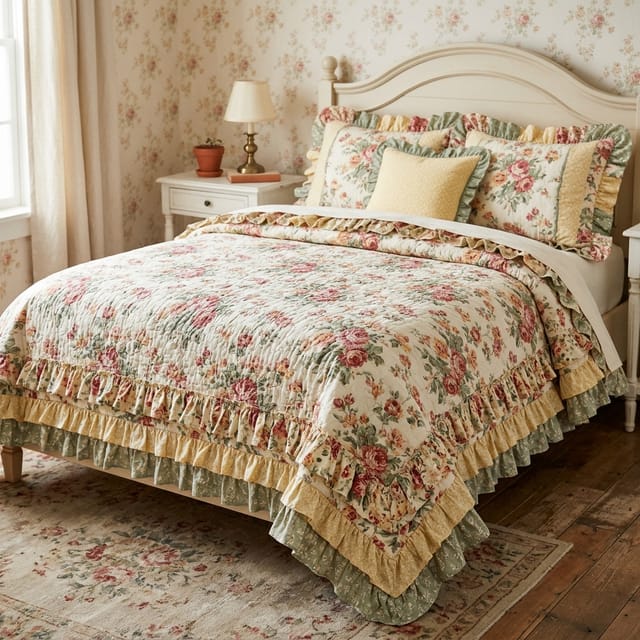
Layer the bed with a floral quilt, ruffled shams, and a pile of decorative pillows that you'll remove every night without complaint. Add a skirted dressing table, fabric-covered lamp bases, and a small vase of fresh flowers on the nightstand to wake up to romance daily.
Kitchen & Dining
Paint cabinets in sage or butter, then dress open shelving with collections of floral teacups, transferware, and pretty serving pieces. Use floral tablecloths or placemats, add ruffled café curtains, and display fresh flowers or potted herbs in vintage pitchers.
Bathroom
A small floral wallpaper makes a big impact here. Add ruffled shower curtains, floral hand towels, and collections of pretty soaps or vintage perfume bottles on a painted tray. A skirted sink or vanity stool continues the soft, romantic feeling.
Small Spaces & Rentals
Use removable floral wallpaper on one wall or inside a bookcase for impact without commitment. Pile your bed or sofa with pillows, add peel-and-stick molding, and focus your collections on vertical spaces like walls and shelves to keep floor space clear while maximizing the layered look.
Get it on any budget
Under $200
Under $500
Renter-friendly
- Use removable floral wallpaper on one accent wall or inside a bookcase to add pattern without damaging walls
- Slipcover existing furniture in floral or striped fabrics that can move with you to your next space
- Hang lightweight botanical prints with removable picture hanging strips instead of nails
- Layer rugs over rental carpet to add color and pattern, and use furniture skirts to hide less-than-lovely existing pieces
Easy to avoid
- Matching everything too perfectly—Marguerite's charm is in the collected-over-time feeling, so mix your florals and let them argue a little
- Forgetting the neutral breathing room—even romantic cluttercore needs cream, white, or soft backgrounds so the eye can rest between patterns
- Skipping the vertical layers—it's not just about covering surfaces, but also layering artwork, shelving, and height variation to create depth
- Going too precious—this style works because it feels lived-in and loved, not museum-perfect, so choose washable fabrics and touchable objects
FAQ
How do I mix floral patterns without it looking chaotic?
Stick to a consistent color palette across your patterns—if everything shares rose, sage, and cream, even wildly different florals will feel related. Vary the scale of your patterns (one large floral, one small ditsy print, one stripe or check) and use solid colors or neutrals as buffers between the busiest pieces.
What's the difference between romantic cluttercore and just being messy?
Romantic cluttercore is intentionally curated clutter with a color story and visual rhythm. Each collection is grouped thoughtfully, surfaces are arranged in balanced compositions, and there's always a layer of cream or neutral to give the eye a place to rest. Messiness lacks that underlying organization and color cohesion.
Can I do romantic cluttercore in a modern apartment?
Absolutely—the contrast between modern architecture and grandmillennial softness is actually wonderful. Use removable wallpaper, focus on textiles and accessories rather than permanent changes, and let your skirted furniture and floral layers warm up contemporary spaces. The juxtaposition makes both elements more interesting.
Where can I find affordable chintz fabric and floral pieces?
Thrift stores and estate sales are goldmines for vintage floral pieces and actual chintz fabric. Online fabric retailers sell chintz by the yard for DIY projects, and many mainstream home stores now carry grandmillennial-inspired florals. Look for duvet covers and curtains that can be repurposed into pillow covers or table skirts.
How many throw pillows is too many?
In Marguerite's world, there's no such thing, but practically speaking, you want enough to create visual abundance without making seating unusable. For a sofa, five to seven pillows in varying sizes works; for a bed, start with sleeping pillows plus four to six decorative ones. If you're removing them and sighing heavily, you might have crossed the line.
Some links may earn MAX by Design a small commission at no cost to you.