The Style Guide · Eclectic Maximalism
Thrift Store Maximalism: How to Get Maeve's Secondhand Eclectic Look
Maeve proves that the best maximalism doesn't come from stores—it comes from patience, good eyes, and the thrill of the hunt.
What is Secondhand Collected Maximalism?
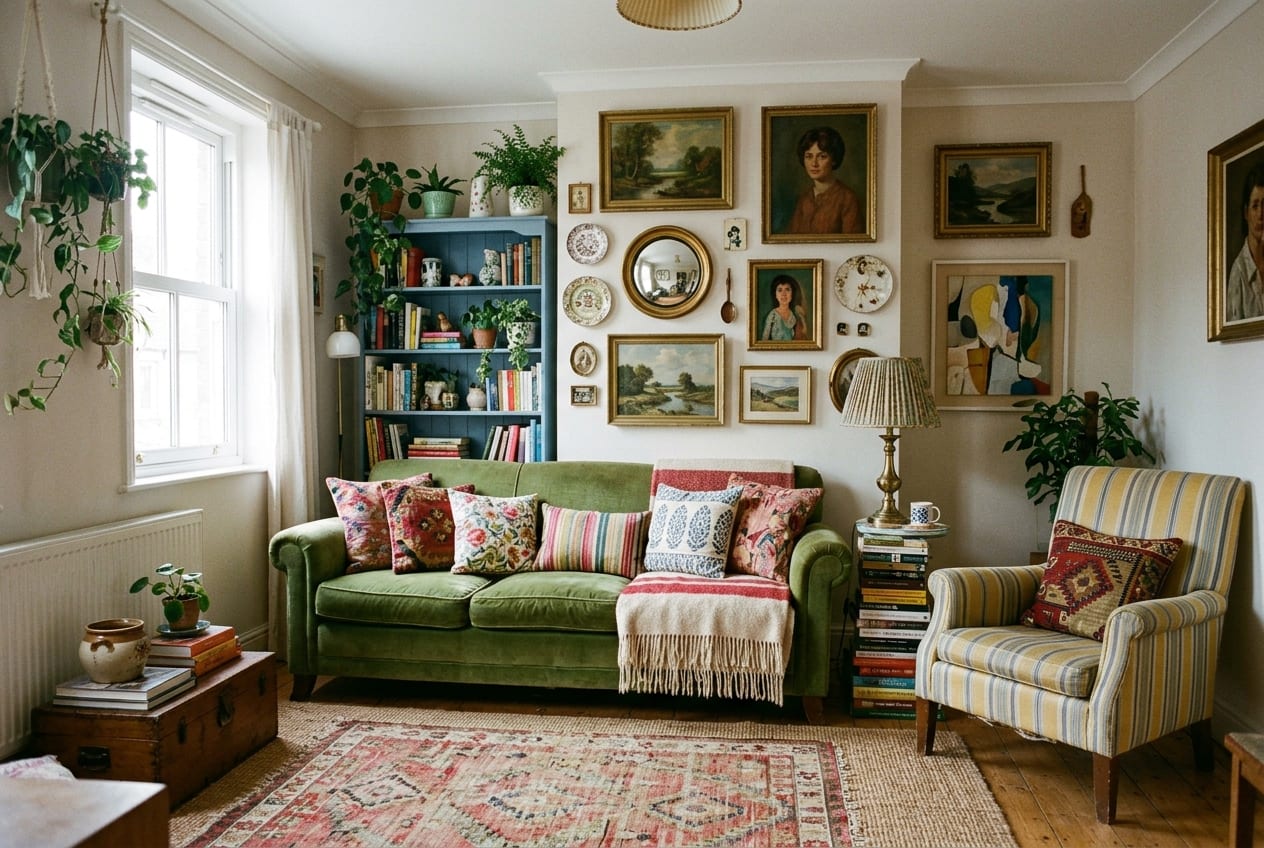
Secondhand Collected Maximalism is the art of building a room entirely from thrifted, vintage, and pre-loved pieces that somehow all speak the same visual language. It's maximalism without the markup, where every velvet cushion, brass lamp, and faded floral has a past life and a good story. Maeve's room feels like it took decades to assemble, even though she probably found half of it in six months of dedicated Saturday morning hunting. Nothing matches exactly, but everything belongs—a trick that only works when you've got a confident eye and refuse to settle for things that don't spark joy or conversation.
This approach has roots in bohemian collecting traditions and the grand, cluttered homes of artists and writers who furnished from estate sales and inherited pieces. It draws from the eclectic maximalism of the 1970s, when mixing eras and styles was a rebellion against matchy-matchy sets, and from the recent resurgence of sustainable living and circular fashion principles applied to interiors. Thrift culture itself has evolved from necessity to choice, from budget constraint to environmental statement, and Maeve represents that shift—she's not shopping secondhand because she has to, but because she genuinely believes the best stuff has already been made.
People love this style now because it's the antidote to algorithm-driven design and rooms that look like everyone else's. It's maximalism with a conscience, where your money goes to small resale shops and estate sales instead of fast furniture corporations. There's treasure-hunting dopamine in every piece, and the room tells your story, not a brand's. Plus, in an era of inflation and sameness, Maeve proves you can have a room that looks like a magazine spread without the magazine budget—you just need patience, good thrift timing, and the confidence to trust your own taste over trends.
The signatures
- Every piece is secondhand, vintage, or thrifted—no retail allowed
- Mixed patterns (florals, stripes, geometrics) that share a color family
- Velvet and worn textures that show age beautifully
- Brass and wood tones from different eras that somehow harmonize
- Layered textiles—throws, cushions, rugs—all from different sources
- Collections displayed casually: books, art, found objects with history
Anatomy of the look
Color & Paint
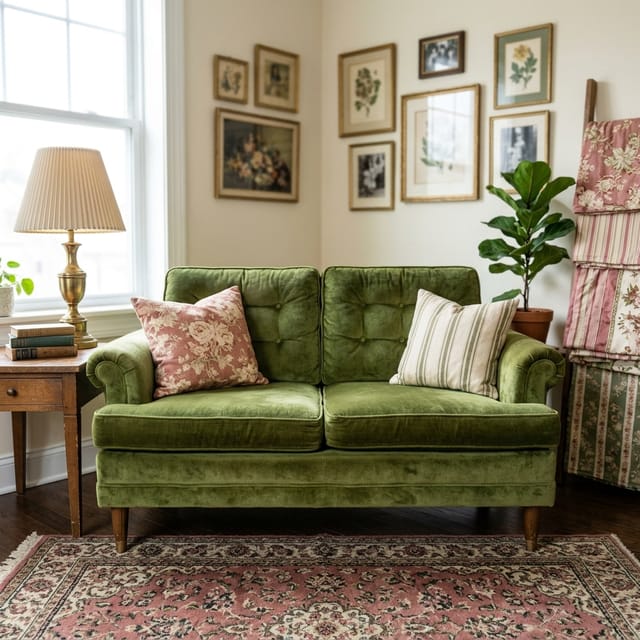
Maeve's walls are Thrift Cream, a soft off-white that reads as warm canvas rather than stark backdrop. This neutral is essential—it lets the collected chaos of secondhand finds breathe without competing. The room's color story comes from the pieces themselves: Velvet Moss from a found sofa, Faded Rose from mismatched cushions, Brass Find from flea-market lamps. Paint is the one thing Maeve might buy new, but she'd choose it to complement her best thrifted score.
Walls & Pattern
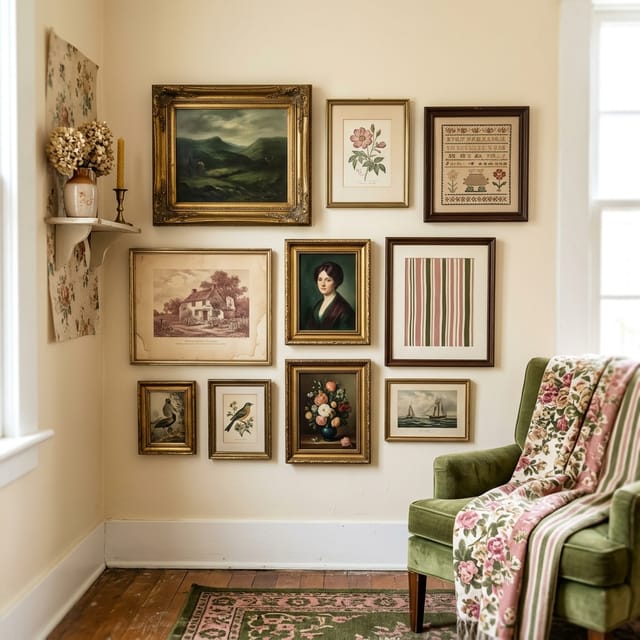
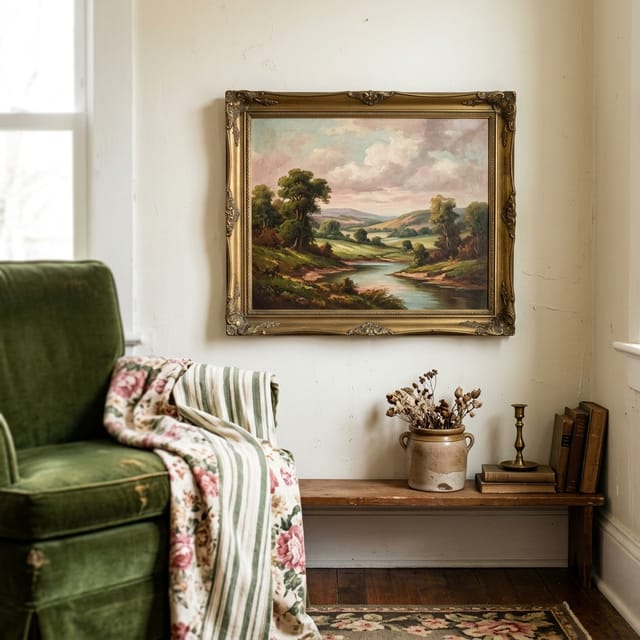
Pattern comes from what Maeve finds, not what she plans. Vintage floral prints in thrifted frames hang beside geometric textiles used as wall hangings, next to a faded landscape oil painting from an estate sale. The mix works because she's consistent about scale—small to medium prints dominate, with one or two larger pieces as anchors. Wallpaper is rare here unless she scores vintage rolls or uses fabric remnants as makeshift covering. The walls are a gallery of secondhand stories.
Furniture & Shapes
The hero is always a statement piece found for a steal—Maeve's green velvet sofa, probably from the 1970s, anchors the room. Around it, she's built a collection of mismatched side tables (one wicker, one wood, one brass and glass), a vintage rattan chair, and a midcentury bookshelf that was someone's office discard. Nothing matches, but the proportions work because she's got an eye for scale. The furniture spans decades but shares a quality: it was built to last, and it's still here.
Textiles
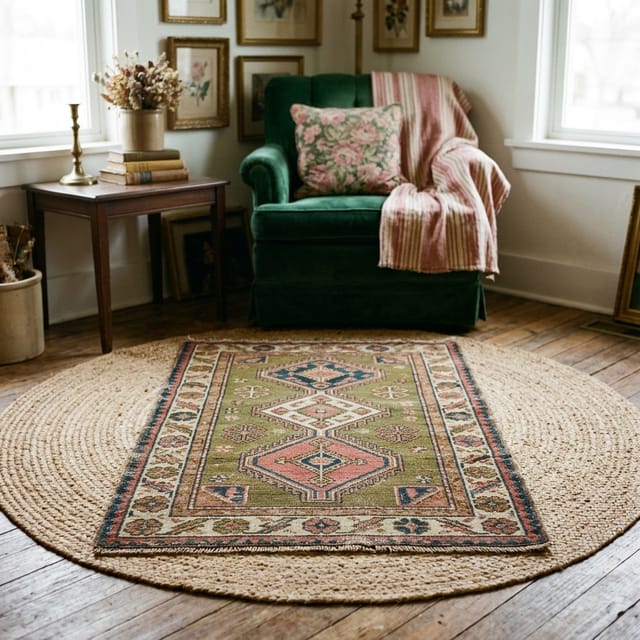
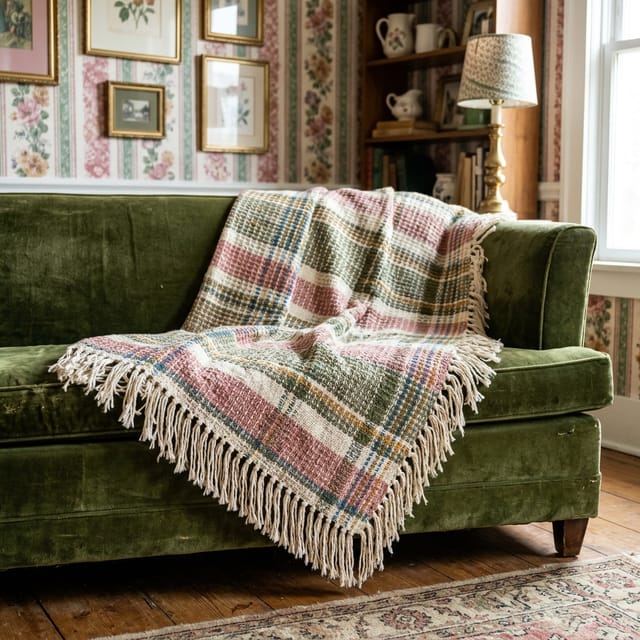
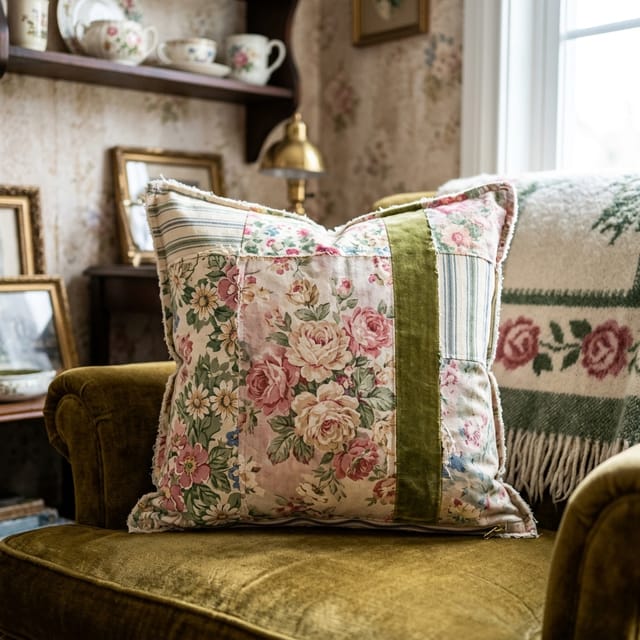
This is where Maeve really shines. Every cushion is from a different decade—a faded rose velvet here, a striped linen there, a needlepoint pillow someone's grandmother made. The kilim rug was a flea market score, the fringe throw came from an estate sale, and the vintage quilt folded over the sofa arm has a story she'll tell you. Mixing patterns works because she sticks to her color family: greens, pinks, creams, and brass tones thread through everything. Worn edges and faded colors aren't flaws—they're proof of life lived.
Lighting
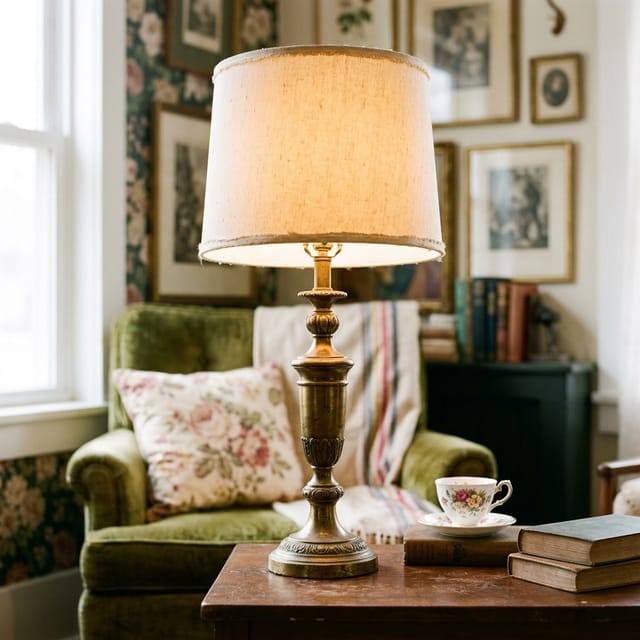
Maeve never buys new lamps. Her collection of vintage brass lamps—some with pleated shades, some with glass globes—came from thrift stores, estate sales, and the occasional curb find she rewired herself. The mix of finishes (some tarnished, some polished) adds depth, and the warm glow makes everything look better at night. She'll add a vintage chandelier if she finds one, or string up old Christmas lights in glass jars. Lighting is where brass and patina do their best work.
Collections & Accessories
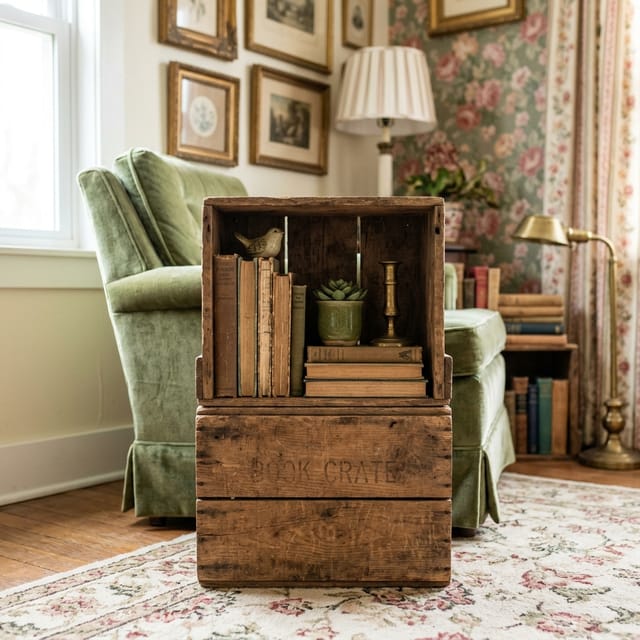
Maeve collects what catches her eye: stacks of vintage books with beautiful spines, wooden crates repurposed as shelving, ceramic vases in odd shapes, brass candlesticks of varying heights. Nothing is precious—these are objects meant to be touched, moved, rearranged. She groups things in threes and fives, clusters them on surfaces, and isn't afraid of a little clutter because it reads as abundance, not mess. Every object has been chosen, even if it cost two dollars.
Plants & Flowers
Plants live in thrifted containers—a brass planter, a ceramic pot with a chip, a vintage tin that once held tea. Maeve prefers easy greenery: pothos trailing from a high shelf, a snake plant in a found basket, a fiddle leaf fig she propagated from a friend's plant. Fresh flowers go in mismatched vintage vases, often from the grocery store or her own garden. The greenery is real, abundant, and costs almost nothing—just like everything else in the room.
The recipe
The Maeve Formula
- 160% neutral base (cream walls, worn wood, natural textures) to let the finds shine
- 230% color from one or two hero pieces (the green velvet sofa, the pink cushions)
- 310% brass, gold, and warm metallics to tie different eras together
- 4Every piece must be secondhand, vintage, or thrifted—no exceptions, no new retail
Paint picks
Thrift Cream #F4EEE2
Walls and ceiling—the warm, soft backdrop that makes every thrifted find look intentional
Velvet Moss #4F7A3F
Accent wall behind the sofa, or use in a smaller room to make vintage finds pop
Faded Rose #C46A7A
Inside of a bookshelf or cabinet—a surprise that ties together all the pink-toned textiles
Brass Find #D9B44A
Trim, door frames, or a ceiling detail to echo all the brass and gold in the room
Room by room
Living Room
Start with one statement piece—a velvet sofa, a vintage rug, a killer lamp—and build around it. Layer textiles from different eras but keep your color story consistent, and don't be afraid to mix wood tones and brass finishes.
Bedroom
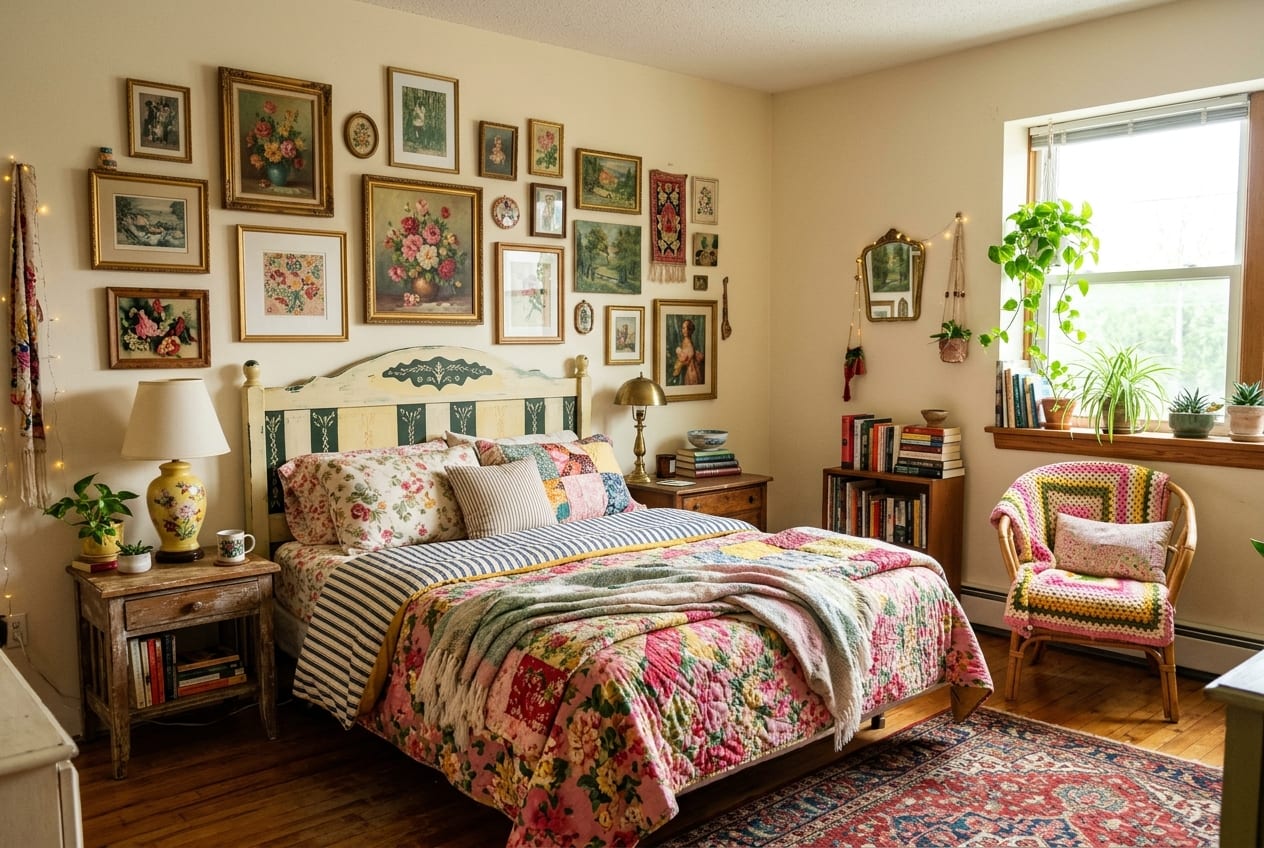
Thrifted quilts and vintage linens are your best friends here. Mix floral and striped pillowcases, layer a faded bedspread over modern sheets, and use vintage nightstands that don't match. The bed becomes a textile showcase.
Kitchen & Dining
Mismatched vintage chairs around a secondhand table create instant charm. Display thrifted dishes, glassware, and serving pieces on open shelves, and use vintage tins and canisters for storage. Every meal feels like a dinner party from another era.
Bathroom
Vintage brass fixtures, a thrifted mirror, and secondhand towels in your color family transform a rental bathroom. Use vintage jars and containers for storage, and hang a small piece of thrifted art. Even the smallest room deserves treasure.
Small Spaces & Rentals
Maeve's approach is perfect for renters because nothing is permanent and everything is movable. Focus on textiles, lighting, and accessories—all easy to take with you. A thrifted rug and a few vintage lamps can transform a beige box without touching the walls.
Get it on any budget
Under $200
Under $500
Renter-friendly
- Focus on movable pieces: rugs, lamps, textiles, and furniture—nothing that requires installation or wall damage
- Use removable hooks for hanging vintage textiles and art, or lean large pieces against walls instead of hanging
- Layer thrifted rugs over builder-grade carpet to hide what you can't change, and take them all with you when you leave
- Build your collection slowly at thrift stores and estate sales—every piece is an investment in your next home, too
Easy to avoid
- Buying something just because it's cheap—Maeve only brings home what she truly loves, even if it takes months to find
- Forgetting your color story—without a consistent palette, thrifted maximalism can look like a hoard instead of a collection
- Skipping the cleaning and repair step—vintage pieces often need a wash, a tightening, or a bulb replacement to shine
- Giving up too soon—this style takes time and patience; the room builds piece by piece, hunt by hunt, story by story
FAQ
How do I make thrifted pieces look cohesive instead of chaotic?
Stick to a consistent color palette across all your finds—Maeve's greens, pinks, creams, and brass tones thread through every piece. Also pay attention to scale and proportion: mix sizes and heights, but keep the visual weight balanced. Finally, edit ruthlessly—just because it's a good find doesn't mean it belongs in this room.
Where should I start thrifting for maximalist decor?
Estate sales are gold for furniture and lamps; thrift stores are best for textiles, art, and small decor; flea markets offer rugs, brass, and one-of-a-kind pieces. Go often, go early, and bring measurements and paint swatches. The best stuff goes fast, and you'll develop relationships with sellers who'll hold things for you.
How do I clean and restore vintage finds safely?
For textiles, check for stains and smells before buying—many can be hand-washed or dry-cleaned. For brass and metal, use a gentle polish or leave the patina if you like the aged look. For furniture, tighten screws, replace missing hardware, and consider reupholstery if the bones are good but the fabric isn't. Always test cleaning methods on a small hidden area first.
Can I mix thrifted pieces with some new items?
Maeve would say no—her rule is everything secondhand—but in real life, you can mix in a few new basics like paint, light bulbs, and hardware. The key is that new pieces should be invisible supports, not focal points. If you must buy new, choose simple, timeless shapes that let the vintage pieces remain the stars.
How long does it take to furnish a room entirely with thrifted finds?
Anywhere from three months to two years, depending on how often you hunt and how specific your vision is. Maeve's room likely took a year of consistent weekend thrifting, estate sale hopping, and online marketplace scrolling. The timeline is part of the charm—each piece is a small victory, and the room evolves as you find things, not as you buy them all at once.
Some links may earn MAX by Design a small commission at no cost to you.