The Style Guide · Hollywood Regency
Mirror-Gallery Vanity Maximalism: How to Get Lulu's Glittering Look
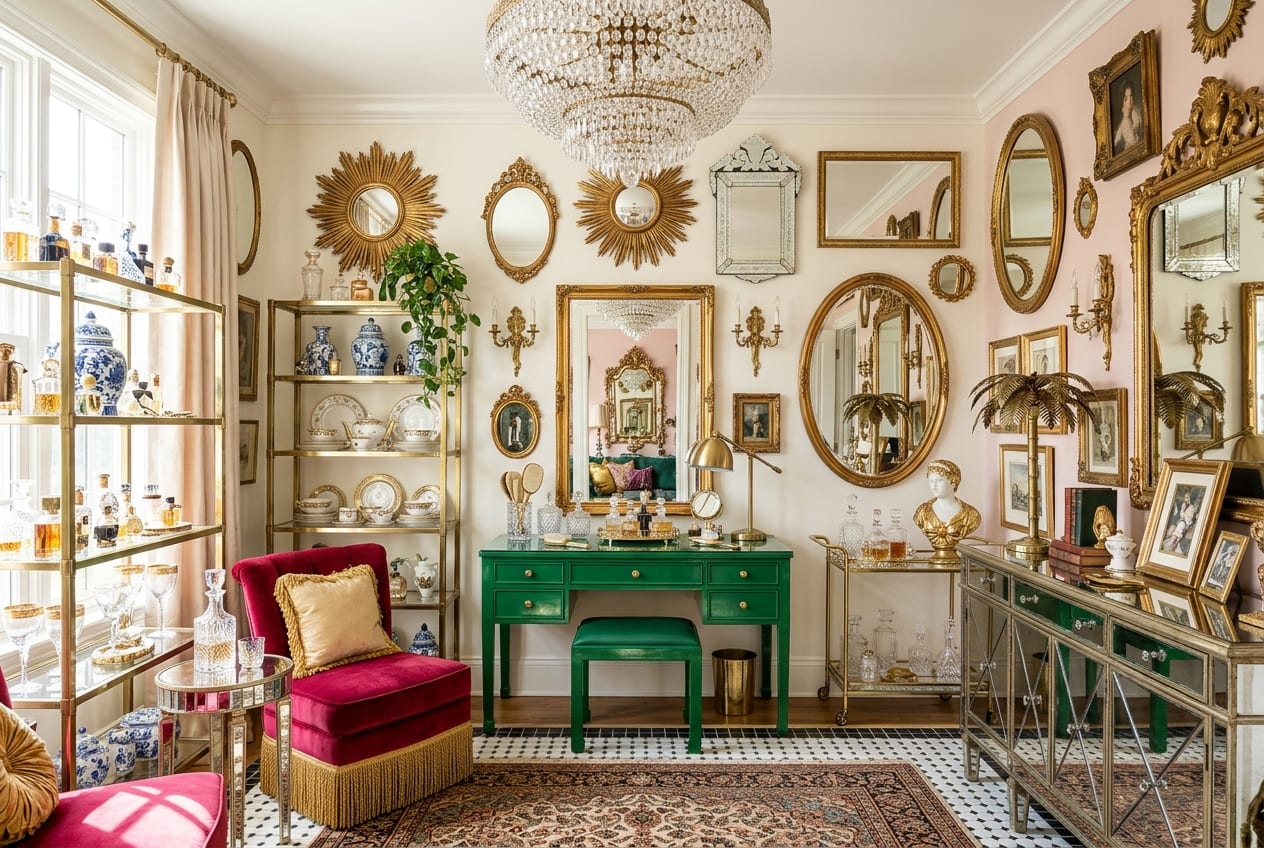
Step into Lulu's world where every wall becomes a flattering portrait gallery and confidence multiplies with every reflection.
What is Mirror-Gallery Vanity Maximalism?
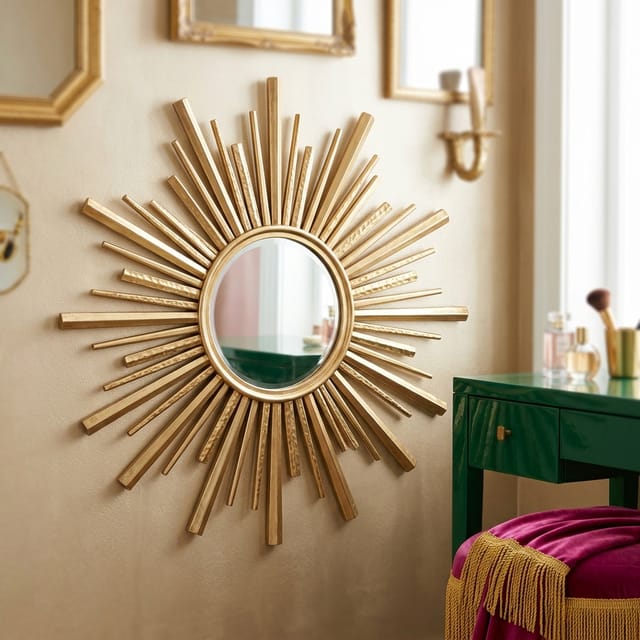
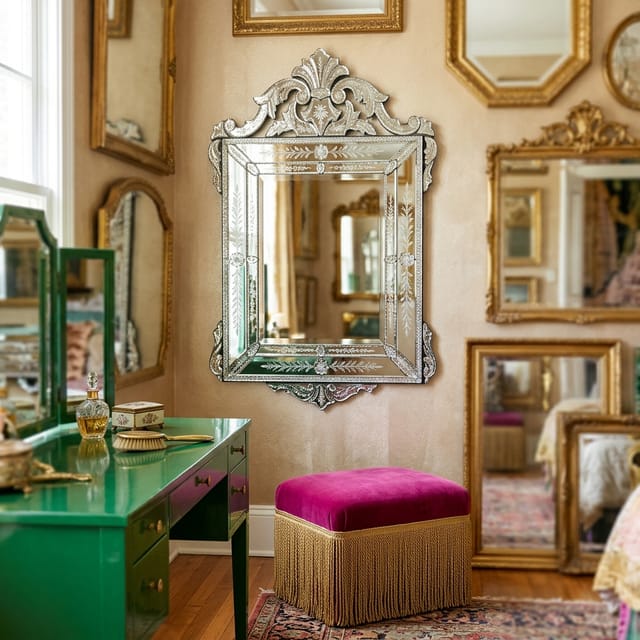
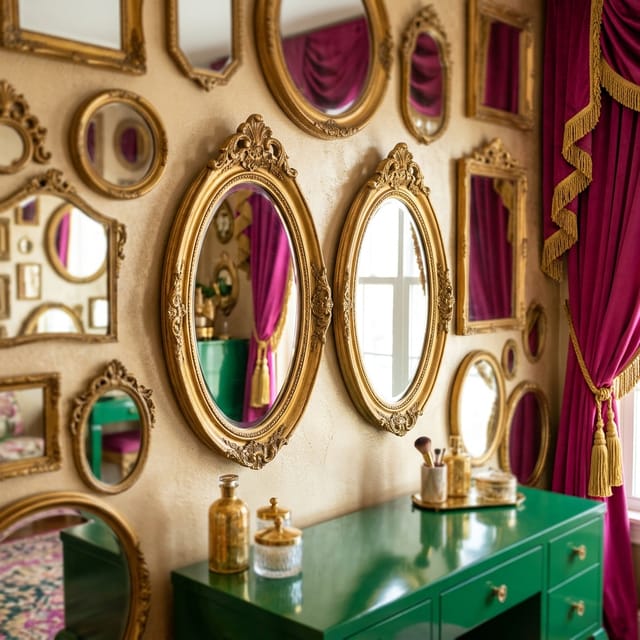
Mirror-Gallery Vanity Maximalism is the art of surrounding yourself with reflective surfaces that multiply light, beauty, and self-assurance. Lulu treats mirrors not as functional tools but as a collection of golden portraits, each frame a compliment waiting to happen. This style layers gilt-framed mirrors of every size and shape across walls like a salon-style art gallery, but instead of paintings, you're the masterpiece. The effect is theatrical, optimistic, and unapologetically glamorous—a space that insists you look marvelous from every possible angle.
This approach draws heavily from Hollywood Regency, the mid-century design movement that brought movie-star glamour into American homes during the 1930s through 1960s. Designers like Dorothy Draper and William Haines understood that mirrors weren't just reflective glass—they were confidence builders, space expanders, and light catchers that made every room feel like a dressing room at MGM. The European salon tradition also influences Lulu's sensibility, particularly the French habit of hanging mirrors in conversational clusters rather than lonely singles. Add a dash of 18th-century Venetian mirror-making craft, and you have a style that's equal parts Old Hollywood, Continental elegance, and modern self-love.
People are drawn to Lulu now because she offers something our screen-filled lives desperately need: the pleasure of seeing ourselves in three dimensions, beautifully framed and warmly lit. In an era of harsh phone cameras and unflattering Zoom angles, a room full of gilt mirrors feels like a radical act of self-kindness. This style also solves practical problems—mirrors make small spaces feel vast, dark rooms feel luminous, and boring rentals feel instantly collected and curated. Most importantly, Lulu reminds us that surrounding yourself with beauty isn't vanity, it's self-respect made visible.
The signatures
- Multiple gilt mirrors in mixed shapes clustered salon-style
- Green lacquer furniture as the grounding counterpoint to all that shimmer
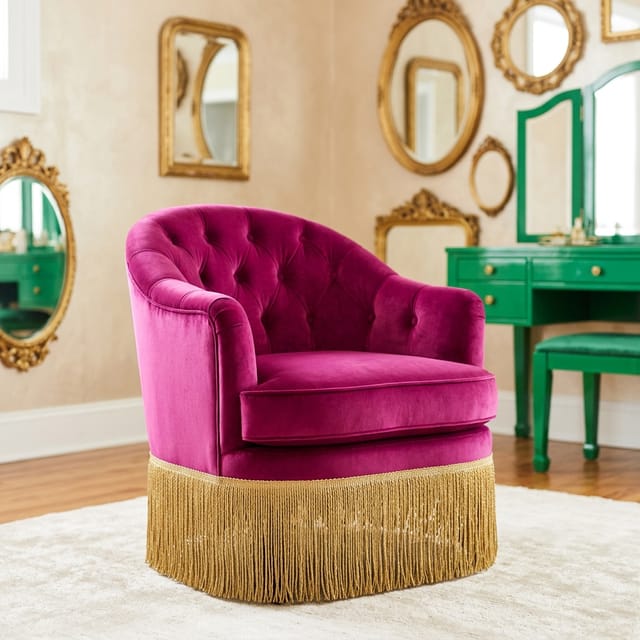
- Magenta or fuchsia velvet with gold fringe for unapologetic glamour
- Champagne or cream walls that act as a neutral stage for the gilt
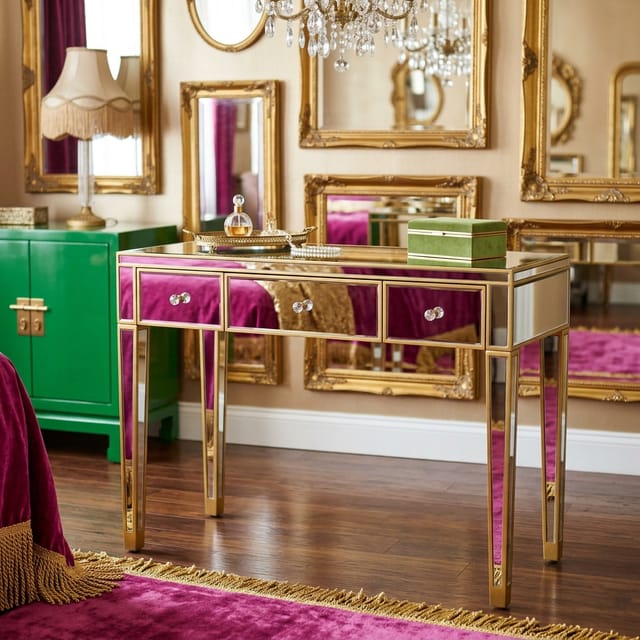
- Reflective surfaces layered on reflective surfaces (mirrored furniture, glass, brass)
- Strategic lighting that makes every mirror glow like a portrait spotlight
Anatomy of the look
Color & Paint
Lulu's walls wear Champagne—a warm, soft neutral that makes gilt frames pop without competing. This isn't stark white; it's the color of candlelight on silk, creating a gentle backdrop that lets the mirrors become the stars. Accents come through furniture and textiles in saturated jewel tones: emerald green lacquer and magenta velvet that feel rich and confident against all that gold.
Walls & Pattern
The walls themselves are a gallery, hung salon-style with mirrors in every conceivable shape—sunbursts, ovals, ornate rectangles, convex rounds. Lulu arranges them with the density of a museum wall, edges nearly touching, creating a glittering crowd rather than lonely individuals. If pattern appears, it's subtle—perhaps a damask wallpaper in one alcove or delicate molding painted to match the walls, never competing with the mirror collection.
Furniture & Shapes
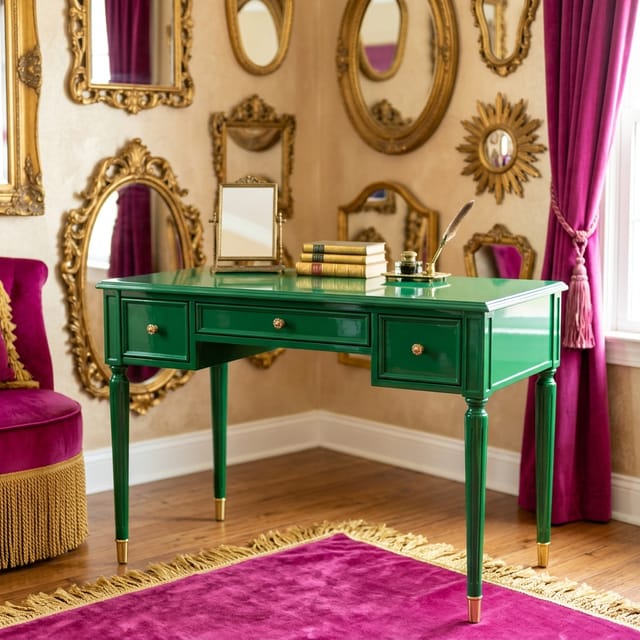
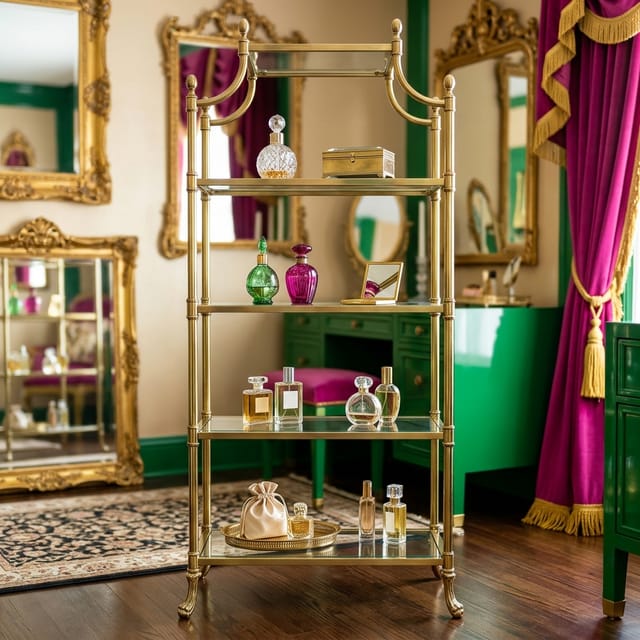
Furniture here is deliberately sculptural and glossy—a green lacquer desk catches light like a jewel, while a magenta velvet chair with gold fringe provides a throne-like seating moment. Lulu favors pieces with reflective finishes: mirrored consoles, brass étagères, glass-topped tables that continue the theme of multiplication and shimmer. Shapes tend toward curves and Hollywood glamour—nothing too angular or minimal.
Textiles
Textiles in Lulu's world are plush and trimmed—velvet in saturated pinks and magentas, always with gold fringe, tassels, or piping. Curtains might be silk taffeta that catches light, or heavy velvet that frames windows like theater curtains. Rugs are typically pale—cream or blush—to keep the floor from competing with the walls, though a pink and green needlepoint or Persian rug could work beautifully.
Lighting
Lighting is critical in Lulu—it's what makes the mirrors come alive. She layers warm-toned sources: a crystal chandelier for overhead sparkle, brass sconces flanking key mirrors like portrait lights, and table lamps with silk shades that cast a flattering glow. The goal is to create multiple points of warm light that bounce between mirrors, never harsh overhead fluorescence.
Collections & Accessories
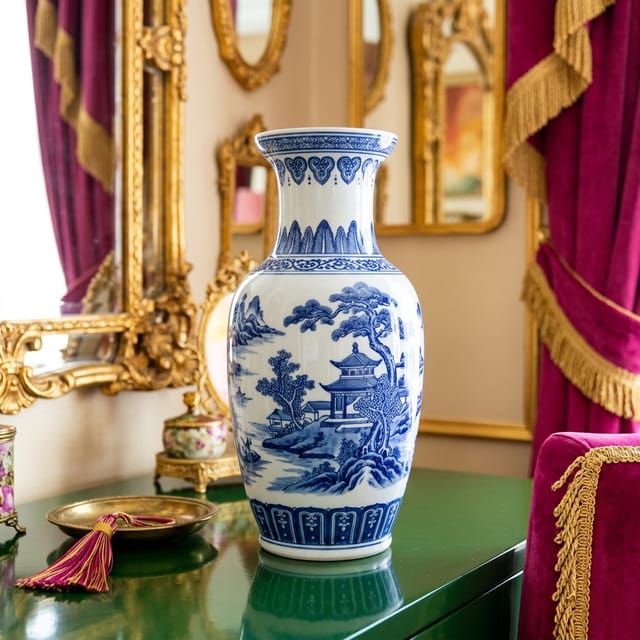
Accessories continue the themes of reflection and glamour: a brass étagère displays blue and white porcelain (the cool contrast to all that warm gold), perfume bottles on mirrored trays, gilt-framed family photos, and perhaps a vintage hand mirror collection. Every surface holds something that catches light—crystal, glass, lacquer, metal. Nothing matte or dull makes it into Lulu's world.
Plants & Flowers
Flowers are essential but specific—Lulu prefers lush, romantic blooms in pinks and whites (peonies, roses, ranunculus) arranged in reflective vessels like mercury glass or crystal. Greenery tends toward glossy leaves—fiddle leaf figs, rubber plants—that add life without competing with the gilt. Fresh flowers feel more on-brand than dried, keeping the space feeling current and cared-for rather than dusty.
The recipe
The Lulu Formula
- 160% warm neutrals (champagne walls, cream rugs) as the flattering backdrop
- 225% gilt and brass in frames, furniture legs, and accessories—the signature shimmer
- 310% saturated jewel tones (emerald green, magenta) in furniture and textiles for grounding
- 45% crystal and glass for additional sparkle and light refraction
Paint picks
Champagne Wall #F6EEE3
Primary wall color—creates a warm, flattering backdrop that makes gilt frames glow
Gilt Mirror #D4AF37
Accent color in frames, furniture details, and accessories—the signature metallic
Green Lacquer #1E7A4C
Statement furniture pieces like desks or cabinets—provides rich, grounding contrast
Magenta Velvet #B0175E
Upholstery and textile accents—adds warmth and glamour without reading too sweet
Room by room
Living Room
Create a mirror gallery wall above the sofa or flanking the fireplace, mixing sizes and shapes but keeping frames consistently gold-toned. Anchor with a green lacquer coffee table and magenta velvet throw pillows to bring in the color story without overwhelming.
Bedroom
Hang a large ornate mirror as a headboard alternative, or create a dressing area with a mirrored vanity flanked by sconces. Keep bedding in champagne and blush tones, then add magenta velvet as an accent bench or throw at the foot of the bed.
Kitchen & Dining
Install a mirrored backsplash or hang a collection of small gilt mirrors on the dining room wall to multiply candlelight. Paint a hutch or sideboard in green lacquer and display blue and white porcelain for a collected, layered look that still feels glamorous.
Bathroom
Replace a standard medicine cabinet with an ornate gilt mirror or hang multiple small mirrors in a cluster. Add brass fixtures, a mirrored tray for perfumes, and magenta hand towels—the bathroom becomes a powder room worthy of a movie star.
Small Spaces & Rentals
Mirrors are your secret weapon for making tiny spaces feel expansive. Lean a large floor mirror against one wall, hang a cluster of smaller mirrors opposite a window to bounce light, and choose furniture with mirrored or glass surfaces to maintain the airy, multiplied feeling.
Get it on any budget
Under $200
Under $500
Renter-friendly
- Lean large mirrors against walls instead of hanging—equally dramatic, zero holes required
- Use removable adhesive strips rated for mirrors to create gallery walls without damaging paint
- Bring in the gilt through furniture, frames, and accessories rather than permanent fixtures you can't change
- Layer mirrored trays, brass candlesticks, and reflective accessories on existing surfaces to build the look without altering the space
Easy to avoid
- Hanging mirrors too high—they should sit at eye level or below to actually be functional and flattering, not just decorative
- Mixing too many metal finishes—Lulu works because gilt/brass/gold is consistent; adding silver or copper dilutes the effect
- Forgetting about what the mirrors reflect—position them to catch windows, artwork, or beautiful views, not blank walls or clutter
- Using cool-toned or harsh lighting—the magic disappears under fluorescent bulbs; warm, layered lighting is essential to make mirrors glow
FAQ
How many mirrors are too many mirrors in one room?
You've gone too far when the reflections become disorienting or when you can't find a single sight line that doesn't include your own reflection. A good rule: mirrors should cover 20-40% of your wall space in a mirror-gallery room, clustered intentionally rather than scattered randomly. If you're constantly catching unexpected glimpses of yourself and it feels more unsettling than glamorous, edit back.
What's the best way to hang a gallery wall of mirrors?
Start with your largest mirror as the anchor (usually at eye level), then build outward, keeping frames 2-4 inches apart. Lay the arrangement on the floor first to plan it, then photograph it for reference. Use a level and proper wall anchors rated for the weight—mirrors are heavier than art. The goal is a cohesive cluster that reads as one installation, not random mirrors scattered across a wall.
Can I do mirror-gallery maximalism in a dark room with few windows?
Absolutely—in fact, mirrors work even harder in darker spaces by multiplying whatever light you do have. The key is strategic placement: hang mirrors where they'll catch and bounce light from lamps, sconces, or even the doorway. Invest in excellent warm-toned lighting and position mirrors to reflect those light sources. The champagne wall color also helps immensely in low-light rooms.
How do I clean all these mirrors without going crazy?
Embrace a rotation system—deep-clean the whole collection monthly, but do quick daily touch-ups on only the mirrors you actually look into (usually 2-3). Use a microfiber cloth and glass cleaner, or just a damp microfiber cloth for daily smudges. The upper mirrors in a gallery wall rarely need attention since you're not touching them. Think of it like dusting a large art collection—it's maintenance, but the payoff is worth it.
Where can I find affordable gilt mirrors that don't look cheap?
Thrift stores and estate sales are gold mines—look for vintage mirrors with good bones and worn gilt, which you can touch up with gold leaf pens or spray paint. Online marketplaces often have people selling grandmother's mirrors for cheap. The secret is mixing a few quality pieces with budget finds; when hung together in a gallery wall, they elevate each other. Focus on frame detail and weight—substantial frames read as expensive even when they're not.
Some links may earn MAX by Design a small commission at no cost to you.