The Style Guide · Cabinet of Curiosities
Bungalow Collector Maximalism: How to Get Hazel's Vintage Look
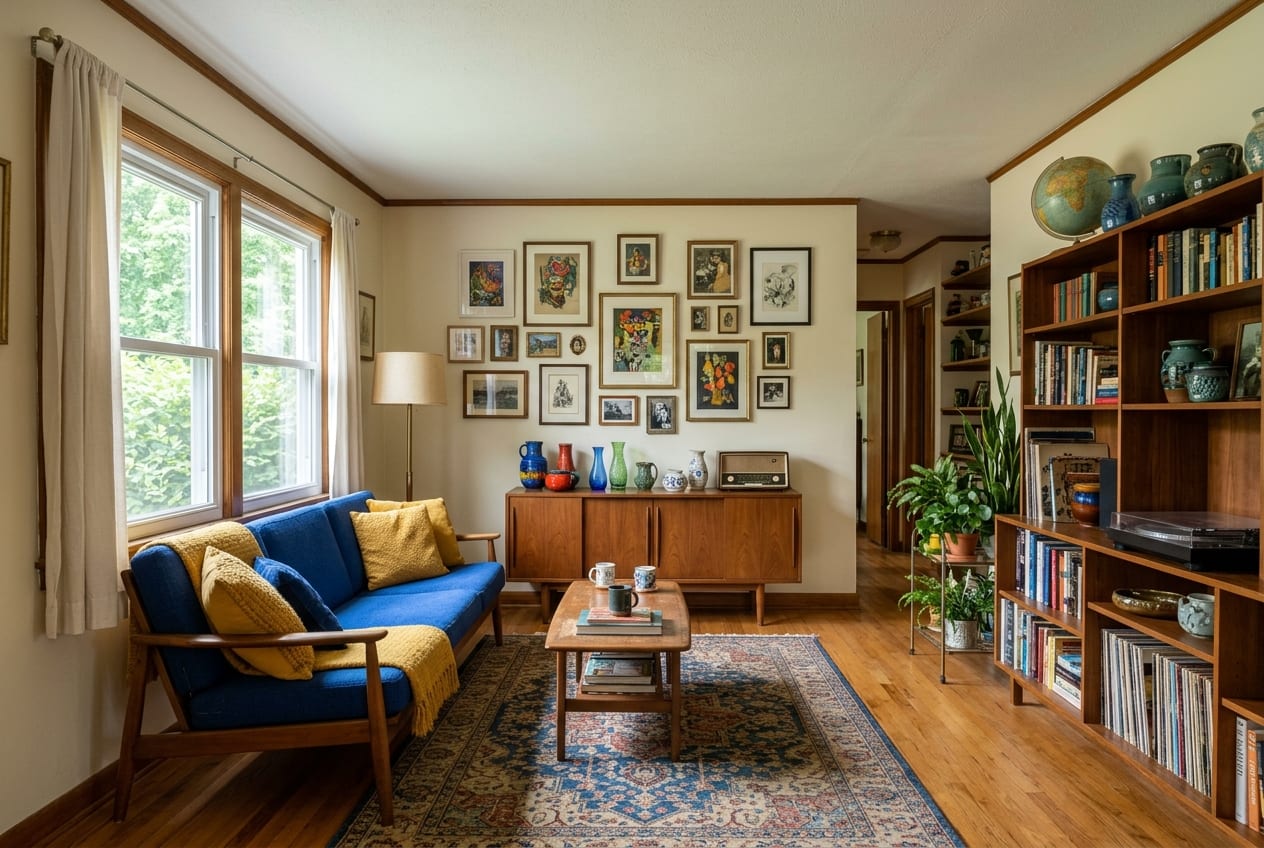
Hazel's home is a cabinet of curiosities where every shelf tells a story in warm wood, cobalt blue, and generations of found treasures.
What is Bungalow Collector Maximalism?
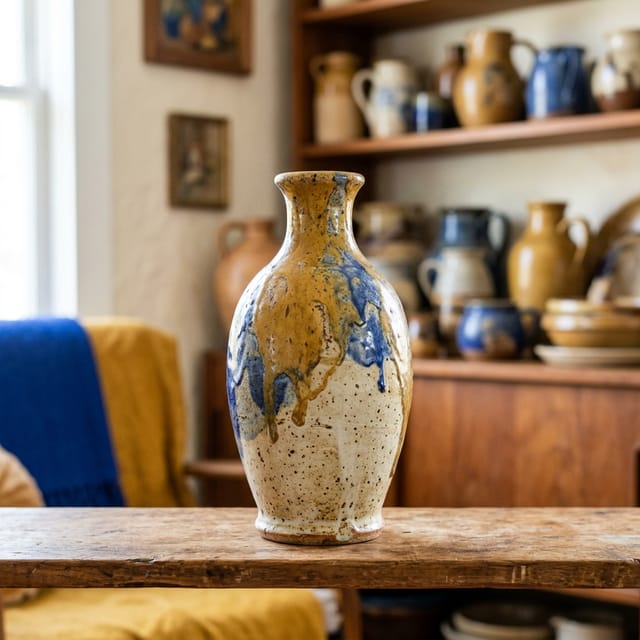
Bungalow Collector Maximalism is the art of thoughtful accumulation—where vintage finds, handmade pottery, and natural materials create rooms that feel like personal museums. Unlike minimalism's edited restraint, this style celebrates the hunt, the find, and the display. Every surface becomes a stage for collections that span decades, from Depression-era glassware to mid-century ceramics. The look is warm, woody, and wonderfully dense, but never chaotic—each piece earns its place through story, patina, or pure visual charm.
This aesthetic has roots in the American Arts and Crafts bungalows of the early 1900s, where built-in shelving and honest materials were designed to showcase the handmade and the meaningful. It borrows from the European cabinet of curiosities tradition, where scholars displayed natural specimens and artifacts in wooden cases. The mid-century modern movement added clean-lined credenzas and open shelving that turned collections into architecture. Today's version blends all three: Craftsman warmth, curiosity cabinet density, and mid-century display logic.
People love Bungalow Collector Maximalism now because it's maximalism with a soul. In an era of mass production and algorithm-driven shopping, building a collection requires time, patience, and real-world hunting—thrift stores, estate sales, grandma's attic. It's sustainable by nature, anti-trend by design, and deeply personal. Every visitor leaves wanting to start their own collection, whether it's vintage pottery, old books, or hand-thrown mugs. It's maximalism that tells your story, not a designer's.
The signatures
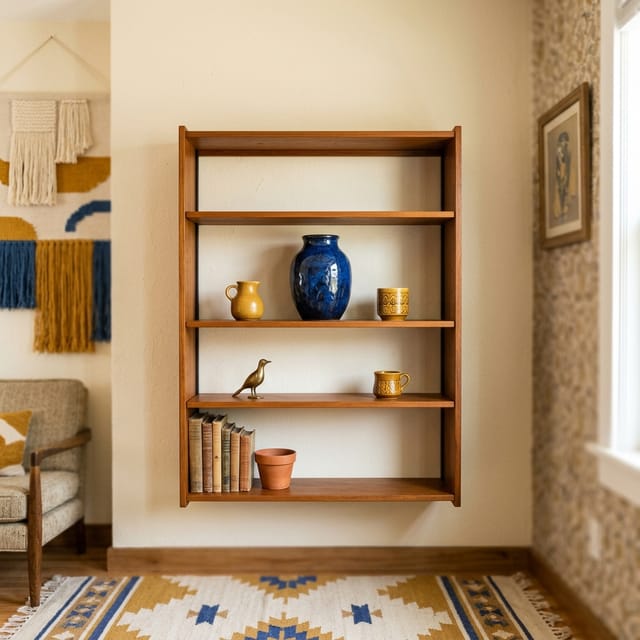
- Open wooden shelving filled floor to ceiling with vintage pottery and glassware
- Warm wood tones in teak, walnut, and oak across furniture and architectural details
- Cobalt blue and mustard yellow as accent colors in ceramics and textiles
- Collections grouped by color, shape, or era—never random, always intentional
- Mid-century credenzas and plant stands as display infrastructure
- Cream or warm white walls that let the collections shine
Anatomy of the look
Color & Paint
Hazel's walls are a warm, creamy white that reads almost like aged paper—never stark, always soft. This neutral backdrop is essential: it lets the cobalt pottery and mustard glassware pop without competing. Wood tones do much of the color work here, from honey-toned shelving to deep teak credenzas, creating a warm base that feels organic and collected over time.
Walls & Pattern
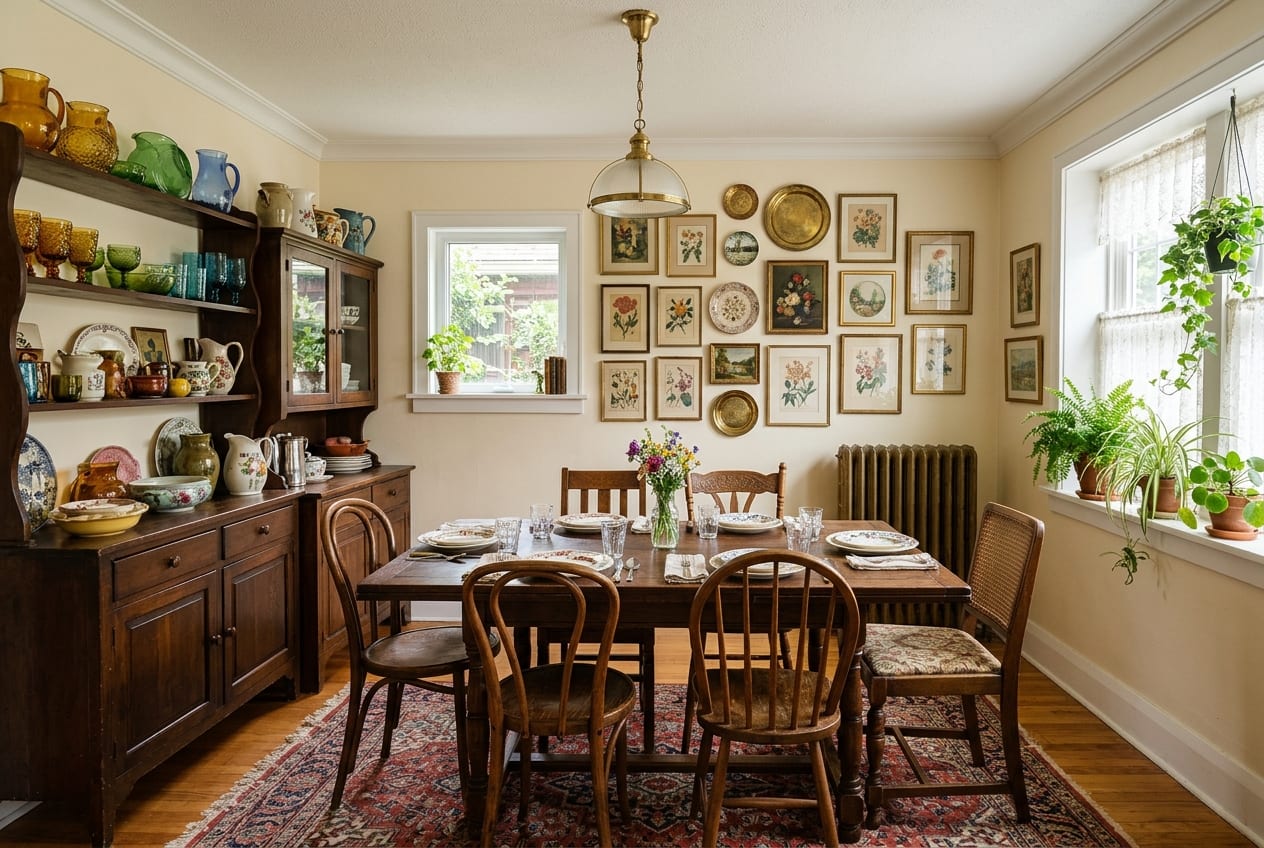
Pattern here comes from the collections themselves, not wallpaper. Rows of pottery create visual rhythm; stacked plates form graphic circles; book spines make accidental color blocks. If there's wallpaper, it's in small doses—perhaps a William Morris print in the powder room or vintage botanical prints in simple frames, echoing the Arts and Crafts heritage without overwhelming the collected objects.
Furniture & Shapes
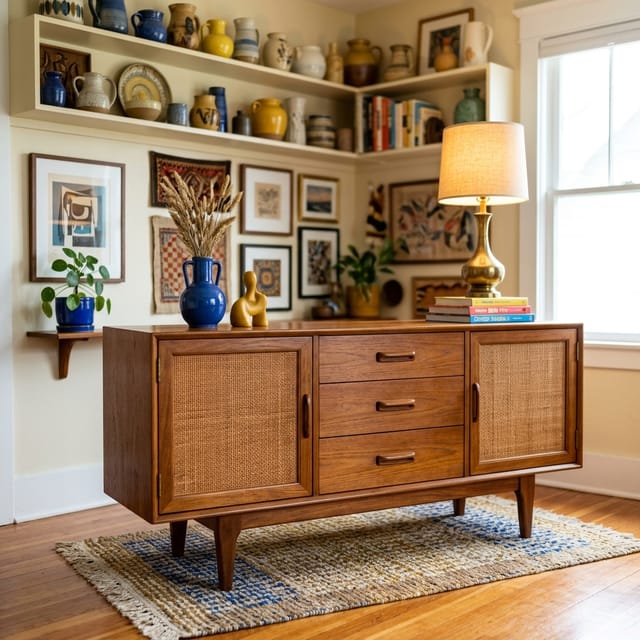
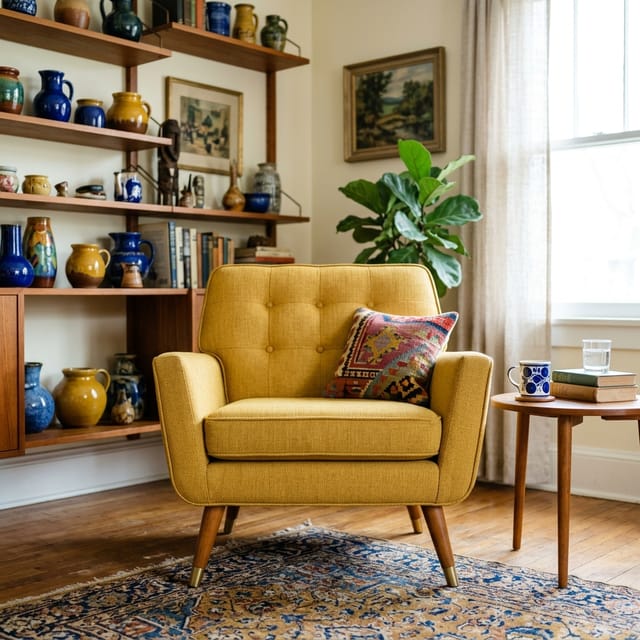
The furniture is all about display and warmth: low-slung mid-century credenzas with sliding doors, open teak shelving units that reach the ceiling, and the occasional vintage armchair in mustard velvet. Shapes are clean and honest—no ornate carving, just good joinery and beautiful wood grain. Everything serves the collection: surfaces to arrange on, shelves to fill, chairs to sit in while you admire your finds.
Textiles
Textiles are minimal but meaningful: a cobalt blue pillow on the sofa that echoes the pottery collection, a vintage wool throw in caramel tones, linen curtains that filter light without blocking it. The goal is to add warmth and a place to rest your eyes without distracting from the collections. Natural fibers—linen, cotton, wool—keep the organic, handmade feeling consistent throughout.
Lighting
Lighting in Hazel's world is warm, layered, and a little bit golden. Think brass pharmacy lamps on the credenza, ceramic table lamps with linen shades, and Edison bulbs in simple pendants. The light should feel like late afternoon year-round—warm enough to make the wood glow and the glassware sparkle. Avoid cool LEDs; this style needs the warmth of 2700K bulbs to feel right.
Collections & Accessories
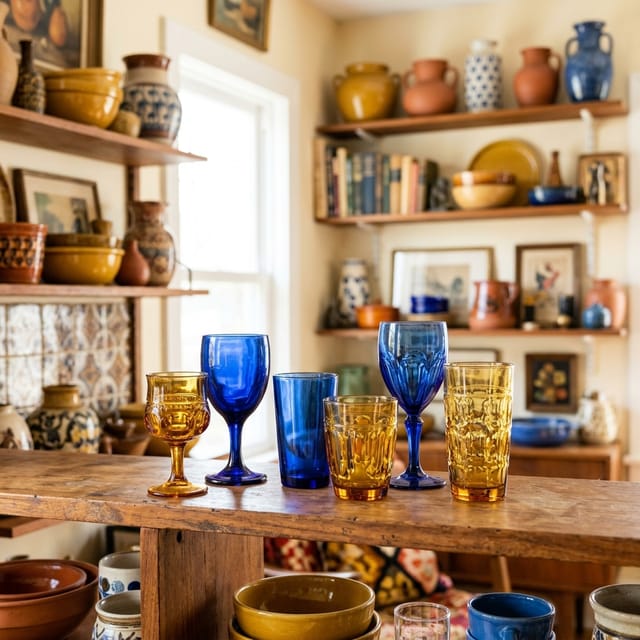
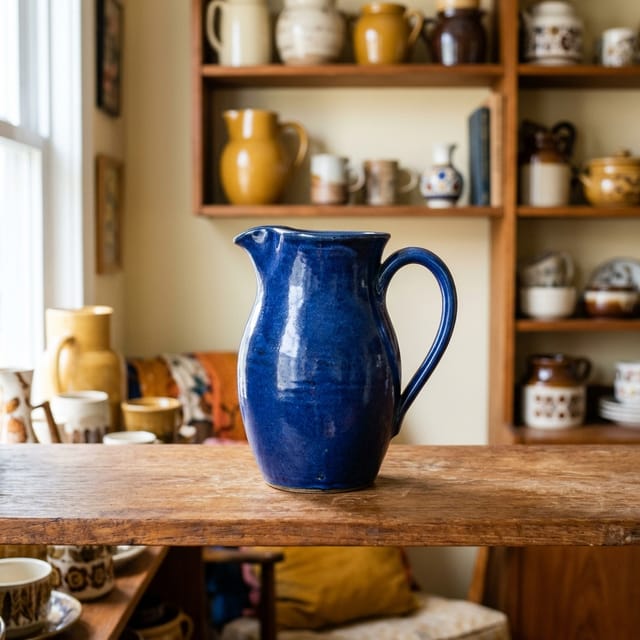
This is where Hazel shines. Collections are grouped by color (all the cobalt together), by type (pottery vases on one shelf, glassware on another), or by era (Depression glass gets its own credenza top). The key is intentional density—shelves should feel full but not crammed, with occasional breathing room. Rotate seasonally, edit ruthlessly, and always leave space for the next great find.
Plants & Flowers
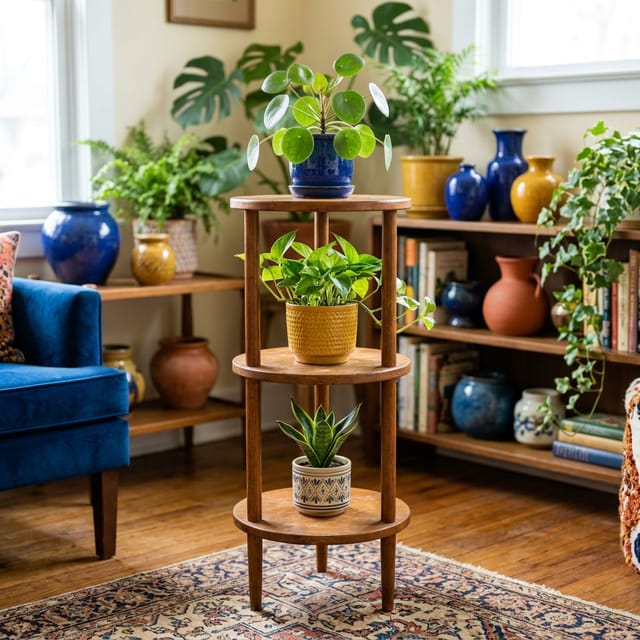
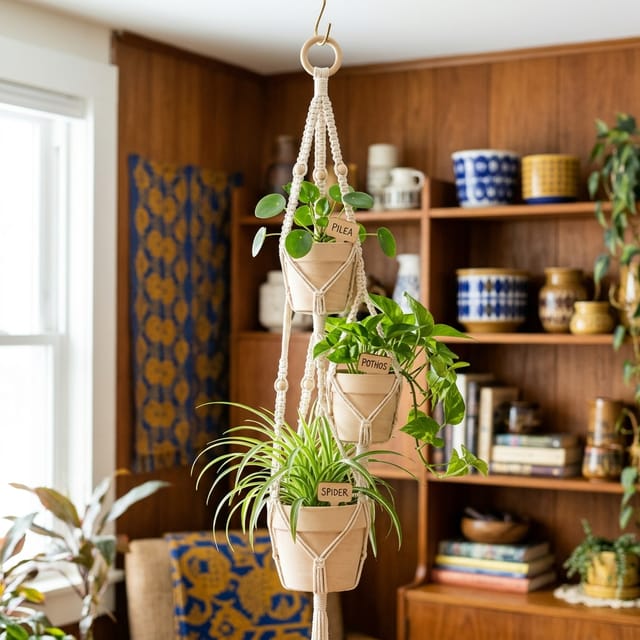
Plants are the living part of the collection: pothos trailing from high shelves, a fiddle leaf fig in a vintage planter, succulents in small pottery bowls. They add life and green without competing with the collections—think of them as another category to collect and display. Hanging planters in macramé or ceramic keep floor space clear for more shelving.
The recipe
The Hazel Formula
- 160% warm wood in furniture, shelving, and architectural details—this is your foundation
- 230% collected objects in complementary colors (cobalt, mustard, cream) grouped intentionally
- 310% breathing room—negative space that lets your eye rest and your collections shine
- 4One new find per month maximum—collecting is about patience, not speed
Paint picks
Bungalow Cream #F5EFE3
Main walls throughout—warm, soft, never stark
Cobalt #2B4C9B
Accent wall in a reading nook or inside bookshelf backs
Mustard #D6A02A
Interior of a glass-front cabinet or a single accent door
Teak #8A5A35
Trim, built-ins, or to paint mismatched furniture for cohesion
Room by room
Living Room
Anchor with a long, low credenza and flank with floor-to-ceiling shelving for your pottery collection. Keep seating simple—a mustard armchair, a linen sofa—so the collections are the stars.
Bedroom
Edit down to your favorite pieces here: a small shelf of vintage books by the bed, a collection of pottery vases on the dresser. The bedroom should feel restful, not like a showroom—save the density for public rooms.
Kitchen & Dining
Open shelving is your friend. Display your colored glassware, stack vintage plates by color, hang mugs from hooks. Let your everyday dishes be part of the collection—use them, enjoy them, rotate them seasonally.
Bathroom
A small floating shelf for apothecary bottles, a vintage mirror, cobalt glass soap dispensers—keep it minimal but meaningful. Bathrooms are great for tight, focused collections that don't need much space.
Small Spaces & Rentals
Focus on one great collection and one great shelf rather than trying to fill every wall. A single teak bookshelf filled with pottery has more impact than scattered objects. Freestanding furniture means you take it all with you when you move.
Get it on any budget
Under $200
Under $500
Renter-friendly
- Invest in freestanding shelving units—teak bookcases and mid-century credenzas go anywhere and add instant architecture without nails
- Use picture ledges and floating shelves with damage-free hanging strips to create display space without drilling
- Build your collection in portable pieces: pottery, glassware, and small objects pack up and move with you, unlike built-ins
- Layer rugs over rental carpet and use warm lamps to counter harsh overhead lighting—you're creating atmosphere, not renovating
Easy to avoid
- Buying collections all at once online instead of hunting over time—the joy is in the finding, and instant collections look instant
- Displaying everything you own all at once—even maximalists need to edit and rotate, or it becomes visual noise instead of intentional display
- Mixing too many collection types in one space—stick to pottery and glassware, or books and ceramics, not pottery and glassware and books and textiles and vintage toys
- Forgetting about scale and negative space—shelves need breathing room between objects, and rooms need places for your eye to rest
FAQ
How do I start a vintage pottery collection?
Start with one color or one era—maybe all cobalt blue, or all mid-century. Hit estate sales, thrift stores, and antique malls with a $20 budget and see what speaks to you. The best collections evolve slowly, guided by what you're genuinely drawn to, not what you think you should collect. Give yourself a year to figure out your taste.
Where should I display my collections?
Open shelving is ideal—it lets you see and enjoy everything daily. Group like with like: all pottery on one shelf, all glassware on another, or organize by color for visual impact. Credenzas and sideboards work for rotating displays. Avoid glass-front cabinets unless you love dusting, and never hide collections in closets—if you're not looking at it, why collect it?
How do I keep collections from looking cluttered?
Edit ruthlessly and group intentionally. If you collect pottery, display your favorite twenty pieces, not all fifty. Arrange by color, size, or type to create visual order. Leave some empty space on each shelf—about 20% breathing room keeps it from feeling crammed. Rotate seasonally: some collections go into storage while others get their moment.
What's the difference between collecting and hoarding?
A collection is intentional, curated, and displayed with care. Hoarding is accumulation without purpose or joy. Ask yourself: Does this item fit my collection's focus? Do I have space to display it properly? Does it bring me genuine pleasure? If you're buying just to buy, or keeping things out of guilt, that's not collecting—that's clutter with a story.
Can I mix vintage and new pieces in this style?
Absolutely, and you should. New linen curtains, a contemporary jute rug, or modern lighting can ground vintage collections and keep the room from feeling like a museum. The key is material harmony—stick with natural materials like wood, ceramic, linen, and brass. A new piece in the right material fits seamlessly; a plastic anything will stick out like a sore thumb.
Some links may earn MAX by Design a small commission at no cost to you.