The Style Guide · Memphis Design
Memphis Revival Decor: How to Get Dot's Bold, Playful Loft Look
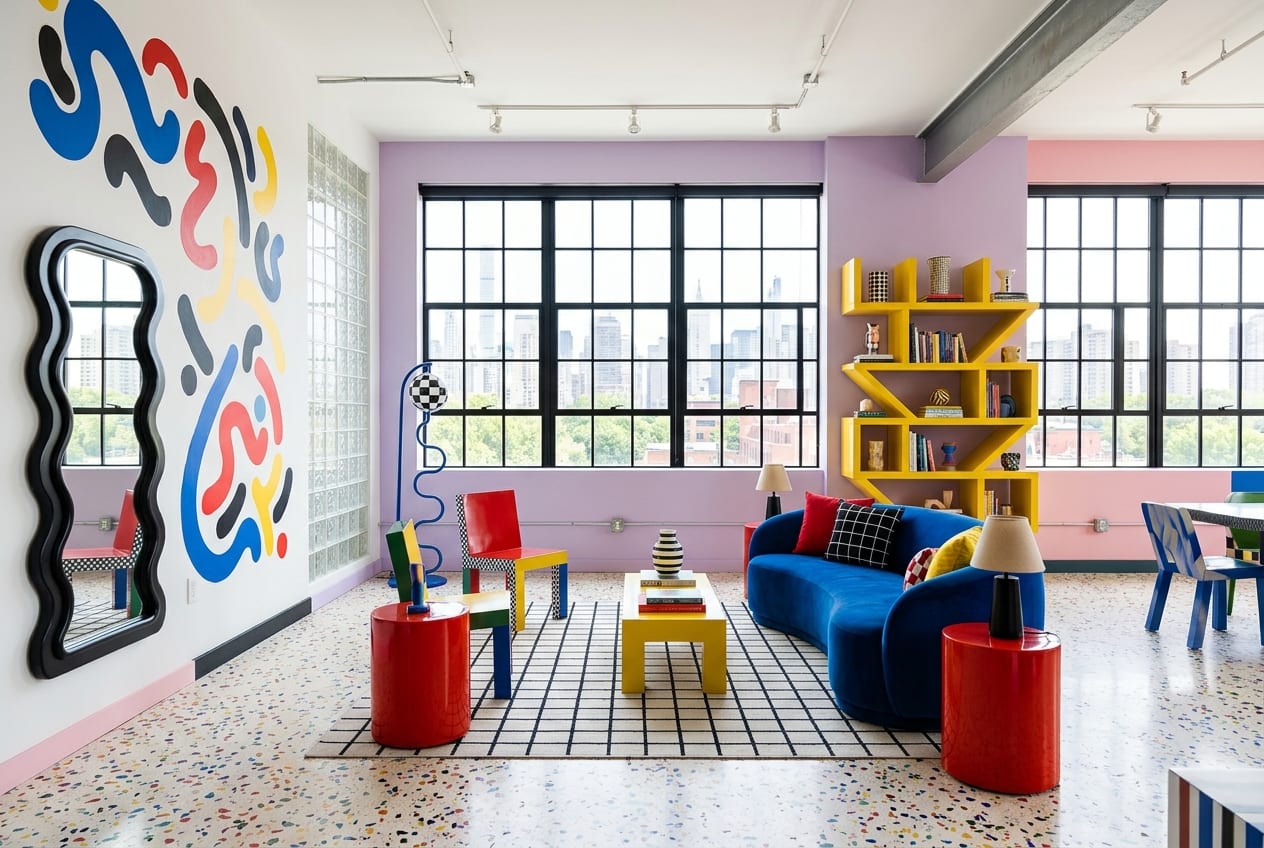
Dot's loft is what happens when a doodle gets a lease and a credit card—geometry meets joy in the most delightfully unserious way possible.
What is Memphis Revival Loft Maximalism?
Memphis Revival maximalism is what happens when 1980s Italian design rebellion crashes into modern dopamine decor and nobody calls security. It's a style built on geometric shapes that refuse to behave, primary colors that never learned to whisper, and the radical belief that furniture can be sculpture and sculpture can be funny. Dot's loft embodies this perfectly: every surface is an opportunity for a squiggle, every corner holds a shape that makes you smile, and the whole space hums with the kind of creative confidence that comes from knowing the rules well enough to gleefully ignore them.
The original Memphis Group, founded in Milan in 1981 by Ettore Sottsass and friends, was a direct rebellion against the beige minimalism and corporate modernism that dominated the seventies. They created furniture and objects that looked like they'd escaped from a cartoon, mixing laminate with marble, covering everything in patterns that clashed on purpose, and treating function as just one ingredient in a much more interesting recipe. The movement burned bright and fast, officially disbanding in 1988, but its influence never really left—it just went underground, waiting for a generation that grew up with screens and stimulation to rediscover that maximalism can be intellectual, playful can be sophisticated, and weird can be wonderful.
People love Memphis Revival now because it gives permission to be joyful without being juvenile, bold without being aggressive, and creative without being precious. In an era of algorithm-smooth interiors and perfectly curated feeds, Dot's approach feels refreshingly human and handmade, even when the pieces are mass-produced. It's maximalism for people who think design should spark conversation and creativity, not just admiration. Every element in a Memphis space has personality, which means the whole room feels alive, like it might rearrange itself overnight just to try something new. It's the antidote to taking yourself too seriously, which might be exactly what your home needs right now.
The signatures
- Bold geometric shapes: cylinders, spheres, triangles, and curves that look like they're mid-dance
- Primary color palette with pastel punctuation and the occasional neon exclamation point
- Pattern clashing as a competitive sport: squiggles meet grids meet terrazzo meet dots
- Furniture that doubles as sculpture and makes guests ask where you found it
- Laminate, plastic, and painted wood treated with the same respect as marble
- An underlying grid that keeps the chaos from tipping into actual mess
Anatomy of the look
Color & Paint
Dot's lilac walls create a soft, slightly surreal backdrop that makes every bold shape pop without competing. Memphis color theory is simple: start with one pastel base, add primary brights in equal visual weight, then accent with one unexpected shade. The key is confidence—these colors weren't meant to whisper, so let them shout in harmony.
Walls & Pattern
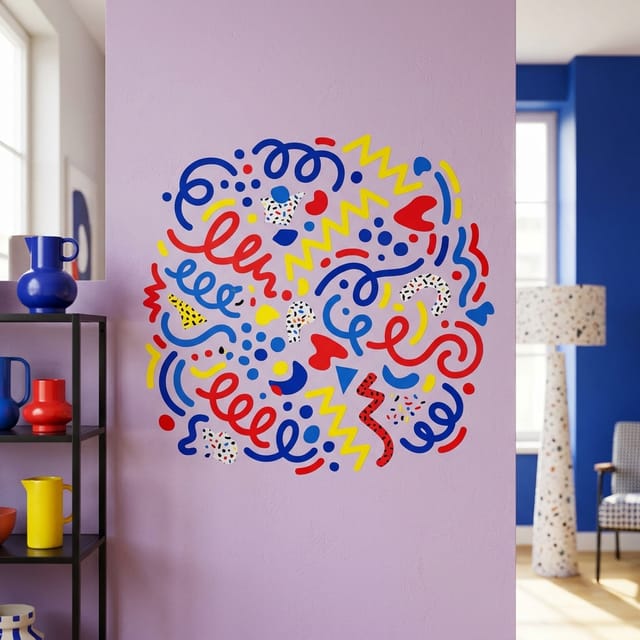
Memphis walls are never just walls—they're canvases waiting for geometric intervention. Dot layers squiggle decals over her lilac base, creating movement without commitment. The trick is treating pattern like punctuation: use it to guide the eye, create rhythm, and add energy to dead zones. Mix scales freely—tiny confetti dots can live happily next to giant zigzags.
Furniture & Shapes
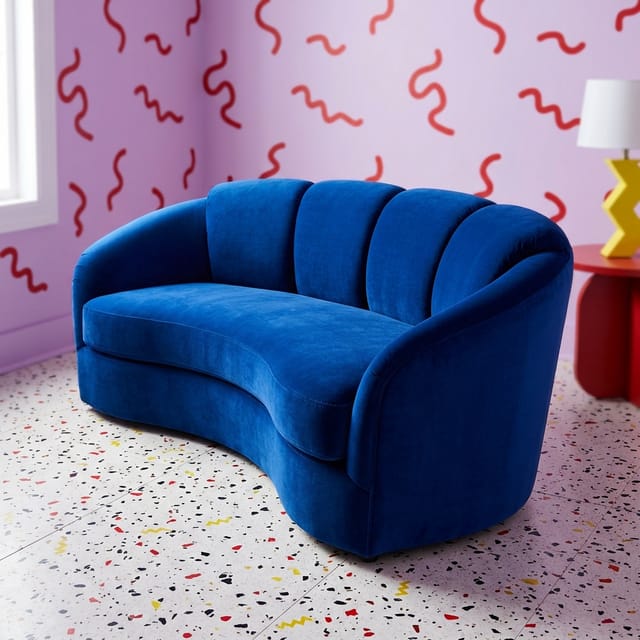
Every piece in Dot's loft is a conversation starter because Memphis furniture treats function as just the beginning. Look for exaggerated geometric forms—curved sofas, cylinder tables, triangular shelves—in saturated colors. The cobalt sofa's wave shape isn't just pretty; it creates a sculptural anchor that grounds all the other playful elements. Mix eras freely: a vintage Memphis piece next to a contemporary curved sofa next to something you painted yourself last weekend.
Textiles
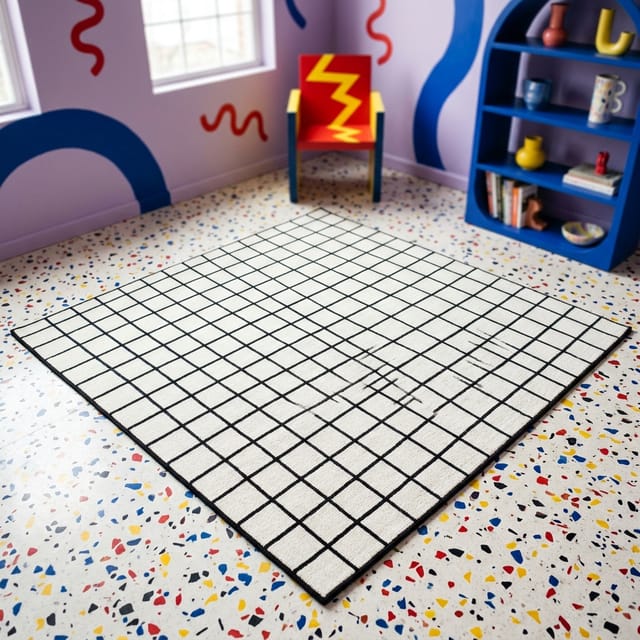
Memphis textiles are where pattern clashing becomes an Olympic sport. Dot's grid rug anchors the space with structure, which gives her permission to go wild everywhere else. Layer patterns that share a color family but different scales and motifs—squiggles on pillows, dots on throws, grids underfoot. The goal isn't matching; it's creating a visual conversation where every textile has something interesting to say.
Lighting
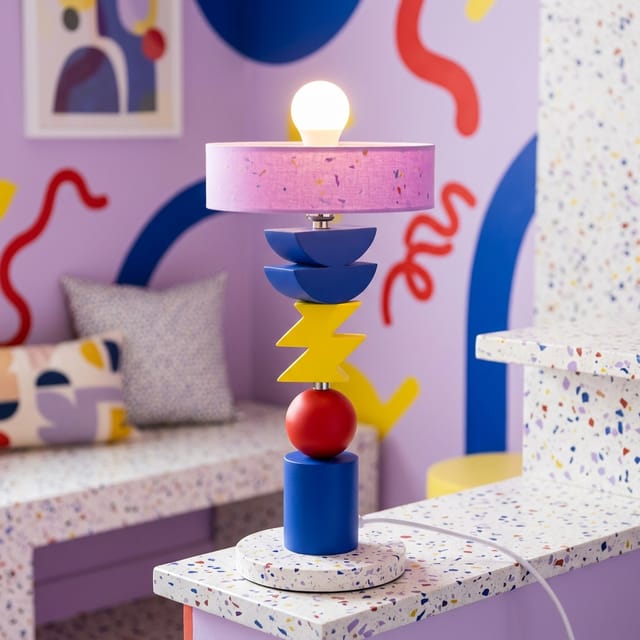
Memphis lighting is sculpture that happens to illuminate. Dot's table lamp looks like a geometric game of Jenga mid-collapse, which is exactly the point. Look for fixtures with stacked shapes, unexpected angles, and colors that contribute to the room's palette rather than fading into the background. Floor lamps with circular or triangular bases, pendant lights with multiple colored shades, and table lamps that look like they're defying gravity all work beautifully.
Collections & Accessories
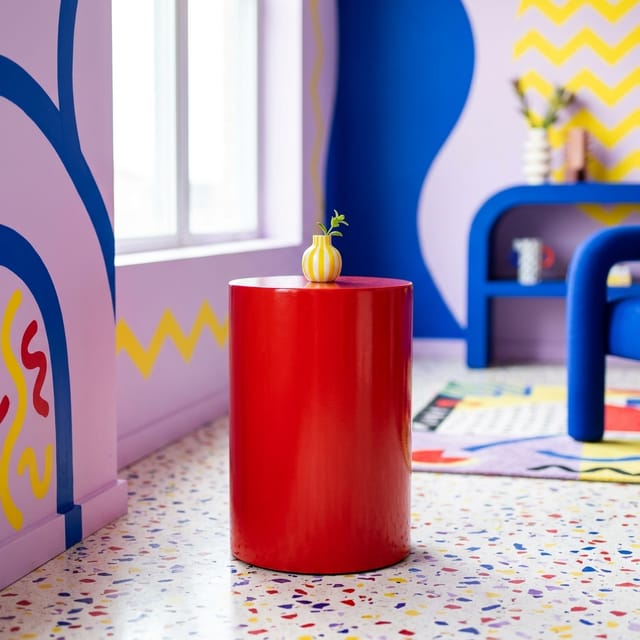
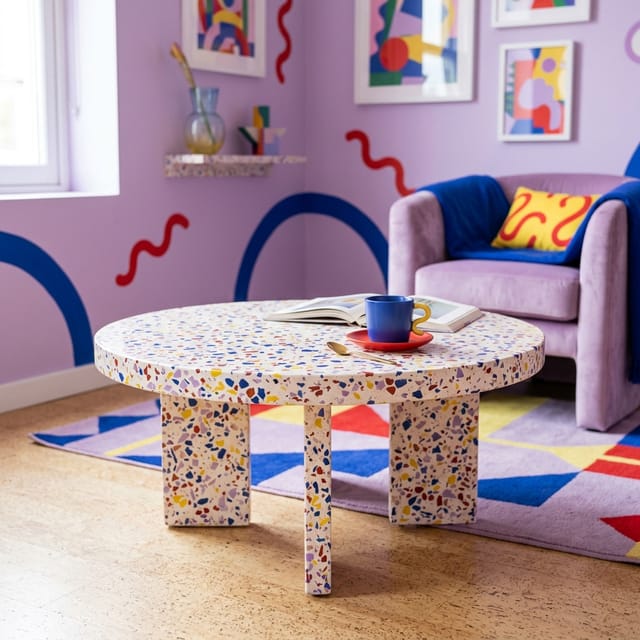
Dot treats accessories like punctuation marks in a very enthusiastic sentence. The terrazzo coffee table brings in speckled pattern at a large scale, while smaller objects echo the room's geometric vocabulary. Group objects by shape rather than function—all the cylinders together, all the spheres in conversation. Vintage Memphis pieces mix with contemporary interpretations and DIY projects without hierarchy.
Plants & Flowers
In Memphis spaces, even nature gets a geometric makeover. Dot chooses planters that echo the room's shapes—cylinders, cubes, triangular stands—in colors that pop against the greenery. The plants themselves provide organic contrast to all the hard geometry, which keeps the space from feeling too designed. Stick to bold, architectural plants with strong silhouettes that can hold their own against the visual competition.
The recipe
The Dot Formula
- 160% one pastel base (lilac, mint, peach) to keep the brightness from overwhelming
- 230% primary brights (red, yellow, blue) distributed across major furniture pieces
- 310% black and white for grounding through grids, stripes, and graphic patterns
- 4Every room needs one curved piece, one angular piece, and one cylindrical piece in conversation
Paint picks
Doodle Lilac #C9B6E4
Main walls to create a soft, dreamy backdrop that makes bold shapes sing
Cobalt Curve #1D3FBF
Accent wall or large furniture piece as your primary bold anchor
Cylinder Red #E32B2B
Smaller furniture, shelving, or architectural details for energetic pops
Zigzag Yellow #F5D020
Accent pieces, frames, or one statement furniture item to add sunshine
Room by room
Living Room
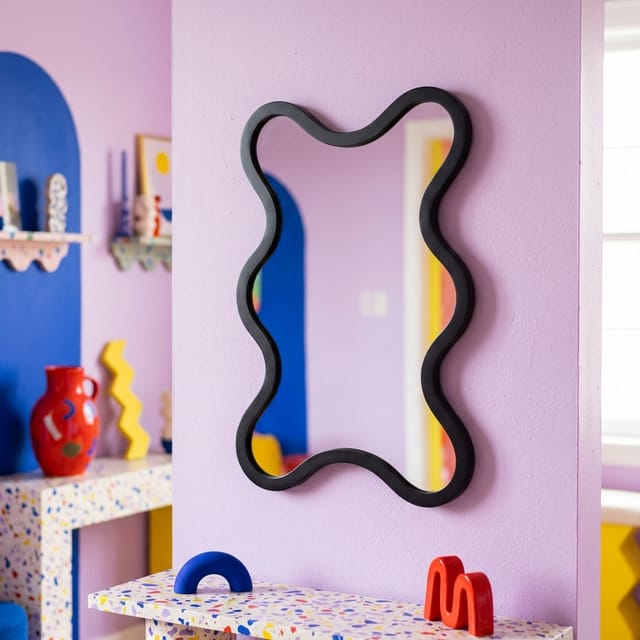
Start with one sculptural curved sofa in a bold color, then build your geometric vocabulary around it. Layer a grid rug, add cylinder and cube side tables in contrasting colors, and let your wall art be three-dimensional—shelves, mirrors, and decals that create actual shadows and depth.
Bedroom
Memphis bedrooms need restraint in pattern but not in color—choose one bold headboard shape (curved, triangular, or stepped), keep bedding in solids or simple grids, then go wild with geometric nightstands, lamps, and wall decals above the bed. The goal is energizing without being overstimulating at bedtime.
Kitchen & Dining
Memphis kitchens thrive on colorful small appliances, geometric dish collections displayed openly, and dining chairs in mismatched primary colors around a simple table. Add pattern through dish towels, trivets, and a bold backsplash or wall decals if you own, or removable options if you rent.
Bathroom
Even small bathrooms can go Memphis with a bold shower curtain in geometric patterns, colorful storage containers in cylinder and cube shapes, and a wavy or geometric mirror. Swap standard accessories for primary-colored soap dispensers, toothbrush holders, and towels in coordinating brights.
Small Spaces & Rentals
Memphis actually works beautifully in small spaces because the bold shapes create focal points that make rooms feel intentional rather than cramped. Focus on removable elements: decals, freestanding furniture in bold colors, and accessories. One curved piece plus one angular piece plus pattern layering creates the look without permanent changes.
Get it on any budget
Under $200
Under $500
Splurge
Renter-friendly
- Wall decals are your best friend—they create the Memphis look instantly and remove cleanly when you move
- Invest in freestanding furniture with bold shapes and colors rather than built-ins or paint
- Use removable wallpaper on one accent wall or even on furniture fronts for instant pattern
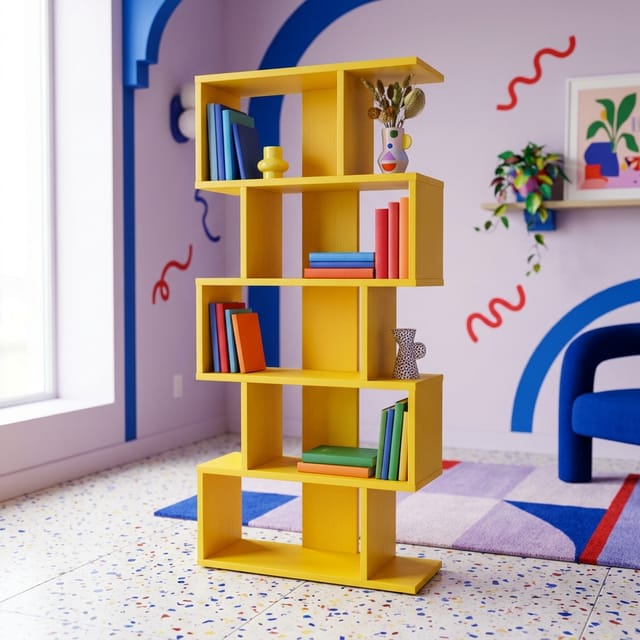
- Focus your budget on portable statement pieces: geometric mirrors, colorful shelving units, and sculptural lighting that moves with you
Easy to avoid
- Using too many patterns at the same scale—vary your pattern sizes from tiny dots to large squiggles to giant grids
- Forgetting the pastel base—all primary brights with no soft backdrop feels like visual shouting instead of conversation
- Buying everything new from one source—Memphis thrives on mixing vintage finds, contemporary pieces, and DIY projects
- Ignoring the grid underneath—even chaotic-looking Memphis rooms have an underlying structure that keeps them from feeling messy
FAQ
What is Memphis design and why is it popular again?
Memphis design is a 1980s Italian design movement that rebelled against minimalism with bold geometric shapes, clashing patterns, and primary colors. It's popular again because younger generations crave maximalism, personality, and design that doesn't take itself too seriously—Memphis delivers all three while still feeling sophisticated and intentional.
How do I mix Memphis patterns without it looking chaotic?
The secret is varying your pattern scales and keeping a consistent color palette. Use one large-scale pattern (like a grid rug), one medium pattern (squiggle pillows), and one small pattern (confetti dots), all pulling from the same family of colors. The repetition of colors creates harmony even when the patterns clash.
Can Memphis design work in a small apartment?
Absolutely—Memphis actually excels in small spaces because bold shapes and colors create strong focal points that make rooms feel intentional rather than cramped. Start with one curved furniture piece, add geometric accessories, and use wall decals to create visual interest without taking up floor space. The key is editing carefully so each piece has room to make its statement.
Where can I find affordable Memphis-style furniture?
Look for curved sofas and geometric side tables at mainstream furniture retailers, check vintage and thrift stores for original 1980s pieces, and consider DIY projects like painting existing furniture in bold colors or adding geometric shapes. The Memphis look is more about shape and color than expensive designer pieces, so you can absolutely recreate it on any budget.
What colors are essential for Memphis Revival style?
Start with one pastel base (lilac, mint, peach, or pink), then add the primary trio of red, yellow, and blue in roughly equal visual weight. Black and white provide grounding through patterns like grids and stripes. The key is using these colors in their saturated, unapologetic forms rather than muted or dusty versions—Memphis colors are confident, not subtle.
Some links may earn MAX by Design a small commission at no cost to you.