The Style Guide · Jewel-Tone Maximalism
Jewel-Tone Maximalism: How to Get Delphine's Opulent Look
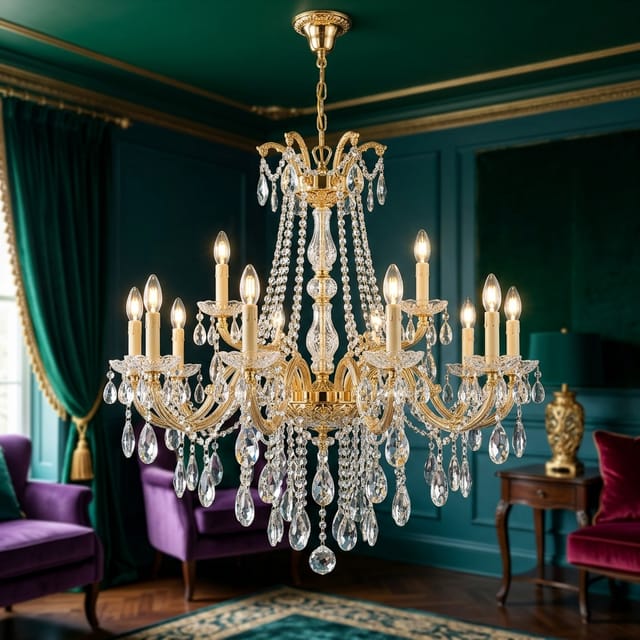
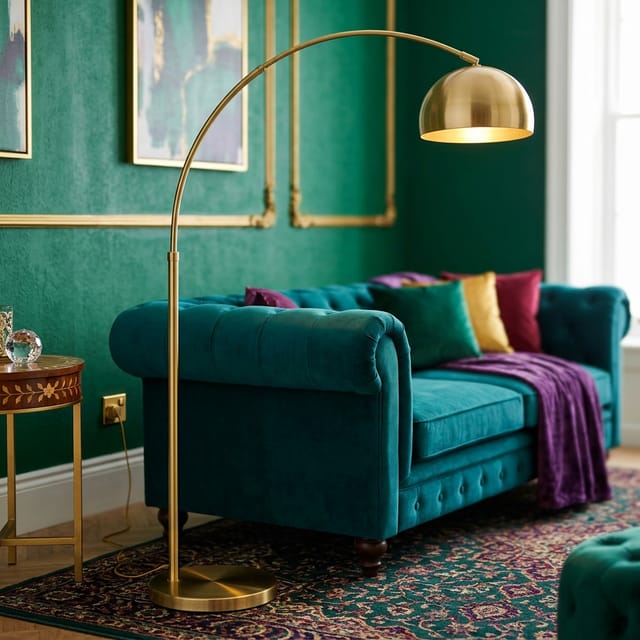
Delphine enters a room the way a chord resolves—peacock emerald, deep teal, and gold that means it.
What is Jewel-Tone Maximalism?
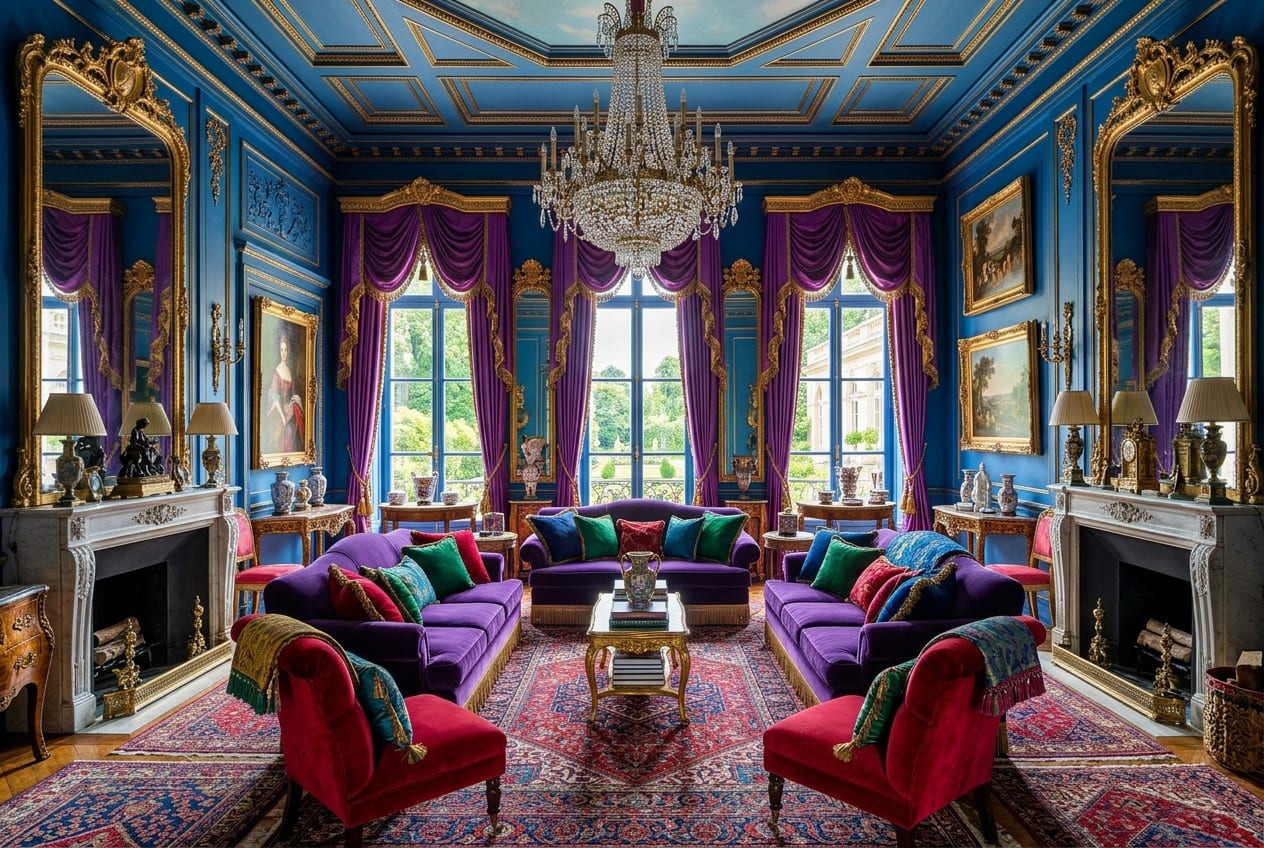
Jewel-Tone Maximalism is the decorating equivalent of wearing a velvet cape to the grocery store: utterly unapologetic, deeply saturated, and somehow completely right. This is maximalism at its most opulent, where emerald greens, sapphire blues, amethyst purples, and ruby reds layer together like a treasure chest spilled across your living room. Every surface shimmers, glows, or catches the light. Restraint isn't invited to this party.
The look draws from Victorian parlors, Art Deco glamour, and the kind of Old Hollywood sets where Joan Crawford would have felt at home. There's Ottoman Empire influence in the jewel tones themselves—colors lifted from precious stones, silk trade routes, and royal courts where more was always more. Mid-century maximalists like David Hicks brought jewel tones into modern interiors, proving that emerald and gold could live happily in a contemporary space without a single piece of period furniture.
People love Delphine now because she offers permission to be excessive in a world that's been beige for too long. After years of minimalist white boxes and safe grays, jewel-tone maximalism feels like emotional exhale. It's for people who want their homes to feel like an experience, not a backdrop. This style says you're interesting, you have opinions, and you're not afraid of a little drama before breakfast.
The signatures
- Saturated jewel tones layered without apology
- Velvet everything—sofas, pillows, drapes, ottomans
- Gold and brass accents that catch and multiply light
- Reflective surfaces: mirrors, lacquer, crystal, glass
- Patterns that compete and somehow cooperate
- Moody, atmospheric lighting that makes colors glow
Anatomy of the look
Color & Paint
Delphine's walls are never neutral—they're emerald, deep teal, or amethyst, creating a jewel-box effect where the room itself becomes the first layer of richness. Paint finishes matter here: high-gloss or satin catches light and makes colors feel even more saturated. Ceilings might be glossy black or metallic gold, turning the fifth wall into a statement.
Walls & Pattern
Wallpaper in Delphine's world is never subtle—think oversized florals, damask patterns, or peacock feathers in jewel tones on dark backgrounds. Molding and trim get painted in contrasting colors or gilded. Wainscoting, picture rails, and ceiling medallions add architectural drama even in newer builds.
Furniture & Shapes
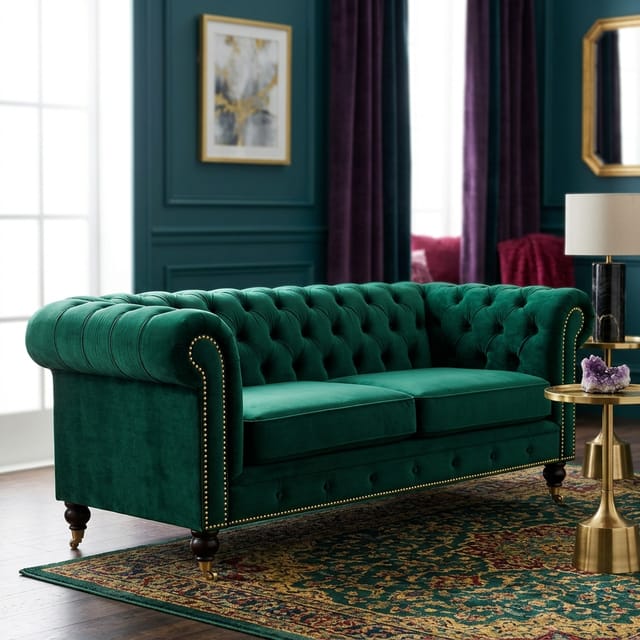
Furniture here has curves, tufting, and presence—Chesterfield sofas, curved-back chairs, and pieces with turned legs or brass details. Delphine loves a good silhouette: nothing boxy or apologetic. Wood finishes lean dark and glossy, or get painted in jewel tones themselves. Every piece should look like it has a story, even if you bought it last Tuesday.
Textiles
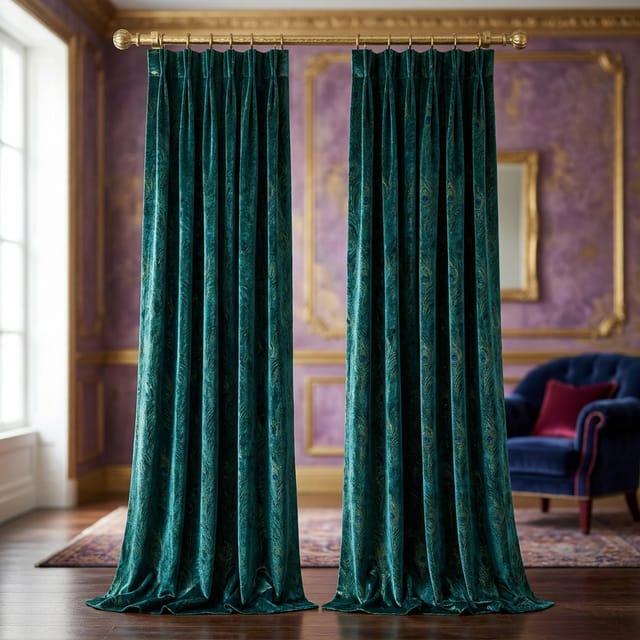
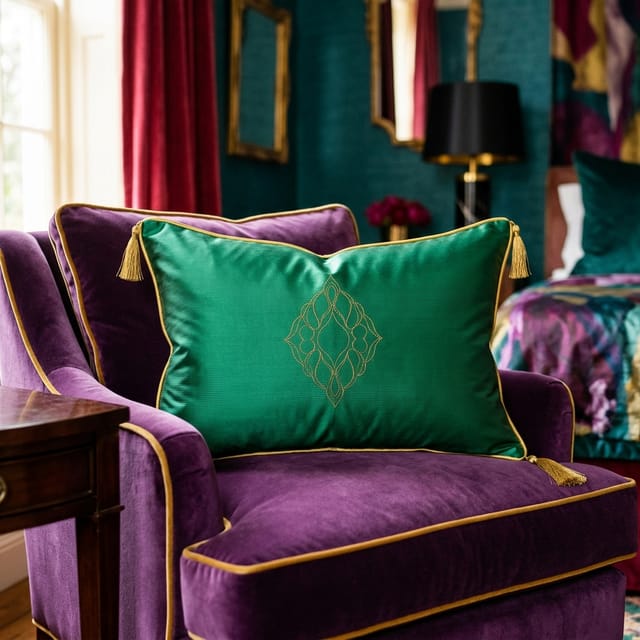
Velvet is the queen fabric here, appearing on sofas, pillows, drapes, and anywhere else you can justify it. Layer in silk, brocade, and heavy embroidered fabrics. Delphine mixes patterns fearlessly—a ruby paisley pillow next to an emerald geometric, both on a teal velvet sofa. Texture creates depth and keeps all those saturated colors from flattening.
Lighting
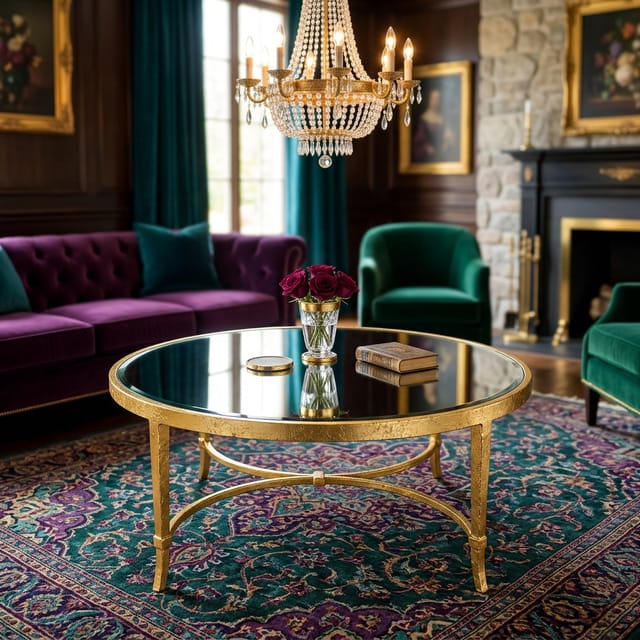
Lighting in Delphine's space is theatrical and layered—crystal chandeliers, gold sconces, and table lamps with jewel-tone glass bases or silk shades. She wants pools of warm light, not overhead fluorescence. Dimmers are essential. Candlelight counts as a light source here, preferably in gold or brass holders.
Collections & Accessories
Delphine collects like a magpie with excellent taste: gilt-framed mirrors, jewel-tone glassware, brass trays, crystal decanters, and art in ornate frames. Coffee tables display stacks of art books, decorative boxes, and fresh flowers. Every surface tells a small story, and empty space is considered a missed opportunity.
Plants & Flowers
Plants are chosen for drama—large fiddle-leaf figs, dramatic monstera, or trailing pothos in jewel-tone or brass planters. Fresh flowers appear weekly in jewel tones: deep red roses, purple anemones, burgundy dahlias. Delphine knows that living things keep all this opulence from feeling like a museum.
The recipe
The Delphine Formula
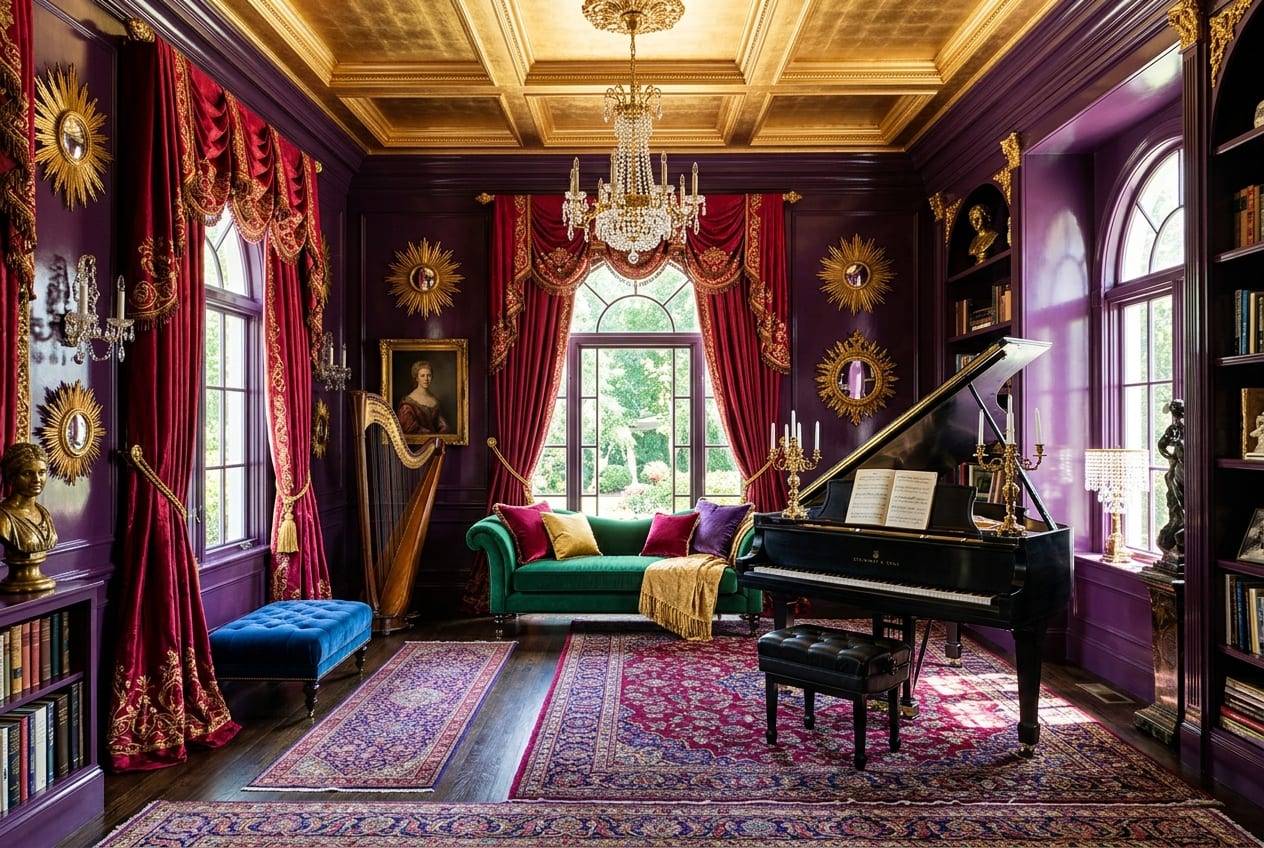
- 160% one rich jewel tone as your base (emerald walls, teal sofa)
- 225% supporting jewel tones that contrast but harmonize
- 310% gold and brass to catch light and add warmth
- 45% black or deep charcoal to ground all that color and create depth
Paint picks
Peacock Throne #0F5C46
Living room walls or bedroom accent wall—the emerald that anchors everything
Midnight Garden #10505A
Dining room or library walls for moody, sophisticated depth
Velvet Curtain #5B2A5E
Powder room or bedroom—small spaces where drama is welcome
Candlelight #B79036
Ceiling, trim, or built-in shelving for warm metallic contrast
Room by room
Living Room
This is Delphine's natural habitat—emerald walls, a velvet sofa in teal or ruby, gold accents everywhere, and layered lighting. Let your coffee table be a stage for beautiful objects, and don't skimp on the pillows.
Bedroom
Go full jewel-box: deep amethyst or emerald walls, velvet headboard, silk or velvet bedding in layered jewel tones, and gold lamps on each nightstand. Heavy drapes keep it cozy and womb-like.
Kitchen & Dining
Paint cabinets in deep teal or emerald, add brass hardware, and hang a statement chandelier over the dining table. Use jewel-tone glassware and gold flatware to make every meal feel like an occasion.
Bathroom
Small bathrooms are perfect for jewel-tone maximalism—paint walls amethyst or emerald, add a gold mirror and sconces, display jewel-tone glass bottles, and hang a small chandelier if you can.
Small Spaces & Rentals
Use removable wallpaper in jewel-tone patterns, bring in velvet furniture and gold accessories, and focus on textiles and lighting. Delphine works beautifully in small doses—even a jewel-tone corner feels luxurious.
Get it on any budget
Under $200
Under $500
Splurge
Renter-friendly
- Use removable wallpaper in jewel-tone damask or peacock patterns—it transforms walls without paint
- Invest in jewel-tone velvet furniture and gold accessories that move with you
- Hang lightweight gold mirrors and art with command strips instead of drilling
- Layer jewel-tone textiles—rugs, throws, pillows, curtains—to add color without permanent changes
Easy to avoid
- Using only one jewel tone—Delphine needs layers and contrast to avoid feeling flat or one-note
- Skipping the gold—brass and gold accents are what make jewel tones glow instead of going muddy
- Forgetting about lighting—jewel tones need warm, layered light to look rich instead of dark
- Choosing cheap-looking finishes—this style needs quality (or quality-looking) fabrics and finishes to work
FAQ
How do I keep jewel-tone maximalism from feeling too dark?
Layer your lighting with multiple sources—table lamps, floor lamps, sconces, and candles create warm pools of light that make jewel tones glow. Add gold and brass accents to reflect light, use mirrors strategically, and consider high-gloss paint finishes that bounce light around the room.
Can I mix different jewel tones in one room?
Absolutely—that's the whole point. Start with one dominant jewel tone (emerald walls, for example), then layer in two or three others through furniture, pillows, and accessories. The key is using gold or brass as a unifying element and making sure you have enough of each color to feel intentional, not random.
What's the difference between jewel-tone maximalism and just using dark colors?
Jewel-tone maximalism is about saturation, richness, and intentional opulence—not just darkness. You're using colors that reference precious stones, layering textures like velvet and silk, adding metallic accents, and creating a sense of luxury. Dark colors alone can feel heavy; jewel tones with the right textures and finishes feel sumptuous.
How do I start with jewel-tone maximalism if I'm nervous about commitment?
Begin with textiles and accessories—velvet pillows in emerald and amethyst, a jewel-tone throw, gold candle holders, and a few pieces of jewel-tone glassware. Once you're comfortable, paint one accent wall or add removable wallpaper. You can always build slowly toward the full Delphine experience.
What kind of art works with jewel-tone maximalism?
Delphine loves ornate gold frames around almost anything—vintage portraits, botanical prints, abstract art, or even fabric swatches. Look for art with jewel tones in it, or use gold frames to tie neutral art into the color story. Gallery walls work beautifully here, and mirrors count as art.
Some links may earn MAX by Design a small commission at no cost to you.