The Style Guide · African & Global Print
Global Print Maximalism: How to Get Amara's Joyful Wax-Print Look
Amara proves that maximalism isn't about more stuff—it's about more story, more joy, more pattern that makes your heart skip.
What is Global Print Maximalism?
Global Print Maximalism is what happens when textiles become architecture. It's a decorating approach where wax prints, mudcloth, kente, ikat, and other heritage fabrics aren't accents—they're the entire point. Walls wear pattern like clothing. Beds stack it like a celebration. Every surface is an opportunity to honor craft traditions that have traveled continents and centuries. The look is abundant, intentional, and unapologetically joyful, rooted in the belief that pattern tells stories words cannot.
This style draws from African textile traditions—particularly West African wax prints (originally Indonesian batik techniques adopted and transformed), Malian bogolan (mudcloth), and Ghanaian kente—but it welcomes global cousins too: Indian block prints, Turkish suzanis, Mexican textiles. These aren't appropriated decorations; they're celebrated craft forms, each with deep cultural meaning. Wax prints emerged in the 19th century as Dutch traders brought Indonesian techniques to West Africa, where local artisans revolutionized the process. The geometric precision of mudcloth comes from Malian women using fermented mud as dye. Kente weaving is a sacred Ashanti art form where every color and pattern carries symbolic weight.
People love Global Print Maximalism now because it offers something our minimalist decade forgot: soul. In a world of beige rental walls and mass-produced sameness, layering heritage textiles feels like reclaiming identity and joy. It's maximalism with meaning—every pattern has provenance, every textile has a maker. For diaspora communities, it's a way to keep culture visible and vibrant. For everyone else, it's permission to stop playing it safe and start decorating like pattern is oxygen. Amara doesn't apologize for being loud. She teaches us that more can be exactly right.
The signatures
- Wax-print fabrics in bold geometrics and florals covering walls, beds, and windows
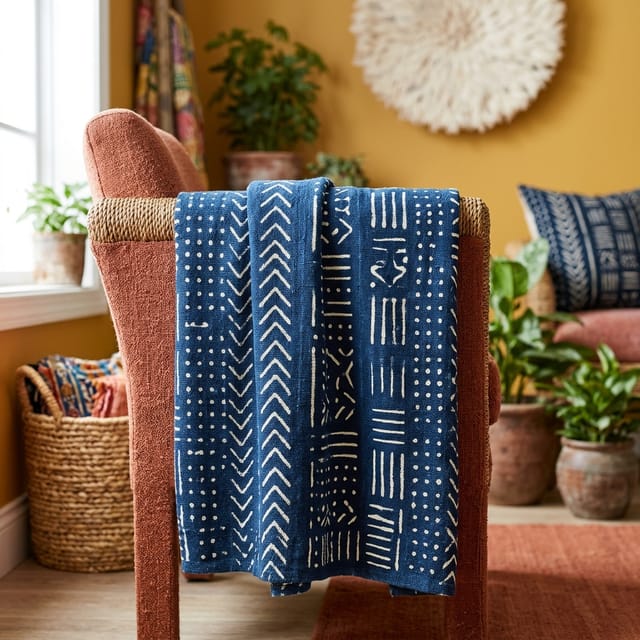
- Mudcloth pillows and throws in cream and indigo adding graphic contrast
- Juju hats, woven baskets, and carved wood as sculptural wall art
- Ochre, terracotta, and indigo as the color foundation
- Layers upon layers of textiles—no bare surfaces allowed
- Handmade and artisan pieces that honor craft traditions
Anatomy of the look
Color & Paint
Amara's walls wear ochre like a second skin—a warm, sun-baked yellow that makes every pattern pop. This isn't a neutral backdrop; it's an active participant, the color of clay and earth and afternoon light. Indigo and terracotta weave through textiles as the supporting cast, creating a palette that feels both ancient and alive.
Walls & Pattern
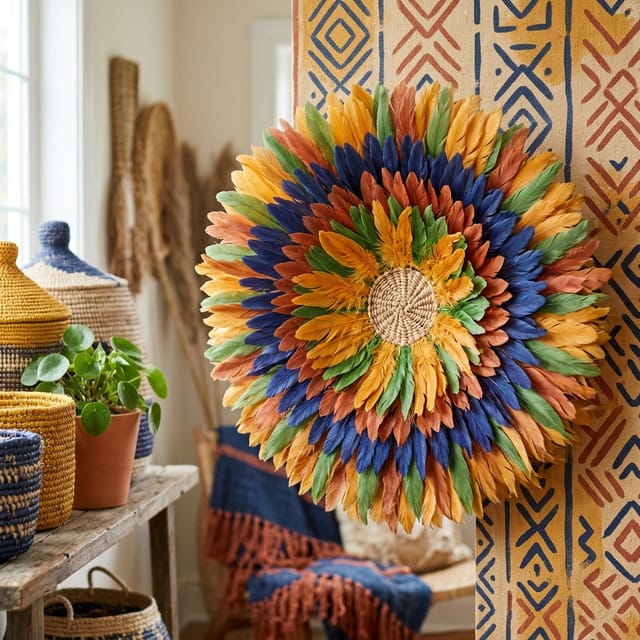
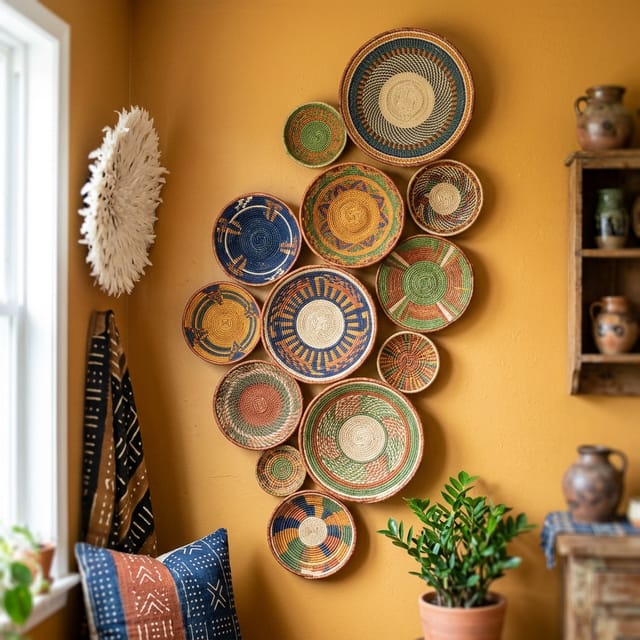
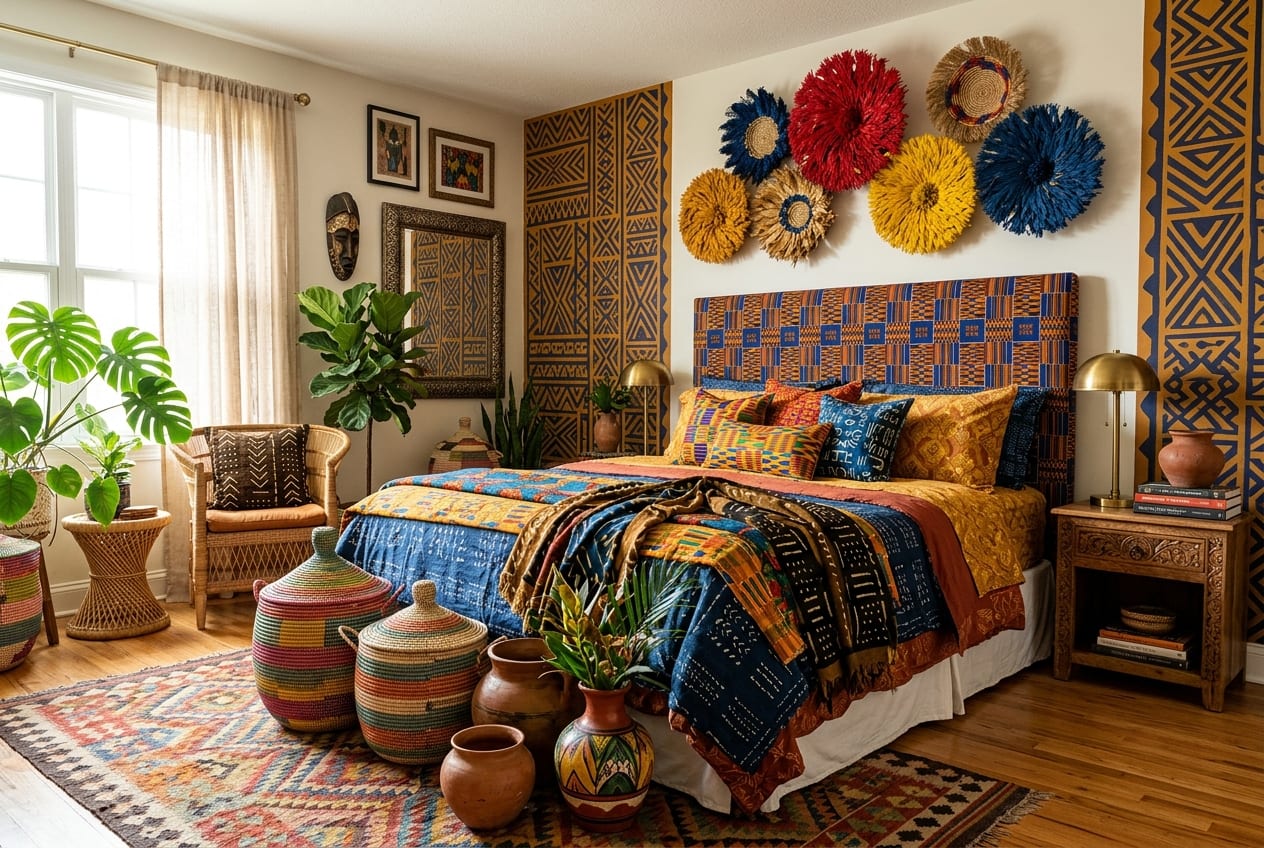
In Amara's world, walls are for wearing. Juju hats bloom like giant flowers, their feathers radiating in cream, ochre, and rust. Woven baskets hang in clustered constellations, their geometric patterns creating rhythm. A wax-print tapestry might claim an entire wall, its bold florals and geometrics becoming the room's heartbeat. The ochre paint peeks through strategically, grounding all that pattern in warmth.
Furniture & Shapes
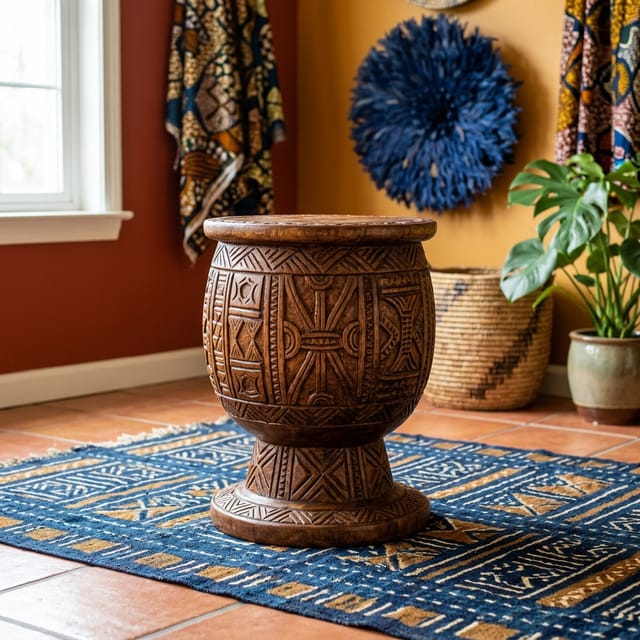
Furniture here is carved, woven, and substantial—nothing precious or spindly. A carved wood bed frame or side table brings sculptural heft. Rattan or woven seating adds texture without competing with the textiles. Pieces feel handmade, with visible grain and natural imperfections that prove someone's hands shaped them.
Textiles
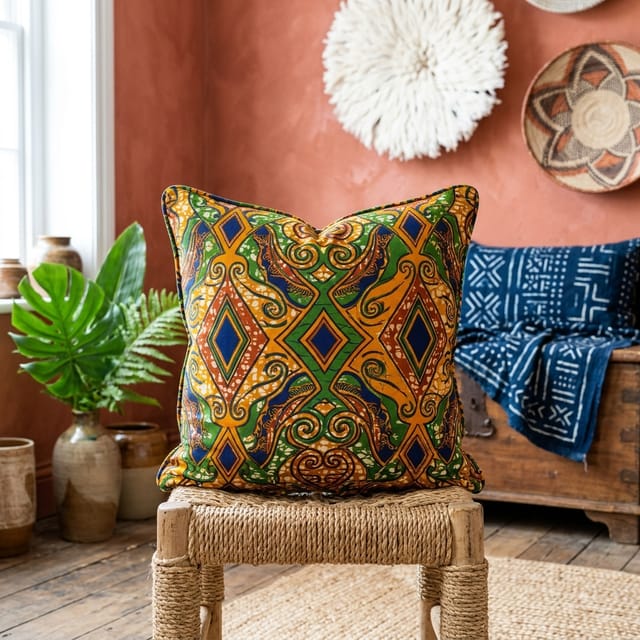
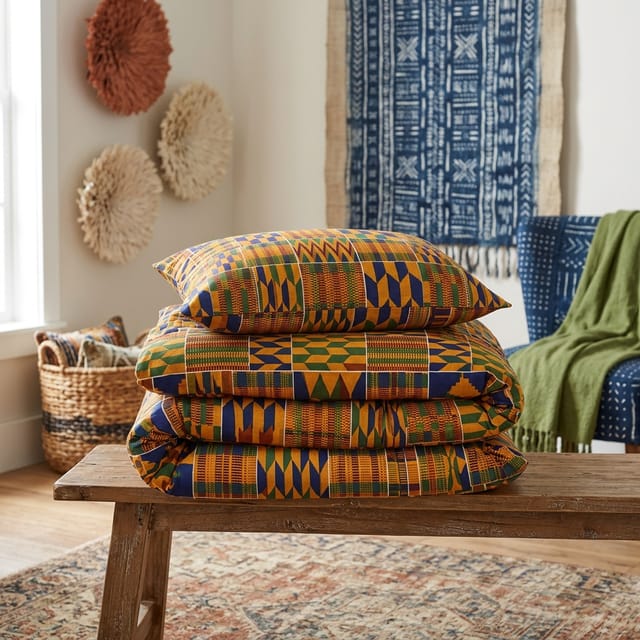
This is where Amara truly sings. The bed is a textile symphony: a kente-pattern duvet, mudcloth euro shams, wax-print cushions in three different patterns, a striped throw at the foot. Curtains might be wax print too, or a simple linen that lets the bed be the star. Every textile is a conversation between pattern, color, and heritage craft.
Lighting
Lighting is warm, woven, and sculptural. A rattan pendant lamp casts beautiful shadows. Brass or copper sconces add metallic warmth that plays off the ochre walls. Table lamps might have ceramic bases in terracotta or indigo, with linen shades that soften the glow. Light here feels golden and alive, never cold or clinical.
Collections & Accessories
Amara collects with purpose: carved wooden bowls, brass vessels, beaded objects, more baskets. A carved wood mirror leans against the wall. Pottery in terracotta and cream sits on surfaces. Everything has texture, weight, and the mark of a maker's hand. These aren't random objects—they're a curated celebration of craft.
Plants & Flowers
Plants bring the final layer of life: a fiddle leaf fig in a woven basket planter, snake plants in terracotta pots, maybe a palm frond in a brass vessel. The leaf green against all that ochre and indigo feels like oxygen. Plants here aren't styled—they're thriving, adding movement and breath to all that glorious pattern.
The recipe
The Amara Formula
- 160% pattern—wax prints, mudcloth, kente—layered on every textile surface
- 230% warm earth tones—ochre walls, terracotta accents, natural wood
- 310% indigo depth as the grounding contrast that makes everything else pop
- 4Handmade over mass-produced, always—every piece should have a maker's mark
Paint picks
Clay Ochre #D49A2A
Main wall color—the warm, earthy foundation that makes every pattern sing
Mudcloth Indigo #25356B
Accent wall or trim to ground the warmth with deep, dyed blue
Kente Terracotta #B5502E
Closet interior or small accent wall for a surprise of clay warmth
Living Leaf #2E8B57
Not for walls—this is your plant color, the green that breathes life into the palette
Room by room
Living Room
Layer wax-print pillows on a neutral sofa, hang a juju hat gallery wall above it, and drape a mudcloth throw over the arm. Add woven baskets as sculptural art and use a carved wood coffee table to anchor the space. The key is treating your sofa like a bed—pile on the pattern.
Bedroom
This is Amara's natural habitat. Start with ochre walls, build a textile mountain on the bed with mixed wax prints and mudcloth, and hang juju hats as a headboard alternative. Add carved wood nightstands, rattan lighting, and plants in woven baskets. Let pattern be your wallpaper.
Kitchen & Dining
Use wax-print fabric as cafe curtains or chair cushion covers. Hang woven baskets on the wall as functional art. Set the table with indigo napkins, terracotta dishes, and a wax-print table runner. Even a small kitchen can handle big pattern when it's confined to textiles and walls.
Bathroom
Swap your shower curtain for wax print, add mudcloth hand towels, and hang small woven baskets for storage. Paint the vanity or one wall in ochre or terracotta. Use brass fixtures and mirrors to add warmth. A bathroom can absolutely wear pattern—just keep it washable.
Small Spaces & Rentals
When you can't paint, let textiles do the work. A wax-print duvet, mudcloth pillows, and a juju hat wall instantly transform a rental bedroom. Use removable wallpaper in a basket weave pattern, or simply lean a large wax-print tapestry against the wall. Small spaces need joy too.
Get it on any budget
Under $200
Under $500
Splurge
Renter-friendly
- Use wax-print fabric as removable wallpaper alternative—hang with fabric tape or a curtain rod system
- Command hooks hold juju hats and woven baskets without damaging walls
- Layer all your pattern on the bed, curtains, and pillows—no paint required
- Lean a large wax-print tapestry against the wall instead of hanging it for instant impact
Easy to avoid
- Matching all your patterns—Amara thrives on joyful clash, not coordination. Mix scales, colors, and origins freely.
- Treating global textiles as generic 'boho'—each has cultural meaning. Source thoughtfully from artisans and fair-trade sellers when possible.
- Adding too much competing wood tone—stick to warm, natural wood and let the textiles be the color story.
- Forgetting negative space—even maximalism needs breath. Let the ochre walls peek through, leave some surfaces clear.
FAQ
How do I mix different African prints without it looking chaotic?
Stick to a consistent color palette—ochre, indigo, terracotta—and vary the scale of your patterns. Pair a large-scale wax print with a smaller geometric mudcloth and a medium kente stripe. The shared colors will unify what feels like chaos. Also, embrace a little chaos—that's the joy.
Where can I find authentic African textiles and support artisans?
Look for fair-trade retailers, artisan cooperatives, and small businesses run by African designers and makers. Etsy has many artisan sellers. Avoid mass retailers selling 'African-inspired' prints made elsewhere. Real wax prints have a waxy hand-feel and are often sold by the yard. Mudcloth should feel stiff with natural dye variations.
Can I do Global Print Maximalism if I'm not African?
Yes, when done with respect and intention. This means buying from artisans, learning about the textiles' cultural significance, and celebrating rather than appropriating. It's about honoring craft traditions, supporting makers, and recognizing that these aren't just pretty patterns—they're heritage. Decorate with appreciation, not extraction.
What if my room is really small—will all this pattern overwhelm it?
Small rooms can absolutely handle big pattern. The trick is committing fully rather than sprinkling timidly. Paint the walls ochre, pile the bed high with wax prints, hang one large juju hat. A small room with confidence reads as cozy and intentional, not cramped. Half-hearted pattern in a small space reads as cluttered.
How do I care for wax-print and mudcloth textiles?
Wax prints are usually colorfast and machine-washable in cold water—the wax coating helps prevent fading. Mudcloth is trickier: it's dyed with natural mud and should be spot-cleaned or gently hand-washed in cold water, never machine-washed. Both improve with age and gentle wear. Think of them as heirloom textiles that develop character over time.
Some links may earn MAX by Design a small commission at no cost to you.